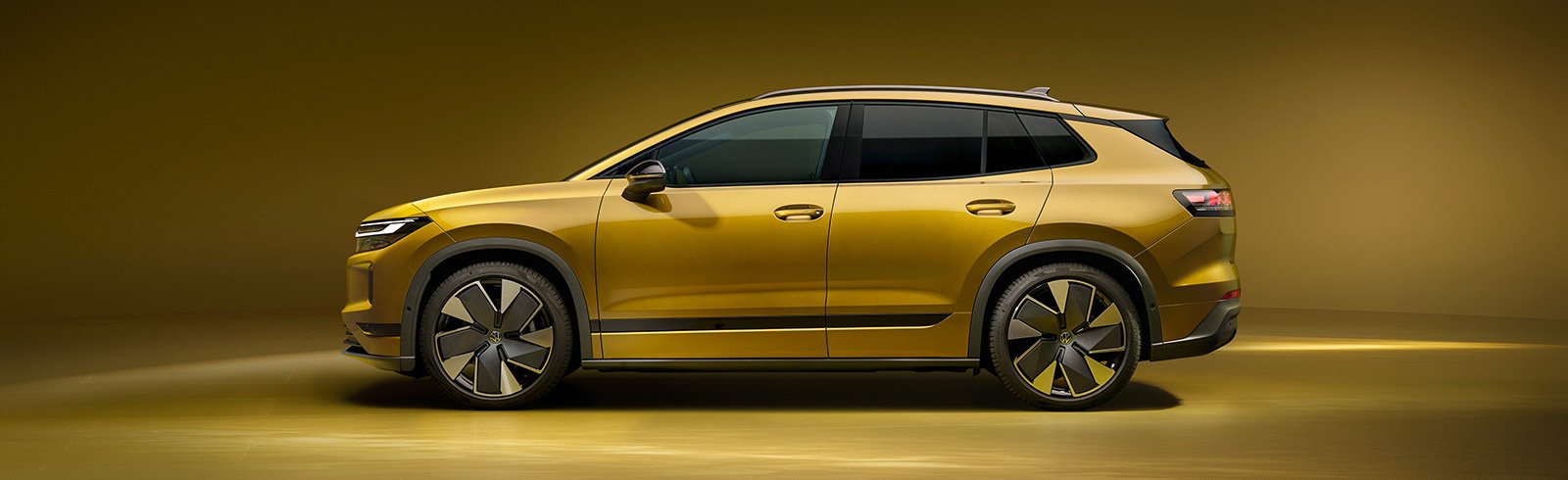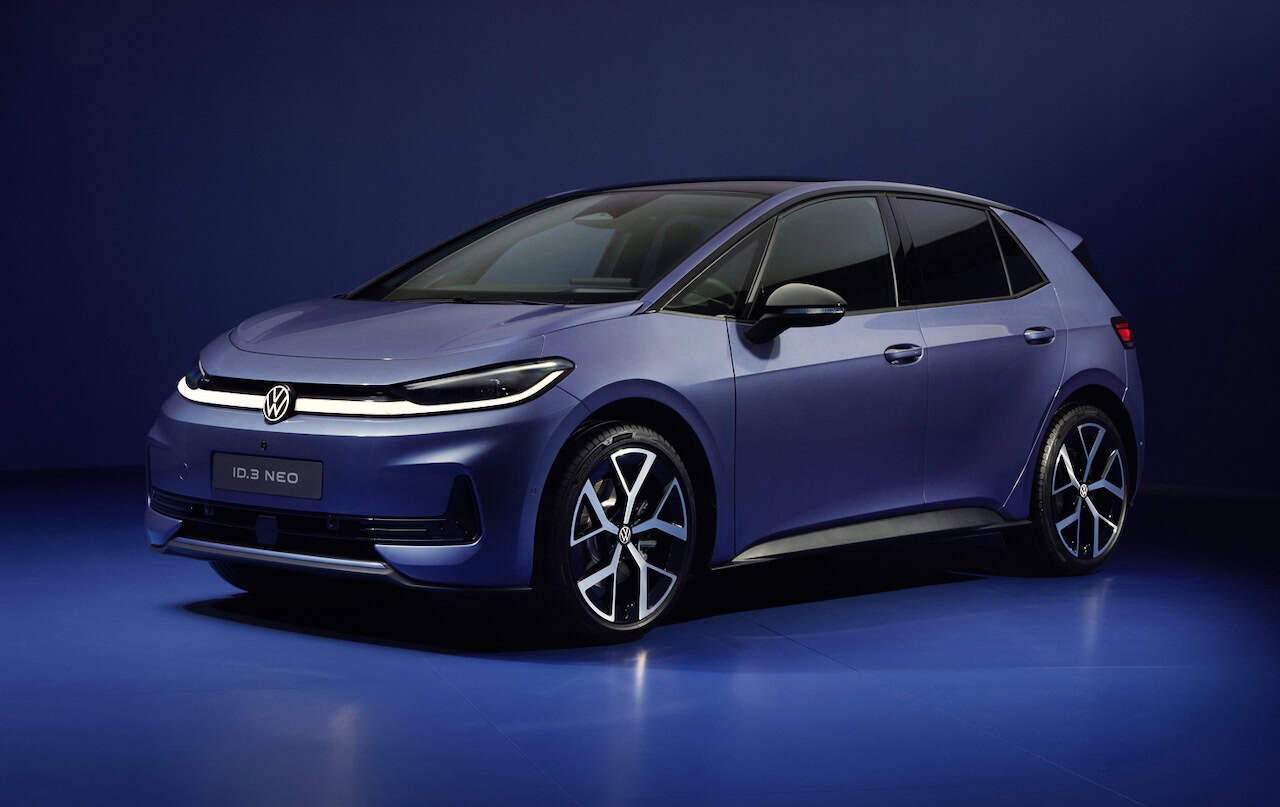
Volkswagen’s first-ever member of its ID family has been updated, with the refreshed VW ID.3 Neo positioned as a more capable rival to models such as the BYD Seal and Tesla Model 3.
Built to bridge the gap until the all-new Volkswagen ID. Golf arrives later this decade, the Volkswagen ID.3 Neo represents a significant update of the bespoke EV hatch first introduced by the German brand in 2019.
Arriving with cleaner styling and an all-new cabin design that reintroduces physical controls, all versions are expected to offer more power and improved range when sales start in Europe this July. However, it remains unclear if the ID.3 Neo will make it to Australia.
READ MORE: Volkswagen ID. Cross electric SUV breaks cover: Critical affordable EV just months from launch
READ MORE: Huge milestone! Volkswagen EV sales hit new high
READ MORE: Groundbreaking Electric Volkswagen Golf Mk9 teased for the first time! Is this the super-hatch that finally beats China for tech?
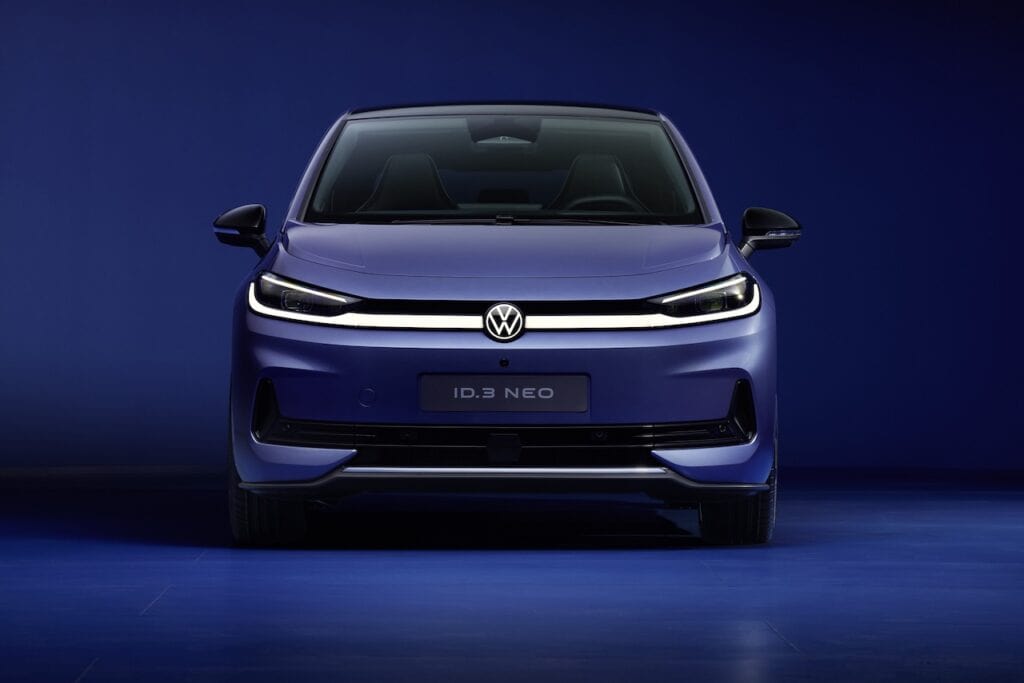
Externally, the biggest change is a thicker full-width LED light bar connecting revised headlamps.
There’s also a repositioned badge and a redesigned bumper with reshaped air intakes, giving it a closer family resemblance to upcoming models such as the ID.2all concept-based hatch and future small SUVs.
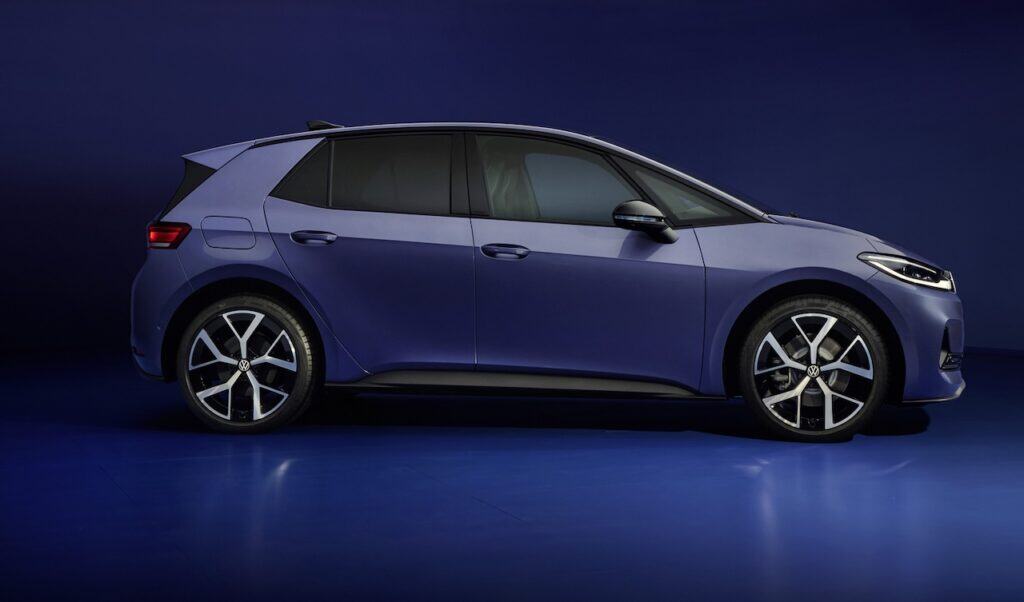
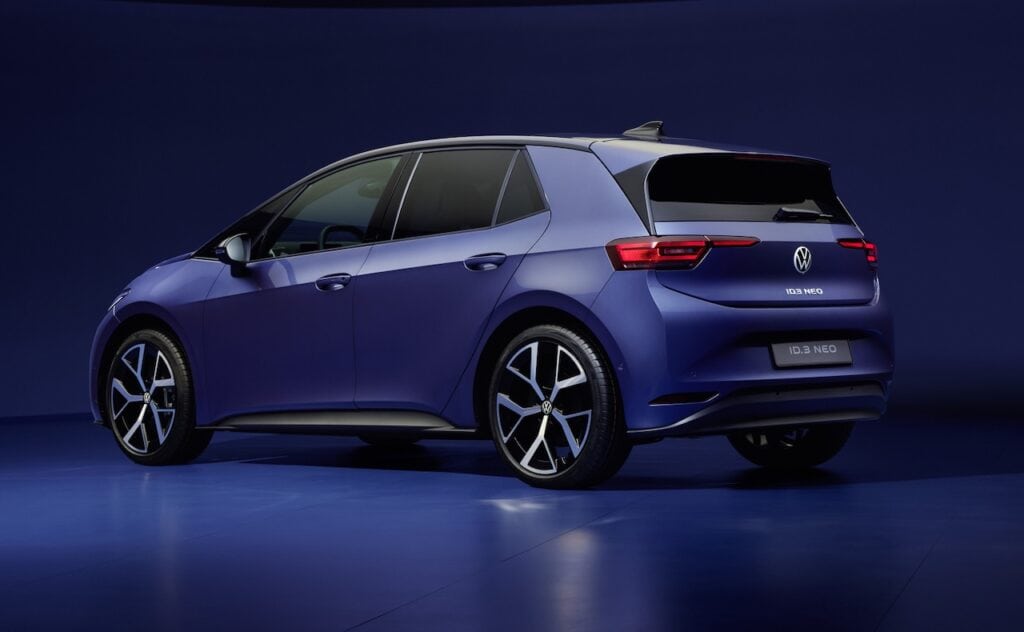
Minor updates include the A-pillar, roof, rear spoiler and tailgate now finished in body colour rather than gloss black.
Inside, there’s a new two-spoke steering wheel and a comprehensively redesigned dashboard with simpler lines, improved materials and a wider, higher-mounted centre console.
New hardware includes a 10.25-inch digital instrument cluster and a 12.9-inch infotainment system.
Both feature updated graphics and simpler menus, along with an integrated app store offering video streaming, gaming and apps for parking and charging.
Physical shortcut buttons for climate control, hazard lights, recirculation and demisting functions have been added below the centre air vents.
New technology includes an upgraded augmented reality head-up display, while a panoramic roof, front electric memory seats and a Harman Kardon premium sound system are optional.
On the move, the ID.3 Neo benefits from an updated Travel Assist system with additional functionality such as traffic light recognition. Park Assist can now remember complex manoeuvres, while lane assist, front assist and turning brake functions have also been enhanced.
In Europe, the entry-level ID.3 Neo is expected to use a 125kW motor with a 50kWh battery, while a mid-spec version pairs a 140kW motor with a 58kWh battery.
At the top of the range, a 170kW variant is matched with a 79kWh battery, delivering a claimed range of up to 630km (WLTP).
Charging for the smaller battery variants is rated at up to 105kW, while the larger battery supports up to 183kW DC fast charging.
Vehicle-to-load (V2L) capability has also been added, allowing the car to power external devices.
A performance flagship is expected to follow, likely replacing the existing ID.3 GTX.
In Europe, sales of the updated ID.3 begin later this year, with deliveries expected in the second half of 2026.
Volkswagen Australia has previously stopped short of confirming the ID.3 for local release and has not yet commented on the updated model.