adminis
…Iran-US war, election spending reignite price concerns
Nigeria’s inflation story in 2026 is beginning to look less like a recovery and more like a fragile pause.
The National Bureau of Statistics (NBS) on Friday reported that headline inflation rose to 15.69 percent in April 2026, up from 15.38 percent in March, marking a second consecutive monthly increase after a brief period of easing that had raised hopes of a more stable price environment. The uptick, though modest on paper, carries significant weight in an economy still grappling with the aftershocks of sweeping reforms, volatile energy costs, and weakening household purchasing power.
For many Nigerians, the numbers feel less like data points and more like lived reality. Transport fares have climbed, food prices are moving, and the cost of basic goods continues to stretch household budgets already thinned by previous economic adjustments.
A fragile disinflation story begins to wobble
The rise in inflation interrupts what had been a cautiously optimistic narrative in 2025, when price growth appeared to slow after earlier spikes linked to fuel subsidy removal, currency pressures, and broader structural reforms.
Economists had, at the start of 2026, even floated the possibility of a return to single-digit inflation. That projection now looks increasingly distant.
Instead, analysts are pointing to a convergence of external and domestic shocks that are steadily rebuilding inflationary momentum.
One of the most immediate triggers, according to analysts, is the disruption in global energy markets following the Iran–US conflict that escalated in late February. The tension, which reportedly affected the Strait of Hormuz, a critical global oil transit route, has contributed to volatility in crude prices.
Simon Samson, chief economist at ARKK Economics and Data Limited, links the inflation uptick directly to these global shocks, arguing that the conflict has rippled through multiple layers of the economy.
According to him, higher crude prices have not only pushed up international energy costs but have also filtered into food systems, logistics, and industrial inputs.
In Nigeria, where transport and production costs are tightly linked to fuel prices, such external shocks tend to have immediate and visible domestic consequences.
Read also: Election-year inflation threatens Nigeria’s reform push, S&P says after upgrade
Fuel prices and the domestic cost spiral
Those global pressures are being amplified at home by rising petrol prices. Pump prices, which previously hovered around N900 per litre, have reportedly climbed beyond N1,300 in many locations.
That jump has had a predictable but severe knock-on effect: transport fares have increased, haulage costs have surged, and supply chains have become more expensive to operate. For traders and manufacturers, every additional naira in fuel cost feeds directly into final prices.
The result is an economy where inflation is being driven not by a single force, but by a layered combination of imported inflation, domestic cost shocks, and structural inefficiencies.
What rising inflation means for households
For ordinary Nigerians, the implications are immediate and often harsh.
Higher inflation translates directly into reduced purchasing power. Salaries remain largely static in many sectors, while the cost of food, transport, rent, and basic services continues to rise.
As Samson puts it, the reversal of earlier disinflation trends signals “reduction in purchasing power, a deepening cost-of-living crisis, further impoverishment of an already strained population, and increased economic misery.”
Beyond household pain, sustained inflation also risks slowing economic growth by discouraging investment and weakening consumer demand. It could also prompt tighter monetary policy from the Central Bank of Nigeria (CBN), potentially making credit more expensive for businesses already struggling with high borrowing costs, the economics lecturer added.
Policy responses: between restraint and reform fatigue
In response to these pressures, policymakers are attempting to walk a tightrope between stabilisation and social protection.
Taiwo Oyedele, minister of Finance and Coordinating Minister of the Economy, has emphasised that the government is prioritising measures that translate macroeconomic reforms into tangible relief for citizens.
Speaking with BusinessDay on the sidelines of the Africa CEO Forum, he acknowledged growing “reform fatigue” and the need to avoid introducing disruptive new policies at a sensitive economic moment.
Instead, the administration is focusing on targeted interventions. Among them is the suspension of certain fuel-related taxes aimed at preventing further increases in pump prices. Government officials argue that Nigeria still maintains relatively lower petrol prices compared to some neighbouring countries partly because of such fiscal restraint.
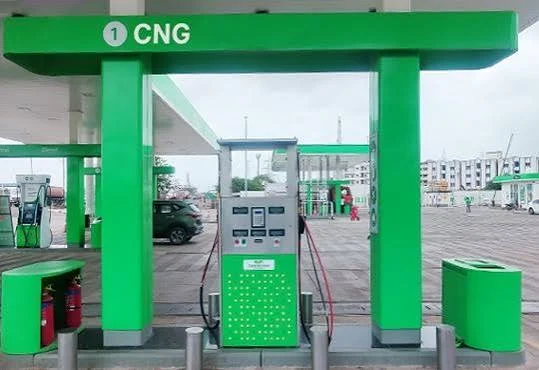
Authorities have also introduced duty waivers for electric vehicles and are supporting the adoption of compressed natural gas (CNG) as part of a broader attempt to reduce dependence on petrol and ease transport costs over time.
However, critics argue that while such measures may offer marginal relief, they are unlikely to significantly offset immediate inflationary pressures without deeper structural reforms in energy, logistics, and production.
Read also: Iran war reignites inflation pressures across Africa’s biggest economies in April
Election spending enters the inflation equation
Beyond external shocks and fuel dynamics, another factor is increasingly shaping Nigeria’s inflation outlook: politics.
The Central Bank of Nigeria and members of its Monetary Policy Committee have warned that rising political activity ahead of the 2027 general elections could inject fresh liquidity into the economy and undermine recent disinflation gains.
At its 304th MPC meeting in February 2026, the CBN cut the Monetary Policy Rate from 27 percent to 26.5 percent, a cautious signal that inflationary pressures were beginning to ease. But that optimism has since been tempered by concerns over fiscal expansion.
Olayemi Cardoso, CBN governor, has warned that election-related spending could distort the inflation trajectory, while Muhammad Abdullahi, deputy governor, has highlighted the risk of rising fiscal deficits and increased consumption spending.
According to him, intensified political activities typically lead to higher government injections into the economy, funding campaigns, social programmes, and infrastructure push, all of which can increase demand-side inflation.
“Stronger fiscal-monetary coordination will be needed,” he noted, pointing to the delicate balance required to prevent excess liquidity from eroding price stability.
The modest rise in inflation may not yet signal a crisis, but it does suggest that the path to stability remains uneven and vulnerable to both external shocks and domestic policy choices.
For households, the question is not whether inflation is rising or falling, but whether incomes will ever catch up with prices.
And for policymakers, the challenge is increasingly clear: sustaining disinflation is no longer just an economic task, it is becoming a political one as well.