adminis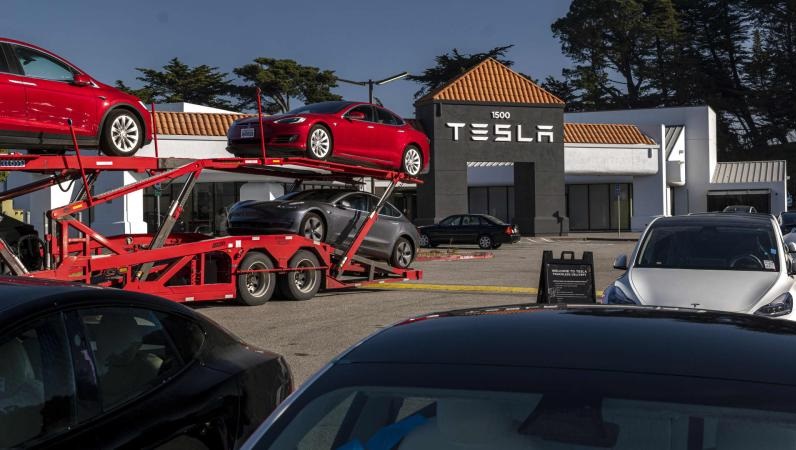
Tesla is regaining momentum in parts of Europe after a difficult two-year stretch, but the company’s recovery is unfolding alongside a deeper structural shift in the continent’s electric vehicle market: the rapid rise of Chinese competitors.
The recovery is believed to have been boosted by Europe’s energy crisis, which is reshaping consumer behavior.
Registrations of Tesla vehicles rose sharply in several European markets last month, extending a turnaround after two years of weakening demand that had raised concerns about the company’s position in one of the world’s most competitive EV regions.
The rebound comes as soaring fuel and energy costs tied to the Iran war and the prolonged disruption in the Strait of Hormuz are accelerating Europe’s transition toward electric mobility. Analysts say consumers who had delayed EV purchases because of high borrowing costs and economic uncertainty are now returning to the market as gasoline and diesel prices climb sharply across the continent.
Industry executives and analysts say the latest surge in EV interest is being driven less by environmental considerations and more by household economics. With energy markets under strain and oil prices remaining volatile, many European drivers are increasingly viewing electric vehicles as a hedge against fuel-price shocks.
Tesla’s registrations, often used as a proxy for sales, jumped 102% year-on-year in Denmark in April, according to bilstatistik.dk. Data from PFA showed registrations in France climbed 112%, while the Dutch automotive industry association BOVAG reported a 23% increase in the Netherlands.

The gains follow a difficult stretch for the company. Tesla recorded two consecutive years of sales declines in Europe, including a drop of nearly 27% in 2025, as consumers gravitated toward cheaper Chinese alternatives and a wave of newer models from established European manufacturers.
The recovery gathered momentum in the first quarter, when Tesla’s European sales rose nearly 45%. The improvement coincided with worsening geopolitical tensions in the Middle East, which pushed crude prices higher and intensified concerns about long-term fuel affordability.
Tesla also benefited from a regulatory breakthrough in Europe last month after the Dutch vehicle authority RDW approved the use of the company’s advanced driver-assistance software. The regulator has informed the European Commission of plans to pursue broader European Union approval for the system, which Tesla offers through a subscription model.

The approval is strategically important for Tesla because software and autonomous-driving subscriptions are increasingly central to the company’s long-term profit ambitions. Investors have become concerned about Tesla’s aging vehicle lineup and slowing hardware growth, placing greater emphasis on higher-margin software revenue.
Still, the rebound masks mounting competitive pressure. Chinese automakers are continuing to gain ground across Europe at a rapid pace, leveraging aggressive pricing, newer vehicle lineups, and expanding dealer networks. In Denmark, Chinese EV maker XPeng sold more vehicles than Tesla in April. In the Netherlands, Tesla was outsold by BYD, underscoring how quickly Chinese manufacturers are moving into markets once dominated by Tesla.
The challenge for Tesla is particularly acute because its product lineup has changed little in recent years. The company has not introduced a new mass-market vehicle since the Model Y in 2020, while rivals have flooded the market with lower-cost compact EVs tailored for European consumers.
Chinese automakers have also benefited from tighter integration between battery manufacturing and vehicle production, allowing them to keep prices competitive even as supply-chain costs remain elevated globally.
At the same time, legacy European carmakers are intensifying their EV push. Companies such as Volkswagen Group, Mercedes-Benz Group, and BMW are rolling out newer electric models with stronger local brand recognition and broader dealership support.
For Tesla, the current energy crisis may be providing a temporary demand tailwind, but analysts say sustaining momentum will likely require more than higher fuel prices. The company faces growing pressure to refresh its lineup, defend market share against lower-cost Chinese rivals, and prove that its software-driven strategy can offset intensifying competition in the core vehicle market.