The European Investment Bank will provide up to 1 billion euros ($1.09 billion) to Hamburger Energienetze for the expansion and modernization of Hamburg’s electricity distribution grid, while also extending around 125 million euros in financing to Verkehrsbetriebe Hamburg-Holstein for battery-electric buses and depot upgrades.
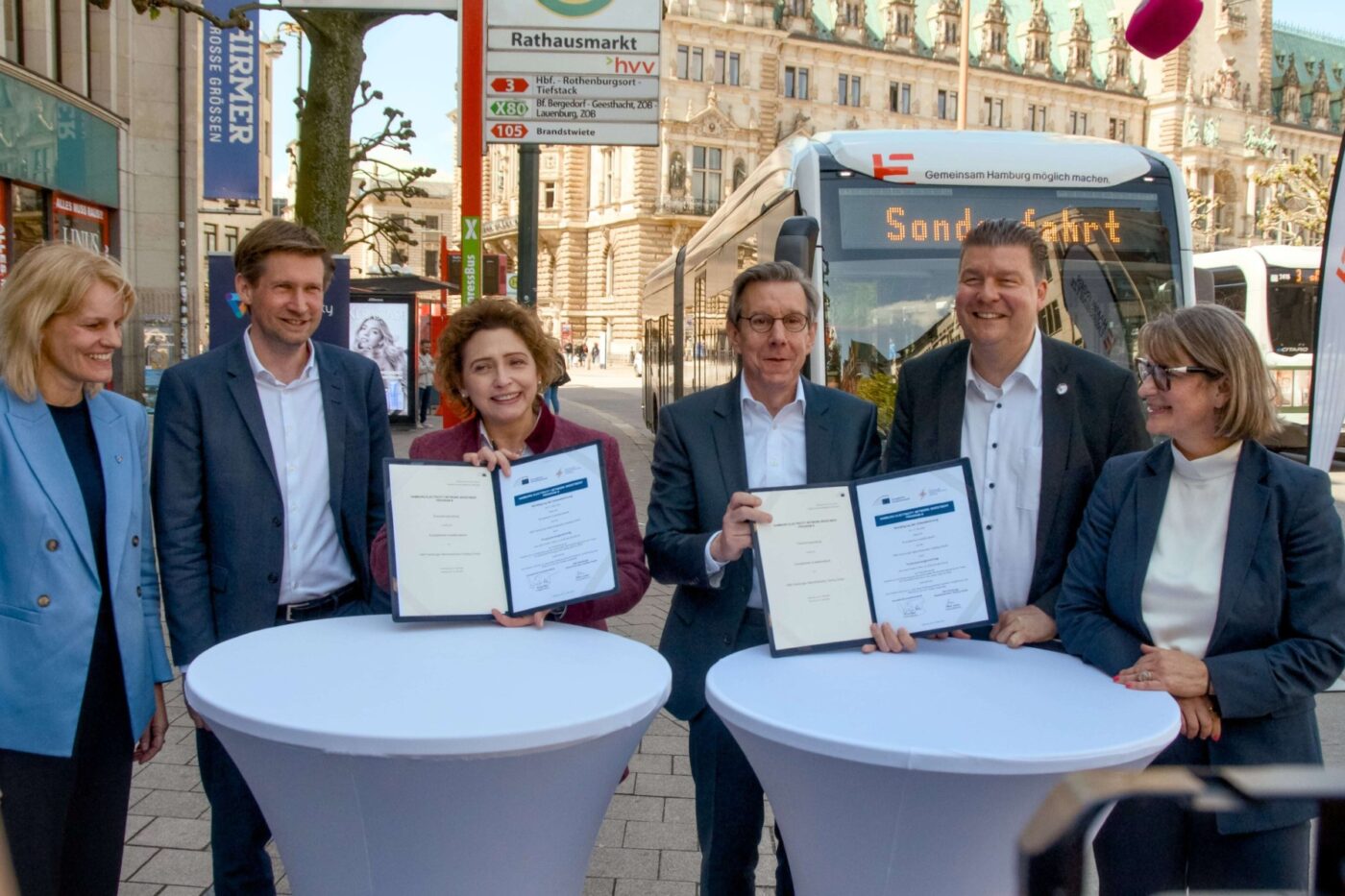
The financing agreements, signed on May 19, form part of Hamburg’s broader efforts to accelerate electrification and modernize infrastructure supporting the city’s energy and transport transition.
Hamburger Energienetze, also known as HNE, plans to use the funding to strengthen and digitalize the city’s power distribution system as electricity demand rises from transport electrification and renewable energy integration.
The utility company plans to invest about 2.9 billion euros in grid modernization by 2029, with the EIB loan covering around 28% of the total investment program.
The planned upgrades include approximately 1,500 kilometers of new and renewed low-, medium- and high-voltage cables, new substations, digital control technologies and 120 new switchgear bays.
Project partners said electricity peak demand in Hamburg is expected to at least double by 2040 as electrification expands across transport, heating and other sectors.
At the same time, Verkehrsbetriebe Hamburg-Holstein, also known as VHH, plans to acquire 188 battery-electric buses and redevelop its Schenefeld depot to support fleet electrification.
The procurement will include 120 standard electric buses, 52 articulated buses and 16 minibuses.
VHH currently operates around 800 vehicles, with roughly one-third of the fleet already electrified. Since 2020, the company has purchased only zero-emission buses for Hamburg operations.
The transport operator plans to invest as much as 337 million euros in electromobility projects in the coming years, with the EIB financing covering roughly 37% of the total program value.
Both HNE and VHH are subsidiaries of HGV, which coordinated the financing process.
Nicola Beer, vice-president of the European Investment Bank, said the projects demonstrate how cities can integrate electricity infrastructure upgrades with cleaner public transport systems.
“Hamburg demonstrates how Europe’s cities can holistically transform their infrastructure: with robust power grids and electrified public transport,” Beer said.
Oliver Jensen, member of the management board at HGV, said the financing confirmed Hamburg’s long-term strategy for coordinated infrastructure planning across mobility and energy sectors.
“The partnership with the European Investment Bank is a strong signal for us: it confirms that Hamburg is on the right track in building a sustainable infrastructure,” Jensen said.
Gabriele Eggers, managing director of Hamburger Energienetze, said investment in grid infrastructure would be essential to maintaining long-term energy security and enabling the city’s climate transition goals.
“The modernisation of Hamburg’s electricity infrastructure is the prerequisite for the success of the energy transition, emission-free heating, and mobility,” Eggers said.
Britta Oehlrich, managing director of vhh.mobility, said expanding the electric bus fleet would help improve urban air quality and reduce noise pollution across the Hamburg metropolitan area.
“Every new battery-electric bus on the streets of the Hamburg metropolitan region means less noise, cleaner air, and a visible sign of a city taking responsibility,” Oehlrich said.
The EIB said the financing aligns with its role as the European Union’s climate bank, supporting infrastructure projects tied to the European Green Deal and regional climate objectives.