Support CleanTechnica’s work through a Substack subscription, on Patreon, or on Stripe. Help us produce all of the high-quality, original content we publish week after week despite the challenges of content-scraping AI, antisocial media, inflation, and other hurdles.
Electric car choice is expanding rapidly thanks to EU clean car targets, but weakening the 2030-35 targets would put affordable models and Europe’s position in the global EV race at risk.
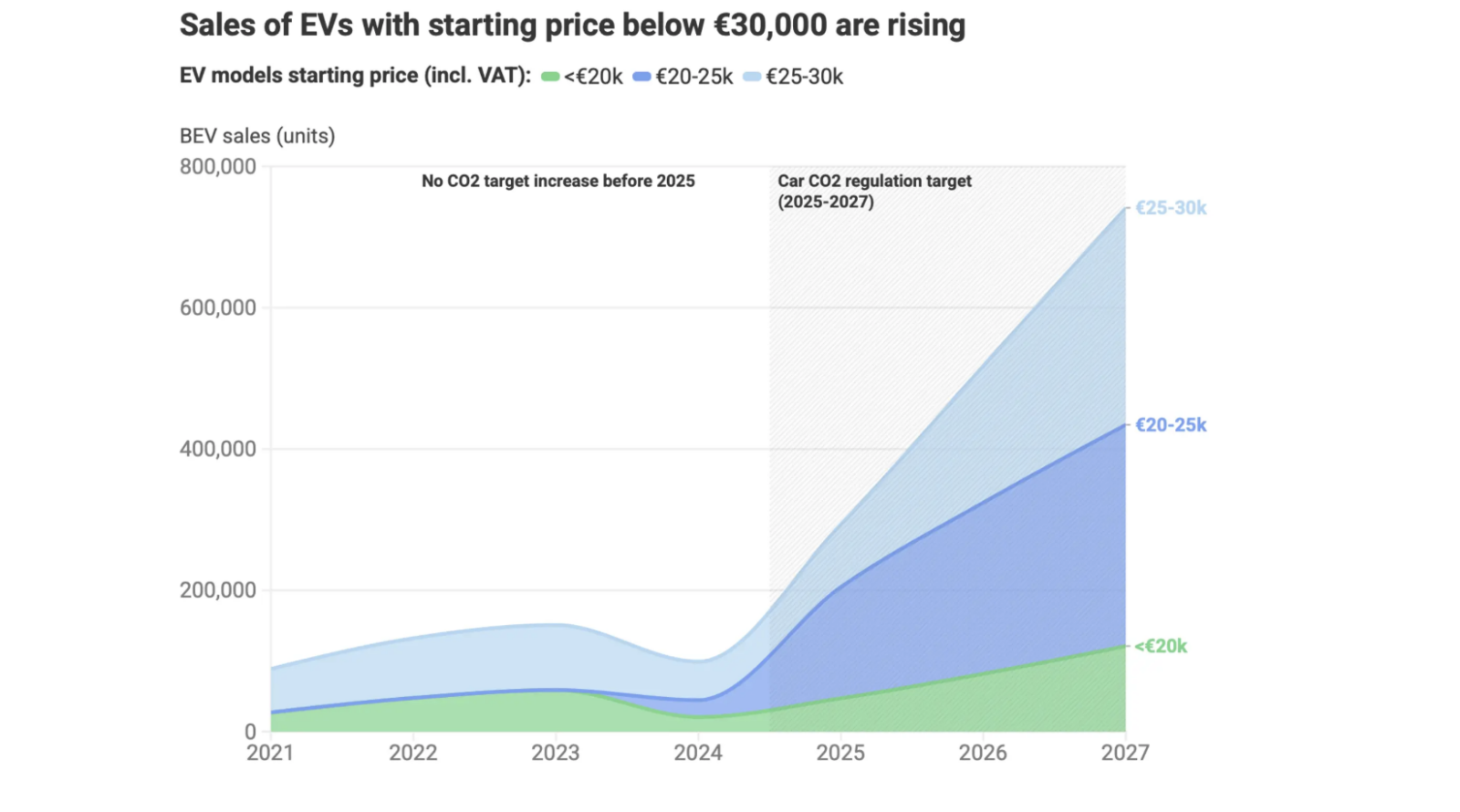
European drivers are gaining access to a rapidly expanding range of more affordable electric cars, protecting drivers from Europe’s costly oil dependence. T&E’s latest EV progress report shows that the EU car CO2 targets are delivering as electric car sales hit record highs in the first half of 2026. Sales of models with a starting price below €25,000 are set to rise sevenfold in 2026 compared to 2024. T&E warns that weakening regulation would halt the ramp-up of small affordable EVs and compromise European carmakers’ ability to compete in the global EV race.
The report shows that the regulation is delivering and bringing affordable models to the market. Almost 40 new electric models were launched in the first half of 2026, taking the number of mass market BEVs to more than 150. About 60 new models are expected to be released by the end of 2026. This is nearly 4 times more than the average 15 new models per year over the period 2021–2025. At the same time, the consumer appetite for electric models starting below €25,000 is finally addressed with a doubling of the number of models available. As a result, sales of electric models starting below €25,000 are set to increase by a factor of 7 in 2026 compared to 2024.
Lucien Mathieu, cars director at T&E, said: “European drivers are finally seeing more of the smaller and more affordable electric cars they have been waiting for. The oil crisis has further fuelled the rush by European consumers for affordable small electric cars. VW’s ID. Polo was quickly sold out, with over 40,000 orders and a 10-month waitlist. European car makers were complaining about the lack of demand for a long time. Now we can clearly see: The issue was not the demand, but what they had to offer. The consumer’s appetite for small affordable electric cars proves the car makers’ claims wrong.”
The report shows that electric cars also offer lower running costs and protection from rapidly increasing fuel prices. The oil price shock has cost EU road users €53 billion. As of mid-September, fueling a 50-litre tank of diesel costs €30 more than before the Iran war. Switching to an electric car at the beginning of the crisis would have saved around €350 in running costs by mid-September.
The combination of a wave in new electric models and high energy prices is leading electric car sales in the EU to reach record levels in 2026. A total of 1.64 million battery-electric vehicles (BEVs) were sold between January and August, 45% more than in the same period last year. BEVs outsold pure petrol cars across a full quarter for the first time ever in the second quarter of 2026, achieving a 22% share. All European carmakers are expected to achieve compliance with 2025–2027 targets which are the driver of the new wave of electric car models. During the period of flat targets between 2021 and 2024, manufacturers had limited incentives to introduce affordable models.
Lucien Mathieu said: “The EU’s car targets are expanding consumer choice, bringing down the cost of going electric and giving European manufacturers a chance to compete in the global EV race. Weakening the 2030 target now would choke off affordable models by nearly three-quarters just as they are reaching the market and lock millions across Europe into debilitating oil dependency.”
News release from T&E. Read the full report.
Sign up for CleanTechnica’s Weekly Substack for Zach and Scott’s in-depth analyses and high level summaries, sign up for our daily newsletter, and follow us on Google News!
Have a tip for CleanTechnica? Want to advertise? Want to suggest a guest for our CleanTech Talk podcast? Contact us here.
Sign up for our daily newsletter for 10–15 new cleantech stories a day. Or sign up for our weekly one on top stories of the week if daily is too frequent.


CleanTechnica uses affiliate links. See our policy here.
CleanTechnica’s Comment Policy