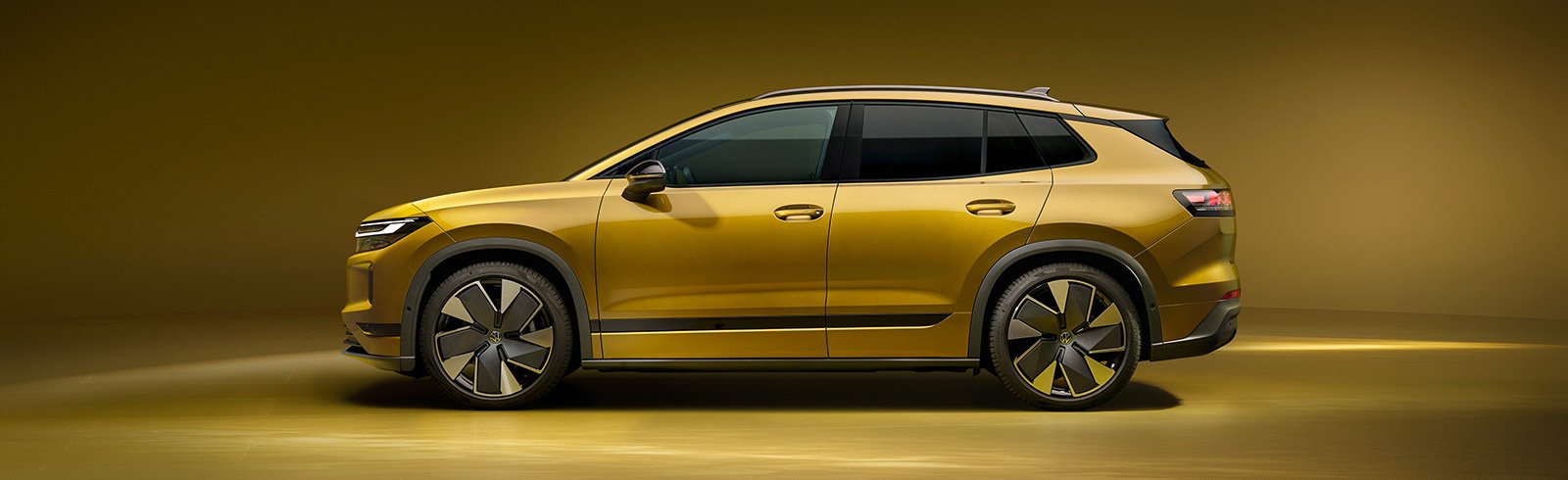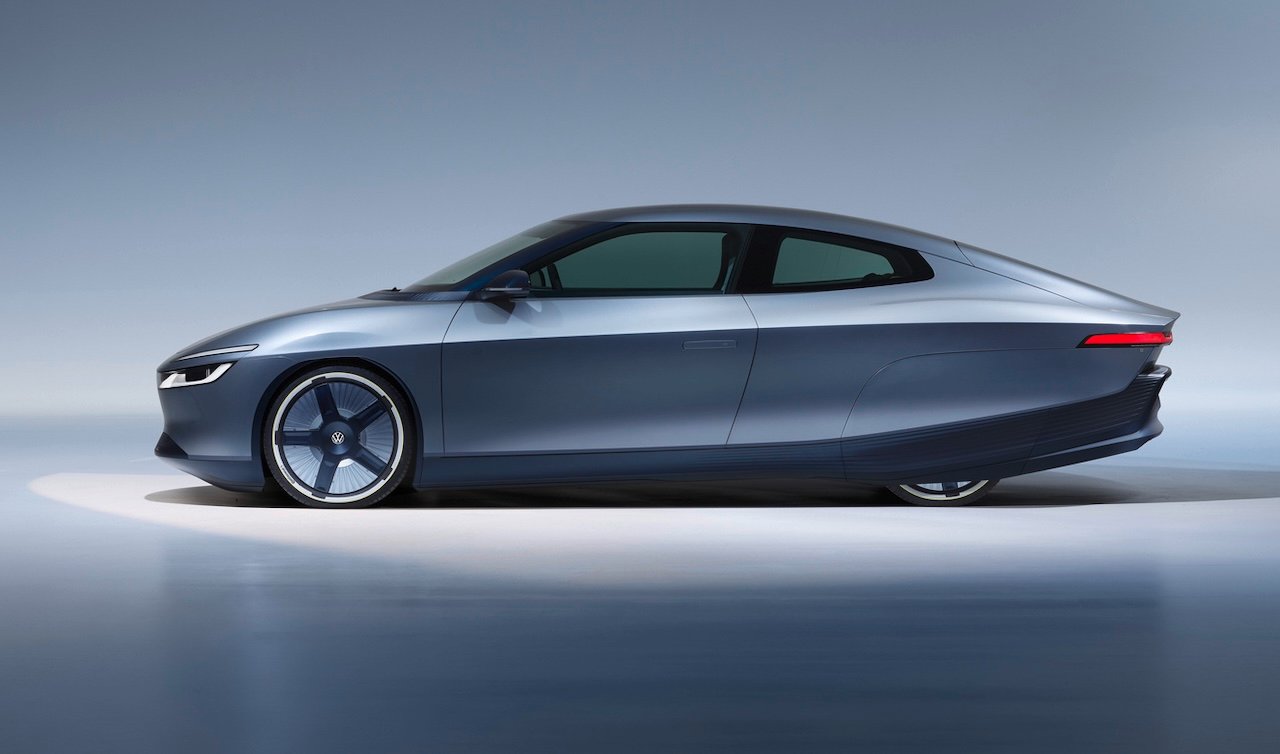
Electric car makers have increasingly turned to bigger batteries to deliver longer driving ranges, but Volkswagen’s remarkable Mission Efficiency prototype demonstrates there’s another way.
The German brand’s ultra-slippery experimental EV has recorded average energy consumption of just 6.89kWh/100km during a 1278km European road trip, despite carrying a relatively modest 54.9kWh usable battery.
For some perspective, plenty of contemporary electric cars consume somewhere in the teens of kWh/100km, while larger and heavier electric SUVs can easily venture beyond 20kWh/100km.
READ MORE: 6.48kWh/100km! Volkswagen Mission Efficiency electric car shows how frugal an EV can be in the real world
READ MORE: Global unveiling: After many teases, the VW ID. Polo has been revealed in full. Is this the best small EV in the world?
READ MORE: Volkswagen turns iconic GTI on its head: Electric ID.3 is first rear-drive GTI and the most powerful ever
Volkswagen’s answer isn’t one breakthrough technology. Instead, it has attacked virtually everything that consumes or wastes energy, from aerodynamics and tyre resistance to braking, weight, climate control and even the stereo.
And much of what sits underneath the Mission Efficiency isn’t experimental.
Its 99kW front-mounted electric motor and battery are derived from the technology developed for the new Volkswagen ID. Polo, while the underlying front-wheel-drive MEB+ architecture will underpin a new generation of relatively affordable Volkswagen EVs.
That makes the Mission Efficiency an intriguing demonstration of how much further an EV might travel if engineers concentrate on reducing its energy requirement rather than simply adding more battery.
Aerodynamics
The Mission Efficiency’s most spectacular number is its drag coefficient of just 0.158.
But drag coefficient is only part of the equation. The VW also has a small frontal area of 2.08 square metres, helped by its unusually low 1392mm overall height.
Its body then progressively narrows towards the rear in the classic aerodynamic teardrop or ‘boat-tail’ shape.
Volkswagen has attacked the airflow in less obvious places too.
The underbody is almost completely enclosed, the rear wheels are covered and three active cooling flaps in the nose remain closed when cooling air isn’t required.
The doors use frameless windows and flush handles, while the rear axle has even been narrowed compared with the ID. Polo to help clean up airflow beneath the car.

The benefits increase dramatically with speed because aerodynamic drag becomes an increasingly important component of a vehicle’s total energy requirement.
Volkswagen claims the Mission Efficiency consumes more than 30 per cent less energy than an ID. Polo once speeds exceed 80km/h.
The most telling comparison comes at German autobahn speeds: VW says driving the Mission Efficiency at about 140km/h requires roughly the same amount of energy as driving an ID. Polo at 100km/h.
Wheels
One of the more fascinating lessons from the project concerns wheels.
Volkswagen estimates they are responsible for between 25 and 30 per cent of a vehicle’s aerodynamic resistance.

So rather than simply fitting conventional aero wheel covers, its engineers worked on controlling airflow both around and through them.
The front wheelarches sit closely around the tyres to reduce turbulence, while the rear wheels are completely enclosed.
VW has also developed patented deflectors mounted on the inside of all four wheels. Their job is to prevent air entering the rims and creating turbulence. Flat external wheel covers complete the package.
Then there are the tyres themselves. Volkswagen worked with Continental to develop special tyres based on its production EcoContact 7.
Their claimed rolling resistance is just 4.9kg per tonne, around 25 per cent below the threshold required to achieve the European Union’s highest Class A tyre rating.
Battery
Mission Efficiency’s battery is particularly interesting because its capacity is nothing extraordinary. It contains 54.9kWh of usable energy – less than many mainstream EVs.
It uses NMC lithium-ion chemistry and cell-to-pack construction, eliminating conventional intermediate battery modules by integrating cells more directly into the pack.

The battery is related to the production unit developed for the ID. Polo, although Volkswagen unlocked an additional 2.9kWh of usable capacity through software for Mission Efficiency.
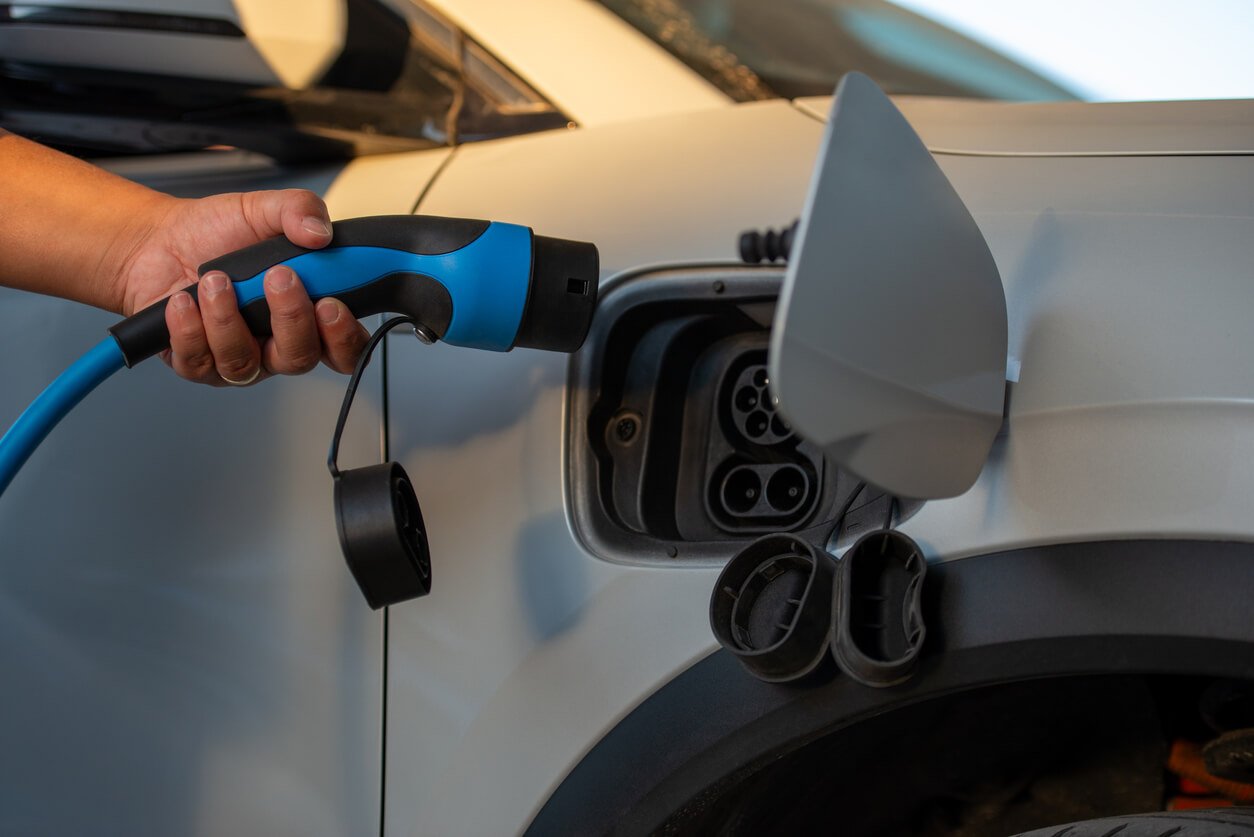
Maximum DC charging power is 105kW and AC charging is rated at 11kW. Those aren’t headline-grabbing charging figures. The point is that Mission Efficiency needs relatively little electricity in the first place.
Its official WLTP energy consumption is just 8.4kWh/100km. During Volkswagen’s documented 1278.36km journey from Wolfsburg in Germany to Vienna in Austria, that fell to 6.89kWh/100km excluding charging losses, or 7.51kWh/100km when those losses were included.
The battery required only one recharge during the journey and VW says the car arrived with another 164km of indicated range remaining.
A separate idealised test at a constant 68km/h, without gradients and with energy consumers such as air-conditioning switched off, produced an even lower 6.48kWh/100km.
Braking
Another potential pointer towards future production EVs is hidden in the braking system.
Mission Efficiency retains conventional hydraulic brakes at the front but uses a new electromechanical brake at the rear, developed jointly by Volkswagen and automotive technology company Aumovio.

Rather than hydraulic pressure activating the rear brakes, electrical actuators do the job. That eliminates rear hydraulic lines and brake fluid while reducing mechanical friction losses.
More importantly for an EV, Volkswagen says the system enables variable brake-force distribution and can improve the interaction between friction braking and regenerative braking.
That potentially allows more of the vehicle’s kinetic energy to be recovered and returned to the battery rather than disappearing as heat through the brakes.
Solar
There is also a 370-watt photovoltaic system integrated into the glass roof and rear section of the Mission Efficiency.
Volkswagen says it can contribute the equivalent of up to 30km of extra range per day, depending heavily on location, weather and season.

But that needs some qualification. The solar cells aren’t intended to transform Mission Efficiency into a solar-powered EV. They feed the vehicle’s electrical system and reduce the amount of energy ancillary systems need to draw from the traction battery.
It’s another example of the philosophy behind the entire car: rather than finding one enormous energy saving, VW has accumulated lots of smaller ones.
Air-conditioning
Climate control can take a significant bite out of an EV’s available energy, particularly when heating the cabin in cold conditions.
Mission Efficiency therefore uses a heat pump to reduce the electrical energy required for heating. The system uses R744 – carbon dioxide – as its refrigerant rather than a conventional synthetic refrigerant.

Volkswagen has applied the same energy-saving philosophy elsewhere inside. There’s no conventional infotainment screen. Instead, occupants bring a smartphone or tablet.
Even conventional permanently installed speakers have been deleted and replaced by a portable Bluetooth speaker.
Weight
The Mission Efficiency combines elements of the ID. Polo structure with a self-supporting aluminium construction, while the doors, bonnet, tailgate, guards and other components employ carbon-fibre and aramid composite materials.
That part of the formula is clearly less representative of an affordable production EV than its motor and battery technology, because extensive lightweight composites remain expensive.

Nevertheless, it illustrates the engineering trade-off inherent in long-range EVs.
Adding battery capacity increases range, but also adds weight. That additional weight then requires more energy to accelerate and move, potentially requiring still more battery capacity.
Mission Efficiency attacks the problem from the opposite direction.
Mirrors
There’s even an interesting lesson in something Volkswagen decided not to fit.
Despite the extreme aerodynamic focus, Mission Efficiency retains conventional exterior mirrors rather than replacing them with cameras.
Volkswagen says wind-tunnel development showed the overall aerodynamic benefit from camera mirrors would have been relatively small.

They would also have added cost and consumed electricity.
It’s a tiny detail, but one that neatly sums up the project: a technology doesn’t automatically make the car more efficient simply because it looks more advanced.
What are the implications for future VW EVs?
Don’t expect an ID. Polo with covered rear wheels, carbon-fibre body panels and a Cd of 0.158. Mission Efficiency is a technology demonstrator rather than a preview of a production model.
But its significance is that the fundamental electrical hardware isn’t exotic.
The 99kW APP290 permanent-magnet motor, battery technology and front-wheel-drive MEB+ architecture have strong links with Volkswagen’s new generation of production EVs.
Other technologies – active cooling flaps, improved underbody aerodynamics, lower-resistance tyres, smarter thermal management, reduced brake drag and better wheel aerodynamics – are far more transferable to everyday cars than Mission Efficiency’s dramatic body shape suggests.
And that’s perhaps the most important lesson from the project. The industry’s EV range battle has often focused on how many kilowatt-hours can be squeezed beneath a vehicle.
Mission Efficiency demonstrates the other side of the equation. Make an electric car require substantially fewer kilowatt-hours to travel each 100km and suddenly a relatively modest battery can take you a very long way.