adminis
More than 300 workers in Nigeria’s airport car-hire sector could face job losses as the Federal Airports Authority of Nigeria (FAAN) moves to enforce an October 2026 deadline for operators to replace vehicles manufactured before 2012.
The proposed enforcement has sparked concern among the 17 licensed airport car-hire companies, which say the cost of replacing their fleets is beyond the reach of many operators at a time when business revenues remain under pressure.
Chairman of the Airport Cab Operators, Prince Amosola, said the operators were struggling to meet the vehicle upgrade requirement and warned that the policy could send hundreds of workers into an already crowded labour market.
Speaking to journalists in Abuja at the weekend, Amosola said operators were not opposed to upgrading their vehicles but needed additional time to raise the funds required for the transition.
According to him, a 2012 vehicle currently costs between N15 million and N18 million, making fleet replacement a major financial burden for operators.
He said each of the 17 companies had more than 50 vehicles, but that FAAN was simultaneously requiring them to reduce their fleets to 30 vehicles per company while enforcing the vehicle-age requirement.
“We have nothing less than 50 cars for each company times 17 companies. And finally they are telling us that we should bring it down to 30 cars from each company,” he said.
Amosola said the operators had appealed to FAAN and other relevant authorities to extend the deadline, arguing that the replacement process should be implemented gradually to prevent businesses from collapsing and workers from losing their means of livelihood.
The operators are also exploring the possibility of switching to electric vehicles as part of the transition to cleaner transportation.
Amosola said discussions had been held with the Minister of Aviation and Aerospace Development on the possibility of adopting electric vehicles, but noted that the acquisition cost remained a major obstacle.
“Even if you go to EV, how much is one EV? N38 million,” he said.
He maintained that operators required more time to mobilise funds and put the necessary infrastructure in place before making a wholesale transition to newer vehicles.
The operators also argued that the economics of airport taxi operations made it difficult for them to absorb the cost of replacing their fleets.
Ekwuemeaku Alex of Edom Comfort Auto Lease Ltd said earnings from individual trips were often modest compared with the cost of fuel, maintenance and other operational expenses.
He said some operators could earn between N20,000 and N25,000 from a trip, but that drivers could be left with only about N10,000 after expenses.
Alex also pointed out that airport cab operators faced different operating conditions from e-hailing drivers, who may be able to secure another passenger after completing a trip.
The operators said the distinction was important in assessing their profitability and ability to finance the replacement of their vehicles.
Alhaji Sulieman Maman of Leviticus Auto Car Service Ltd said the operators accepted the need to upgrade their vehicles but objected to what they described as the abrupt implementation of the requirement.
Similarly, Gbenga Kolawole of Giant Motors Ltd rejected allegations that airport cab operators were exploiting passengers through excessive fares, arguing that their charges reflected the costs associated with operating within the airport environment.
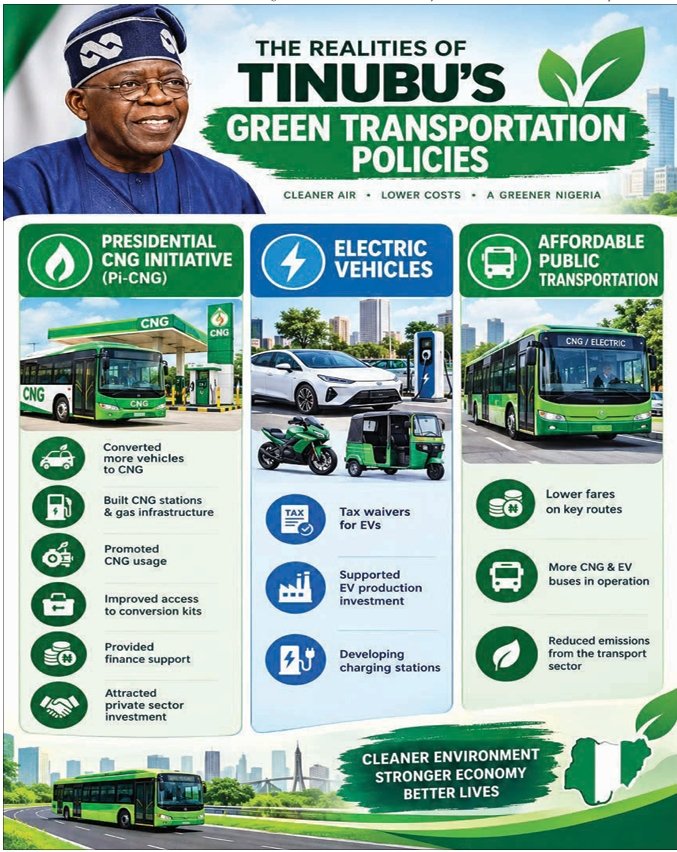
The operators have also raised concerns about the potential impact of the policy on vehicles converted under the Presidential Compressed Natural Gas (PCNG) initiative.
The Secretary-General of the Coalition of 17 Car-Hire Companies, Emmanuel Ikeh Sunday, said a large proportion of the operators’ vehicles had been converted to CNG under the government-backed programme introduced following the removal of the petrol subsidy.
According to him, about 80 per cent of the operators’ vehicles had undergone CNG conversion, while more than 99 per cent of the converted vehicles did not meet the proposed 2012-and-above manufacturing requirement.
“If this policy is implemented, it is completely against the policy of the Renewed Hope Agenda of President Bola Ahmed Tinubu,” Sunday said.
The operators argued that enforcing the vehicle-age restriction on cars that had already undergone CNG conversion could undermine the objective of the government’s clean-energy transition programme and impose additional financial pressure on businesses that had invested in the conversion exercise.
Beyond the vehicle requirement, the airport cab operators also complained about increases in charges associated with their operations.
They specifically cited an increase in the operational tariff from N500 to N1,500, saying the additional costs were further squeezing businesses already struggling with rising expenses.
FAAN, however, has defended the tariff adjustment, explaining that the increase followed more than eight years without a review and was necessary to reflect inflation and the rising cost of operations.
The airport authority has also maintained that operators have had sufficient notice of the vehicle replacement requirement.
According to FAAN, the policy was first communicated to operators in July 2024, after which several extensions were granted to allow them to comply.
The authority said the deadline was subsequently extended to January 2026 and then June 2026 before the October 2026 date was set as the final deadline.
The disagreement therefore centres largely on the pace of implementation, with the operators seeking further time and FAAN insisting that the replacement requirement has been communicated over an extended period.
For the operators, the immediate concern is the potential impact of the deadline on their businesses, drivers and other workers whose livelihoods depend on airport car-hire services.
They are urging FAAN and the relevant government authorities to consider a phased implementation that would allow operators to replace their vehicles progressively rather than face a sudden reduction in fleet capacity or withdrawal of non-compliant vehicles.
With the October deadline approaching, the outcome of discussions between the airport authority and the operators could determine whether the sector undergoes a gradual fleet transition or faces significant disruption to airport transport services.