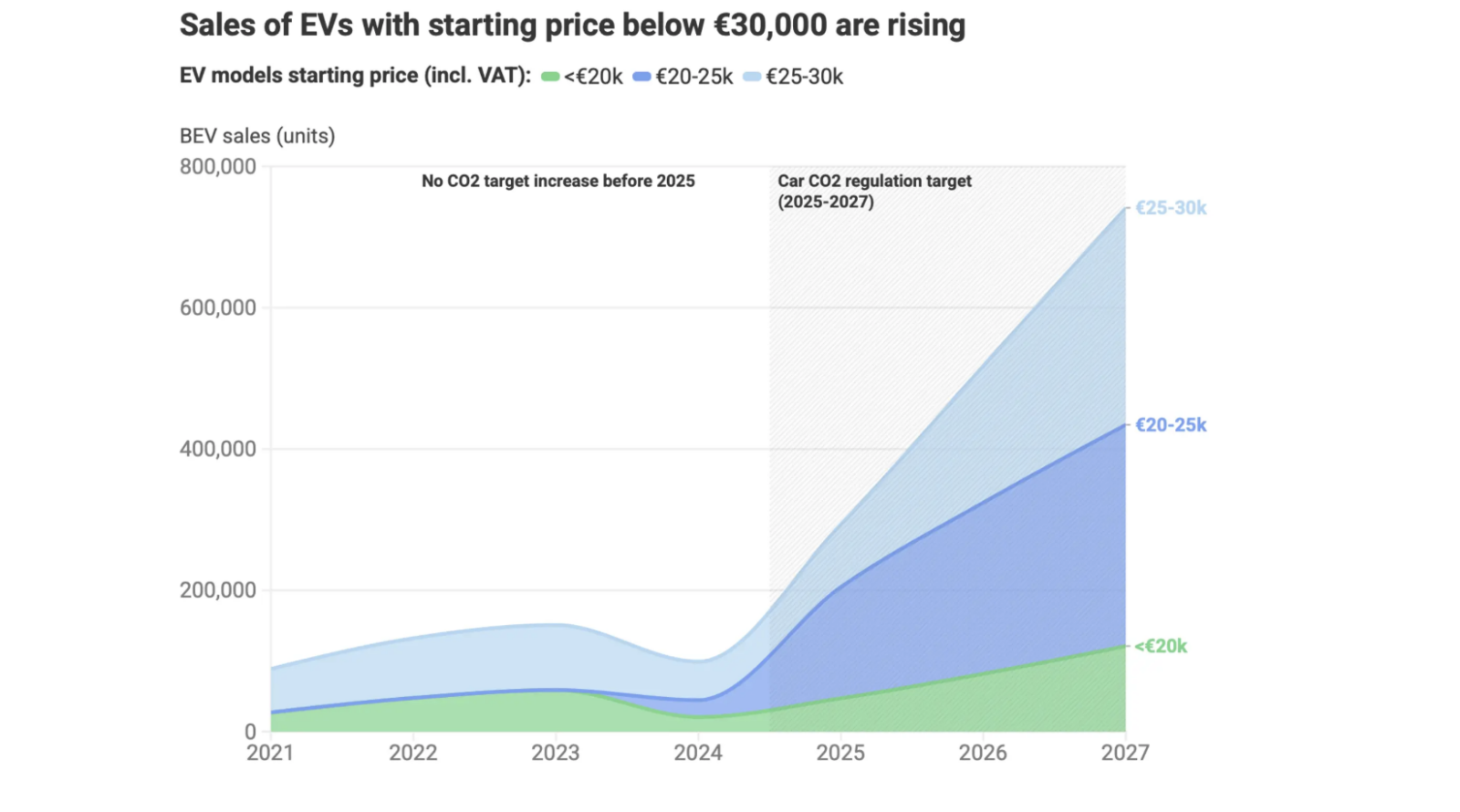
Public charging stations once operated in a niche market. They were expensive to set up and generated low revenues from a small customer base. Nowadays, they are part of flourishing EV networks, thanks to the government’s drive towards net zero. Electric vehicle charging stations present an attractive, profitable, and sustainable business opportunity, benefiting from the sizeable shift towards EV ownership and the ability to generate revenue from nearby businesses.
EV Charging Station Business Model Explained
EV charging stations operate in a similar way to petrol stations. After the initial investment, revenue is created by charging drivers to use the electricity supply. There are different models of charging for electricity.
Pay Per Use
Users pay a fee for each kWh of electricity used. The fee is the cost of the electricity plus a profit margin.
Subscription
Drivers pay a regular subscription fee that allows them access to a specific network of charging facilities. The fee usually includes attractive customer loyalty perks as an incentive to join. This creates a stable revenue stream.
Tiered Pricing
This is a more variable option, taking advantage of price fluctuations based on the type of charger, time of day, and membership status. Although some customers may find this too complex, the availability of cheap energy at different times during the day can be a huge influence on many drivers.
How profitable an EV station is depends on several factors, including location, type of charger, and pricing strategy. All of these factors affect how often a charging station is used. Studies suggest a utilisation rate of around 15% is enough for an EV charging station to break even. Location is vital because the volume of traffic, and specifically EV traffic, gives an EV charge station access to an abundant potential market. Offering DC fast chargers can also boost traffic, although there is an initial investment cost. AC chargers offer a steadier return with reduced outlay.
An EV charging station can also generate revenue through other sources, such as advertising on charging point casings and spending from nearby homes and businesses.
Location, Location, Location

Location is everything when it comes to investing in an EV charging stations. Whether you’re next to a supermarket, retail park, business district or the only station in a 50-mile radius, being the ‘go-to’ for as many drivers as possible is key. An EV station should be convenient and accessible to maximise usability. Research is essential to determine the level of EV owners in an area, and typical charging needs. The type of charger should match the location; fast DC chargers are ideal for short-term parking, whereas AC chargers are more appealing in longer stay areas.
Technology Matters

For many of us, there aren’t enough hours in the day and dashing between home, work, leisure, and other commitments is pretty much the ‘norm’. So it’s no surprise that ultra-fast public chargers are becoming increasingly popular.
The trend for fast charging seems set to continue as the number of DC fast chargers increases and time-restricted drivers begin to rely on their ultra-fast charge speed. So if you’re in the business of EV charging, it’s wise to maintain investment in the latest technology to keep your customers happy.
Dynamic Pricing Initiative

Think about your home electricity night rate, or ‘Economy 7’ as some power providers call it. For decades, households and businesses have been encouraged to use electricity during quieter times at night to relieve pressure on the grid. The same is happening in the EV charging market through the rollout of a new, ‘green’ pricing strategy.
A recent study by The Centre for Net Zero has shown that public charging at EV stations can be shifted towards ‘greener’ times of the day by offering price discounts and incentives. The trial has revealed that dynamic pricing incentives significantly increase public charging during periods when renewable energy is abundant.
Historically, EV charging at public stations has been more expensive than petrol, but by passing on cheaper wholesale electricity prices, EV charging can actually be cheaper. Allowing motorists to benefit from grid savings in this way reduces vehicle running costs massively.
This new research exposes the myth that drivers charge their vehicles based on location and habit. In fact, price is the main factor influencing consumer behaviour.