adminis
0
ABUJA – Nigeria’s drive to deepen domestic gas utilisation is set to receive a major boost as the Nigerian Midstream and Downstream Petroleum Regulatory Authority (NMDPRA) unveiled plans to expand gas distribution networks along the Ajaokuta-Kaduna-Kano (AKK) Pipeline Corridor to unlock new industrial clusters and extend gas access across the country.
The agency said the next phase of Gas Distribution Licences (GDLs) will focus on areas connected to the AKK pipeline, a move expected to stimulate industrial growth, attract investments and improve energy access, particularly in Northern Nigeria.
Speaking at the Association of Local Distributors of Gas (ALDG) Business Forum in Abuja, the Authority Chief Executive of NMDPRA, Mr. Rabiu Umar, represented by the Acting Executive Director, Distribution Systems, Storage and Retailing Infrastructure, Engr. Ayorinde Cardoso, stressed that Nigeria’s challenge is no longer the availability of gas but ensuring that the resource reaches end-users efficiently.
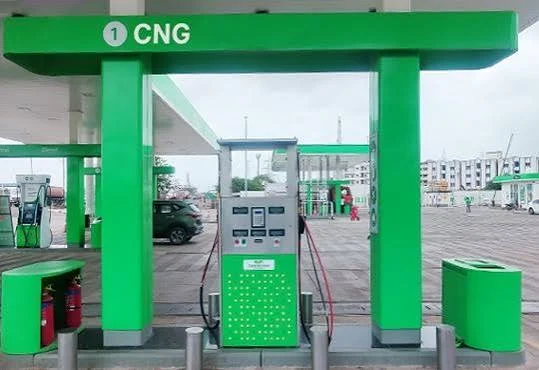
According to him, despite Nigeria’s proven gas reserves of more than 209 trillion cubic feet, significant gaps remain in the infrastructure required to deliver gas to industries, power generation plants, businesses, compressed natural gas (CNG) stations and households.
Umar said the Federal Government has set ambitious targets to increase gas supply to 10 billion cubic feet per day by 2027 and 12 billion cubic feet per day by 2030.
He noted that meeting these goals would depend not only on major transmission projects such as the AKK and OB3 pipelines but also on investments in distribution systems capable of connecting consumers to supply sources.
He highlighted the achievements recorded under the Gas Distribution Licensing framework established under the Petroleum Industry Act (PIA) 2021, revealing that ten distribution licences were issued in 2025.
The licensed networks, he said, currently serve about 430 customers through more than 535 kilometres of gas pipelines, with a combined capacity of 442 million standard cubic feet per day.
The NMDPRA chief described gas distribution as a critical component of Nigeria’s energy transition and economic diversification strategy, emphasizing that infrastructure development must keep pace with efforts to increase production.
While acknowledging the growing contribution of virtual gas transportation through CNG and LNG trucking, Umar maintained that piped natural gas remains the most sustainable and cost-effective model for achieving large-scale domestic gas penetration.