adminis
By Adewale Sanyaolu
The Nigerian Midstream Downstream Petroleum Regulatory Authority (NMDPRA) has disclosed that less than 3,000 cooking gas refilling plants are serving over 200 million Nigerians.
The disclosure may not be unconnected with current cooking gas scarcity being experienced in some parts of the country as this affects gas penetration.
Authority Chief Executive (ACE), NMDPRA, Farouk Ahmed, stated this at the National Association of Energy Correspondents (NAEC) Energy Conference 2025 held in Lagos, yesterday with the theme; “Nigeria’s Energy Future:Exploring Opportunities and Addressing Risks for Sustainable Growth.”
Represented by the Head of Public Affairs, George Ene Ita, Ahmed said as a country, Nigeria is in urgent need of a diversified investment approach in our energy mix to further drive an expansion in the economy beyond the traditional focus on fossils.
He added that as the country invests in gas infrastructure, we must also ensure we diversify our energy sources and reduce dependency on any single fuel.
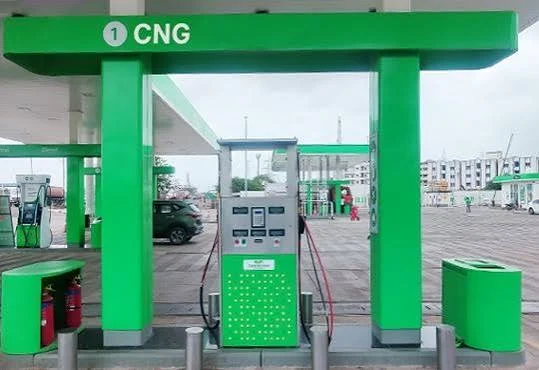
“It is important to note that the number of LPG refiling plants in the country is less than 3000 while the CNG compression station is less than 50 for a country of over 200 million citizens,” he said.
He noted that constructive approach to developing our other energy sources would have the potential to enable sustained growth in our economy, create jobs and expand the country’s revenue base and offer a diversified basket of multiple streams of revenues for the government to enable multilateral growth to scale national development.
Recently, he stated that the NMDPRA in collaboration with S & P Global, held an inaugural international conference on the West African Refined Fuel Market where critical stakeholders from international petroleum products refiners, traders, suppliers, regulators and investors in piping and transportation infrastructures all came together to examine the potential of establishing a reference market for refined petroleum products and price benchmarking in the subregion with Nigeria, specifically Lagos, as the hub.
“This conference, with the resultant outcomes, succeeded in identifying critical roadmaps in the energy downstream, that could lead towards potential investments and expansion into the petroleum liquids and gas markets in the subregion and the larger continent of Africa.
The conference further gave insight into previously unexplored frontiers, outlining opportunities in infrastructure development, transportation, market forecasting, and the enormous potential in a public-private partnership in the development of a national products strategic stock for the country,”.
Farouk maintained that this is a moment of critical transition—and the choices we make now will define whether Nigeria emerges as an energy leader or remains mired in supply swings and missed potential.
He stressed that Nigeria’s proven natural gas reserves have reached 210.54 trillion cubic feet (TCF) as of January 2025—among the highest in Africa and giving us a “gas life index” of over 90 years when matched with current utilisation while crude reserves, including condensates, stand at roughly 37.28 billion barrels.
On production, he said in the first half of 2025, Nigeria produced about 1.37 TCF of gas, pointing to an upward momentum in gas activity.
Encouragingly, he stated that gas flaring, long a blight on both environmental performance and resource loss, has shown a downward trajectory; in July 2025, flaring fell to about 7.16 per cent despite increasing production.
“These numbers are not just technical; they are the raw evidence of Nigeria’s energy transformation.
Overall, the oil and gas sector plays a crucial role in the nation’s economic growth, and its sustained development is critical for the country’s energy security and economic prosperity,”.
In all of these, he lamented that the challenges remain stark even though electricity is improving but uneven.
In 2025, he disclosed that reports suggest around 150 million Nigerians now have “adequate” electricity access, while 80 million still lack reliable supply.
Other setbacks, according to him, are grid constraints, transmission losses, fuel (gas) supply gaps, and distribution inefficiencies that continue to hobble the system.
On the other hand, partial dependence on imported petroleum products still exposes the country to the dynamics of the global market.
“Global regulatory shifts, especially around methane emissions and import intensity rules, are converging to raise the bar for compliance.
Overall, the oil and gas sector plays a crucial role in the nation’s economic growth, and its sustained development is critical for the country’s energy security and economic prosperity,”.
On opportunities, he maintained that Nigeria’s vast gas resources, as outlined above, exists huge potential for investment opportunities in a variety of areas, be it in the upstream, midstream or downstream sector of the gas value chain.
“We are at the moment implementing our national Energy Transition Plan (ETP) which was launched in 2022. This plan was aimed at steering the country towards the adoption of gas as a cleaner, cheaper and more eco-friendly energy source, which will promote energy access, reliability, and adherence to environmentally sustainable goals and initiatives, while promoting economic growth.
In the last few years, strong emphasis has been placed on gas as a major energy source, and consequently it has been adopted as a transition fuel steering the nation away from carbon-dominated energy sources to less carbon intensive fuels like LPG, CNG, LNG, ethanol, biodiesel etc., before navigating us into the age of renewables in the near future. This then calls for a broader scoped, more strategic forward look to vast opportunities available in other energy sources such as solar, wind and hydro energy, which can be tapped and developed in this truly blessed country of ours,”.