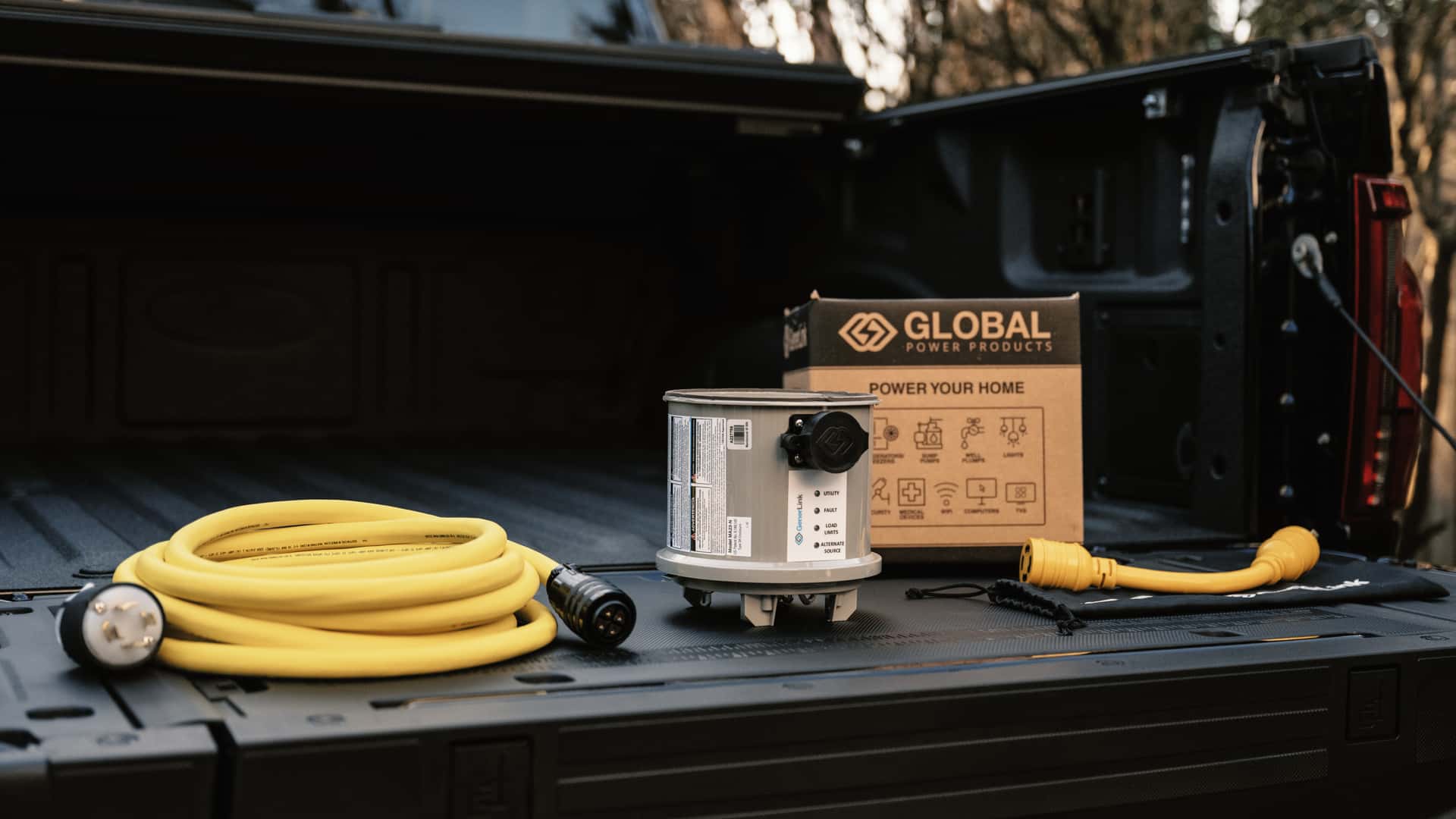
- Ford announced a new product for F-150 Hybrid and Lightning owners that makes backing up one’s home easier.
- The automaker partnered with Global Power Products so that Ford trucks can deliver power through its Generlink transfer switch.
- Using that, Ford truck owners can deploy energy from their Pro Power Onboard systems into their home’s main electrical panel.
One of the biggest advantages of electric vehicles is being able to power things outside the vehicle. Sure, this can come in handy at a tailgate or campsite, but power outages are where these systems really shine.
On Wednesday, Ford announced a product that it says makes that a little cheaper and easier. The company partnered with Global Power Products to make the company’s GenerLink transfer switch compatible with F-150 Lightning EVs and F-150 Hybrid trucks. Both have a feature called Pro Power Onboard that can deliver power through a 240-volt outlet in the bed.
Photo by: Ford
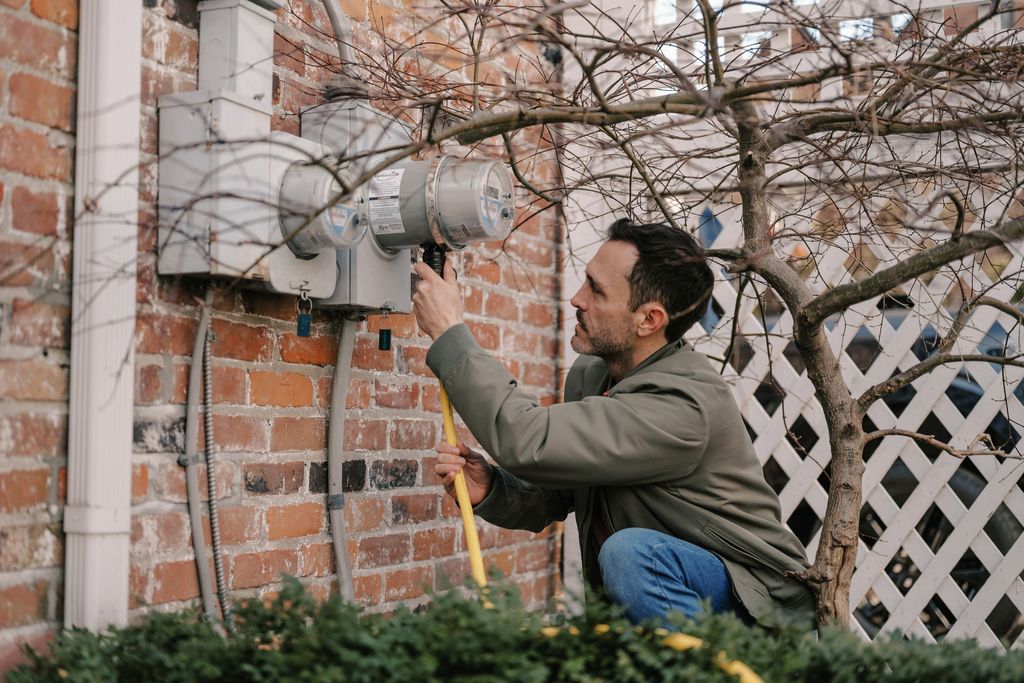
You can plug appliances and laptops directly into the bed, or run extension cords into your home in a pinch. But the new system links that 240V outlet straight to a home’s main electrical panel, much like any other generator. The system can be installed at a home’s meter or next to it. It works with F-150 Lightnings that have the Pro Power Onboard system rated at 9.6 kW, and with F-150 PowerBoost Hybrids with 7.2 kW of Pro Power Onboard capability.
Posts on owners forums show that Ford F-150 Lightning owners have been rigging up these kinds of setups for years; the technology itself isn’t new. But now there’s a Ford-approved version, which centers around a 12-inch cord called the Ford Vehicle Connector. A company spokesperson said the company doesn’t endorse aftermarket connectors, but that it has tested this one thoroughly. And Ford says plugging straight into a generator-style outlet can trip its trucks’ built in safety sensors.
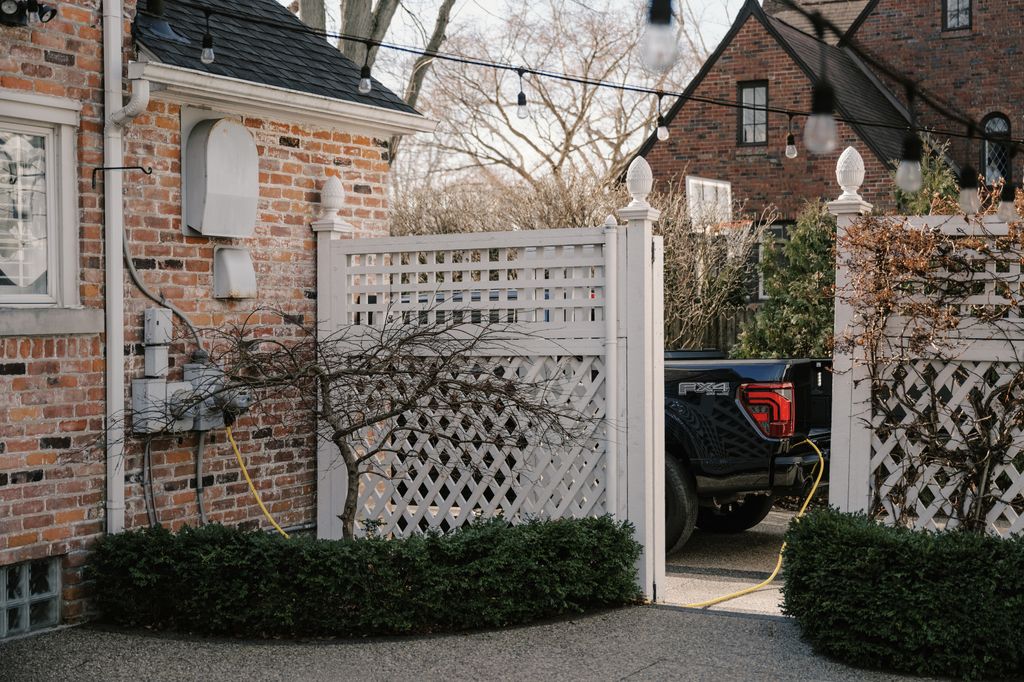
Photo by: Ford
The hardware itself will run you $1,100, with the cost for installation varying depending on where it’s mounted, Ford says. Installing the setup at the meter—which not every utility allows—should cost $250-$450. Next-to-meter installs, Ford says, cost $1,000 to $1,500. That option in particular isn’t exactly cheap, but if you live somewhere where power outages are common, it could be worth it. And the other way to use a Lightning as a backup battery bank—installing a system that automatically pumps power into your home through a Ford wall charger—can be far costlier.
Contact the author: Tim.Levin@InsideEVs.com