adminis
Follow THISDAYLIVE on GoogleAdd us as a preferred source to see more of our stories in Google
• Recommends checks every three to six months
Emmanuel Addeh in Abuja
Rolling Energy, a key operator in Nigeria’s Compressed Natural Gas (CNG) space yesterday cautioned motorists against patronising unqualified technicians and using improvised cylinders for CNG vehicle conversion, warning that improper installations and unauthorised modifications could expose users to safety risks.
The company’s Technical Process Manager, Julius Yaama, gave the warning during a media excursion to its CNG conversion centre and refuelling station, organised by the Presidential Initiative on Compressed Natural Gas and Electric Vehicles (Pi-CNG and EV) to commemorate the United Nations World Sustainable Transport Day.
Yaama said vehicles must undergo thorough inspection before conversion, adding that only certified components should be installed by trained technicians.
He explained that conversion does not eliminate existing mechanical faults, such as faulty spark plugs and ignition coils, because the CNG system operates alongside the vehicle’s original components.
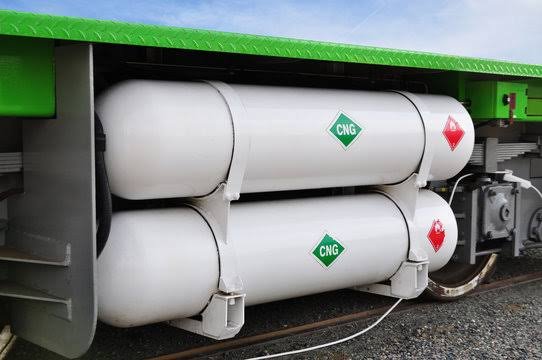
Yaama also warned against modifying CNG installations with improvised air-conditioning gas cylinders to increase storage capacity. He stressed that such practices were responsible for recently reported explosions.
He said motorists must avoid unauthorised alterations and ensure that installation and maintenance are carried out by qualified personnel.
On cylinder lifespan, he said CNG cylinders were designed to last 15 years from their production date and should not be used after expiration. He added that a cylinder could be transferred to another vehicle through an accredited workshop, provided it remained within its approved lifespan and met the required safety standards.
He further advised motorists to ensure that their vehicles were structurally suitable for conversion, explaining that rusted boots could compromise the mounting of cylinders because of their weight.
Yaama said the suspension system must also be assessed and upgraded where necessary, while vehicles with direct-injection engines and some turbocharged models require specialised conversion kits rather than standard sequential kits.
He stressed that proper calibration was necessary to balance petrol and CNG consumption and ensure smooth engine performance.
On maintenance, he recommended routine checks every three to six months, noting that spark plugs might require replacement within two to three months, depending on usage. Other maintenance procedures, he said, should include checking and cleaning sensors such as the manifold absolute pressure sensor.
Yaama disclosed that Rolling Energy carried out an average of three to four vehicle conversions daily, with the cylinder capacity and installation requirements determined by the vehicle and the customer’s needs.
Speaking on the rationale for the media excursion, the Head of Brand and Communications of Pi-CNG and EV, Onyekachi Eke, said the initiative was aimed at equipping journalists with practical knowledge of the conversion process so they could provide Nigerians with accurate information.
Eke explained that Rolling Energy was selected because it offered journalists an opportunity to observe an operational conversion centre, interact with technicians and ask questions about the technology, particularly its safety.
She described the excursion as the first in a series of engagements planned to commemorate the United Nations World Sustainable Transport Day, adding that subsequent editions would be organised in batches to give more journalists the opportunity to witness the process.
Eke urged motorists to patronise accredited conversion centres rather than roadside mechanics, noting that the initiative had published lists of approved centres and refuelling stations across the country on its website.
While describing CNG as a cheaper and cleaner alternative fuel, she said adherence to approved conversion procedures was essential to ensuring users’ safety.
“CNG is safe. It is cheaper. It is cleaner. But please go to an accredited centre to convert your vehicle,” Eke added.
She also disclosed that the initiative planned to sustain the media engagement, possibly on a quarterly basis in Abuja, while a regional capacity-building workshop for energy correspondents was being planned for the coming year.
An estate surveyor and CNG user, Adeolu Bamidele, who spoke during the excursion, said switching to the alternative fuel had reduced his vehicle running costs, although he observed some differences in engine performance compared with petrol.
Bamidele said he had not encountered significant technical problems with his CNG system, but identified long queues at refuelling stations as a challenge for users.