adminis
0
Expected gas supply before year-end raises prospects for cheaper energy, industrial investment and business expansion, but distribution infrastructure remains critical, writes NICHOLAS UWERUNONYE.
The planned delivery of natural gas to Abuja through the Ajaokuta-Kaduna-Kano (AKK) pipeline could open a new investment frontier for the Federal Capital Territory (FCT), offering opportunities to reduce business energy costs, stimulate industrial development and strengthen the city’s position as a commercial hub.
For a city whose economic activities are largely driven by government administration, real estate, construction, hospitality and commerce, access to pipeline gas presents an opportunity to expand its productive economy and attract businesses requiring substantial and dependable energy supply.
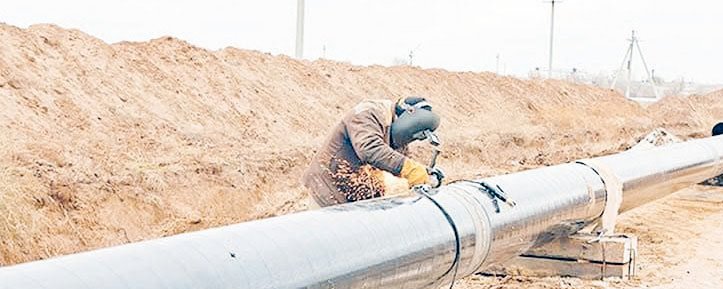
The Group Chief Executive Officer of the Nigerian National Petroleum Company Limited (NNPC), Bashir Ojulari, recently disclosed that the company was targeting gas delivery to Abuja before the end of 2026, following the completion of the mainline section of the 614-kilometre pipeline.
Ojulari said the project had reached 95 per cent completion, with the outstanding work involving some stations and connections to end-users. Kaduna and Kano are expected to receive supplies in 2027.
The development is significant for Abuja because energy availability remains a major consideration for businesses deciding where to locate investments, expand production or establish new operations.
Hotels, shopping centres, hospitals, manufacturing companies, cold-storage facilities and other commercial establishments depend heavily on electricity, with many relying on diesel and petrol generators to supplement public power supply.
A dependable pipeline gas network could create opportunities for gas-fired power generation and embedded electricity solutions for industrial and commercial clusters. If properly developed, these alternatives could help businesses manage energy costs, improve operational efficiency and reduce dependence on conventional generators.
However, the arrival of gas does not automatically translate into cheaper electricity. The availability of generating capacity, distribution infrastructure, pricing arrangements and the reliability of power delivery will determine the actual benefits to businesses.
Beyond electricity, the pipeline could improve Abuja’s attractiveness as a destination for manufacturing and processing investments.
Areas such as Idu, Kuje, Lugbe and Karsana, alongside other emerging development corridors, offer opportunities for industrial and commercial expansion. With appropriate infrastructure, some of these locations could accommodate businesses requiring natural gas for production, heating and other industrial processes.
Food processing, pharmaceuticals, industrial fabrication and other energy-intensive enterprises could benefit from improved access to gas, particularly where supply arrangements are commercially competitive.
For investors, the availability of a relatively dependable energy source is an important factor in determining production costs, location and long-term profitability. Abuja could therefore use the pipeline’s arrival to promote industrial clusters supported by shared energy infrastructure, logistics and other essential services.
The city’s growing digital economy also presents another investment opportunity. Data centres, telecommunications facilities and other technology infrastructure require substantial and uninterrupted electricity. Improved gas availability could strengthen the business case for locating such facilities in the FCT, potentially attracting technology investments and creating demand for engineering, cooling, maintenance and related services.
The hospitality and healthcare sectors could equally benefit from access to commercially viable gas supplies, given their substantial energy requirements.
Another emerging opportunity is the expansion of Compressed Natural Gas (CNG) infrastructure. Ojulari indicated that the AKK project would improve gas availability across northern Nigeria as additional connections are developed.
For Abuja, this could stimulate investments in CNG refuelling stations, vehicle conversion facilities, gas transportation and distribution services. Logistics companies, commercial transport operators and organisations managing large vehicle fleets could become important customers.
Yet, the critical challenge is distribution.
The completion of the main transmission pipeline does not mean that businesses across Abuja will automatically have access to natural gas. Additional infrastructure will be required to transport gas from the mainline to industrial estates, commercial districts and other potential consumers.
This creates an investment opportunity for private gas distributors and infrastructure developers, but also places responsibility on the FCT Administration and relevant energy institutions to facilitate the necessary connections.
The FCT must identify potential demand centres, encourage investment in distribution networks and provide clarity on gas availability, connection costs, pricing and applicable regulations.
The $1.5 billion financing secured by NNPC, based on projected gas transportation volumes, also highlights the commercial potential of the infrastructure. It demonstrates the possibility of attracting investment around energy assets with identifiable demand and revenue prospects.
For Abuja, the challenge is to translate that potential into productive economic activities rather than simply becoming a destination along a national gas transportation route.
The FCT’s investment promotion strategy and industrial development plans will therefore need to reflect the opportunities presented by the pipeline.
Ultimately, the economic value of AKK gas to Abuja will not be measured merely by its arrival before the end of 2026, but by the investments it attracts, businesses it supports, jobs it creates and the extent to which it helps diversify the capital’s economy beyond government, property development and commerce.