adminis
BY LEKAN OLAYIWOLA
Nigeria is perfecting the art of cushioning economic fallouts over the structural shocks that cause them. The split between the Nigeria Labour Congress and the Trade Union Congress over a six-month, N70,000 monthly transport allowance exposes this systemic flaw. The NLC secured immediate relief for workers facing urgent pressures, while the TUC demanded lasting earnings improvements to prevent future shortfalls.
The policy trap this conflict exposes is that emergency allowances expire, but inflated living costs do not. By relying on temporary wage awards rather than permanent purchasing power, policymakers treat welfare as recurring fires to extinguish. Until state interventions fix underlying market conditions, temporary compensation remains an expensive stopgap for true economic security.
The attraction of temporary relief
A permanent salary increase expands recurrent expenditure and raises the baseline for future wage negotiations. A six-month allowance provides immediate support, answers industrial pressure and expires without a permanent obligation. But fiscal flexibility is not household security. Workers organise their lives around the income they have, not its budgetary classification. When an allowance expires while commuting costs remain high, the adjustment returns to the household.
The ₦35,000 provisional wage award after the 2023 petrol subsidy removal shows the difficulty. It was meant to cushion workers while wage arrangements were negotiated. Implementation met payment disputes, and the later ₦70,000 minimum wage did not end the pressures workers faced.
The transport allowance raises the same question: whether temporary compensation helps households through adjustment, or just manages its consequences without changing them? Temporary relief is not wrong in itself; governments cannot permanently absorb every rise in household costs. The problem arises when an intervention’s expiry is treated as the end of policy responsibility while the hardship persists.
When cheaper energy does not mean cheaper transport
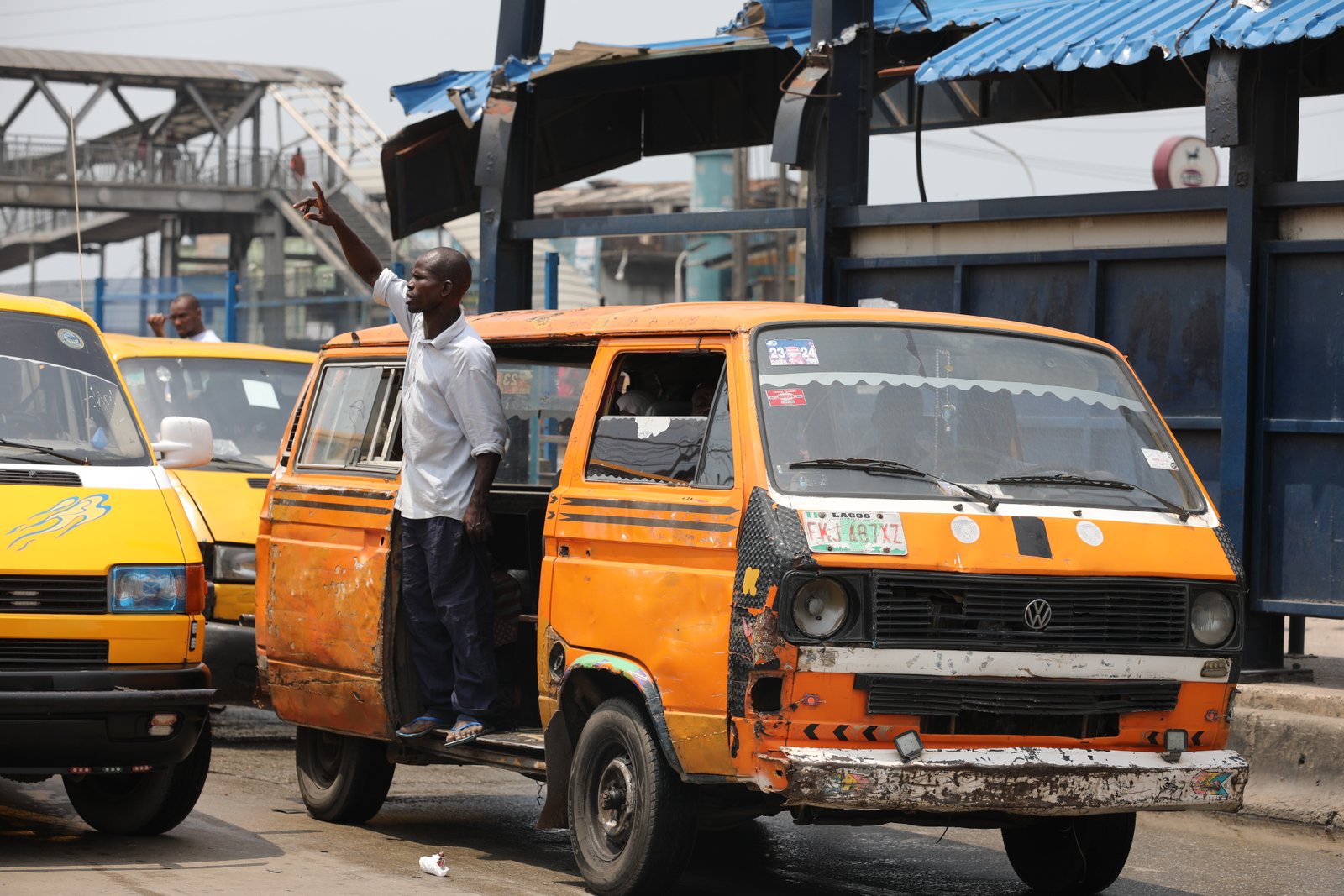
The Federal Government’s compressed natural gas (CNG) initiative is a useful test. Unlike an allowance, which raises workers’ capacity to pay fares, CNG cuts operators’ costs, which could lower fares more durably. But cheaper energy does not automatically mean cheaper transport. Operators need conversion facilities, refuelling infrastructure and suitable vehicles, and must pass a meaningful share of savings to passengers. Otherwise, a cheaper fuel bill stops at the operator.
The government’s September 2026 account of the National Affordable CNG Transit Programme reported lower fares on supported routes in Borno, Kaduna, Oyo, Adamawa, Enugu and Plateau. On the Lagos–Ibadan corridor, it reported a fall from about ₦8,000 to ₦3,200 after CNG buses were deployed. These figures are programme-reported for selected routes, not proof of a general fall.
The National Economic Council’s October call for engagement with transport operators and unions, so that CNG and electric-vehicle savings reach passengers, acknowledges a gap between the savings government facilitates and what commuters receive. If fares still reflect the old cost structure, government needs to know where the savings are going. The test is whether transport economics have changed for the people meant to benefit, not how many buses have been converted.
The same applies to the ₦70,000 allowance. Its announcement is an input, not proof of a welfare outcome. Beneficiary numbers and amounts disbursed matter, but neither shows whether workers are less exposed to the costs behind the allowance.
The missing connection in welfare policy
Nigeria has several interventions addressing different dimensions of economic hardship. Wage adjustments seek to improve earnings. Transport allowances cushion commuting expenses. CNG deployment targets transport operating costs. Fuel-price interventions attempt to moderate energy-related pressures. The difficulty is that these policies can operate alongside one another without forming a coherent system.
A transport allowance may compensate workers for high fares while a separate programme attempts to reduce those fares. If the two are not coordinated, government may end up paying to cushion a cost that another publicly supported intervention is supposed to bring down. This does not necessarily make either intervention wasteful. It makes the relationship between them an important question of public expenditure and policy effectiveness.
The missing element is a mechanism for connecting interventions to measurable changes in household conditions. Government should be able to establish whether lower operating costs translate into lower fares, whether wage improvements preserve purchasing power and whether temporary allowances reduce the financial exposure they were designed to address.
Without that connection, policy evaluation becomes an exercise in counting activities rather than assessing outcomes. Buses are deployed, allowances are approved, funds are released and agreements are signed. Yet the household experience that justified these decisions may remain substantially unchanged.
Where federalism complicates welfare delivery
The October agreement encouraged state and local governments to participate, but their capacity to provide similar support differs considerably. Revenue bases, existing wage obligations and transport infrastructure are not uniform across the federation. A national welfare framework cannot reasonably demand identical interventions from governments with unequal fiscal capacities.
But neither should the absence of uniform capacity mean the absence of common objectives. Federal, state and local governments need transparent reporting arrangements that make it possible to assess what support is being provided, what it costs and what improvements it delivers. The challenge is to accommodate fiscal differences without allowing them to obscure disparities in the protection available to workers.
Beyond the next allowance
The six-month transport intervention should be treated as an opportunity to establish a more credible relationship between immediate relief and longer-term welfare. Before April 2027, the Federal Government should be able to demonstrate whether transport costs have changed on supported routes, whether CNG savings are reaching passengers and how effectively the allowance has protected workers facing different commuting conditions. These findings should inform whether the intervention expires, is adjusted or gives way to a different arrangement.
More importantly, government should establish a framework in which temporary interventions have identifiable objectives and measurable transition points. This would not require an automatic extension of the allowance or an open-ended public commitment to subsidise transport. It would require decisions about public support to be informed by evidence about the conditions that made the support necessary.
Organised labour also has a role beyond negotiating the amount and duration of allowances. Its engagement with government should extend to monitoring whether economic interventions deliver the promised improvements to workers. The dispute between the NLC and TUC should not obscure their shared interest in ensuring that temporary compensation does not become a permanent feature of working life.
From compensation to institutions
Temporary relief can be an appropriate instrument during economic adjustment. But it should lead towards reduced exposure to hardship, not become a recurring substitute for achieving it. If government reaches April 2027 without being able to explain what has improved, what remains unresolved and what should happen next, the country will have completed another cycle of compensation without establishing a clearer path to economic security.
The difficult task is to build the institutional connections through which public spending translates into lasting improvements in household welfare. The split puts what government and labour should do in the first part and the verdict in the second. Your text is unchanged apart from the two headings. If you prefer a different second heading, “What April should show” would also work.
Lekan Olayiwola is a peace & conflict researcher/policy analyst. He can be reached at [email protected]
Views expressed by contributors are strictly personal and not of TheCable.