Tesla started rolling out the latest version 14 Full Self-Driving (Supervised) software to Australian customers last Friday, June 19, and The Driven is one of the first to be given the opportunity to put the updated system through its paces over the subsequent 5 days.
While the overall driving experience was noticeably smoother and more relaxing, the 2 major benefits of v14 over v13 are the introduction of new speed profiles and much better behaviour at the start and end of journeys. These improvements enabled me to complete over half of my journeys end to end without touching a single vehicle control.
When driving with FSD (Supervised) enabled you can now use the right-hand scroll wheel on the steering wheel to toggle between Sloth, Chill, Standard and Hurry, going from slowest to quickest as the names suggest.

My wife and I found the perfect use case for sloth, when a guy behind us decided to tailgate and was clearly raging while we were stuck behind a bus and couldn’t go any faster anyway. I dropped down from standard to sloth, which typically drives 5-10 km/h below the speed limit and takes corners more slowly.
The road rager only had to endure driving behind us for another few hundred metres, but that was enough for him to stick his arm out the window and yell “F@#$wit” as we peeled away from him at the next roundabout. We were cacking ourselves for the next 5 minutes and while recounting the story to our kids later.
Parks like a boss, most of the time
During my first test of FSD (Supervised) 9 months ago, the biggest issue I had was how it handled the end of a journey, as the car would usually get confused and either stop awkwardly in the middle of the road or do a half-arsed park that would need correcting.
FSD v14.3.3 introduces arrival options, giving you the choice to pull over like a taxi or park on the street, carpark, driveway or indoor carpark depending on your destination. Tesla says it will pick an intuitive default, or you can manually select one as you drive that is remembered for each location you visit which is handy.

For the most part, the automatic parking feature worked quite well and it even impressed me on a few occasions. One of those was a quick trip to my local shops to grab some last minute items for dinner.
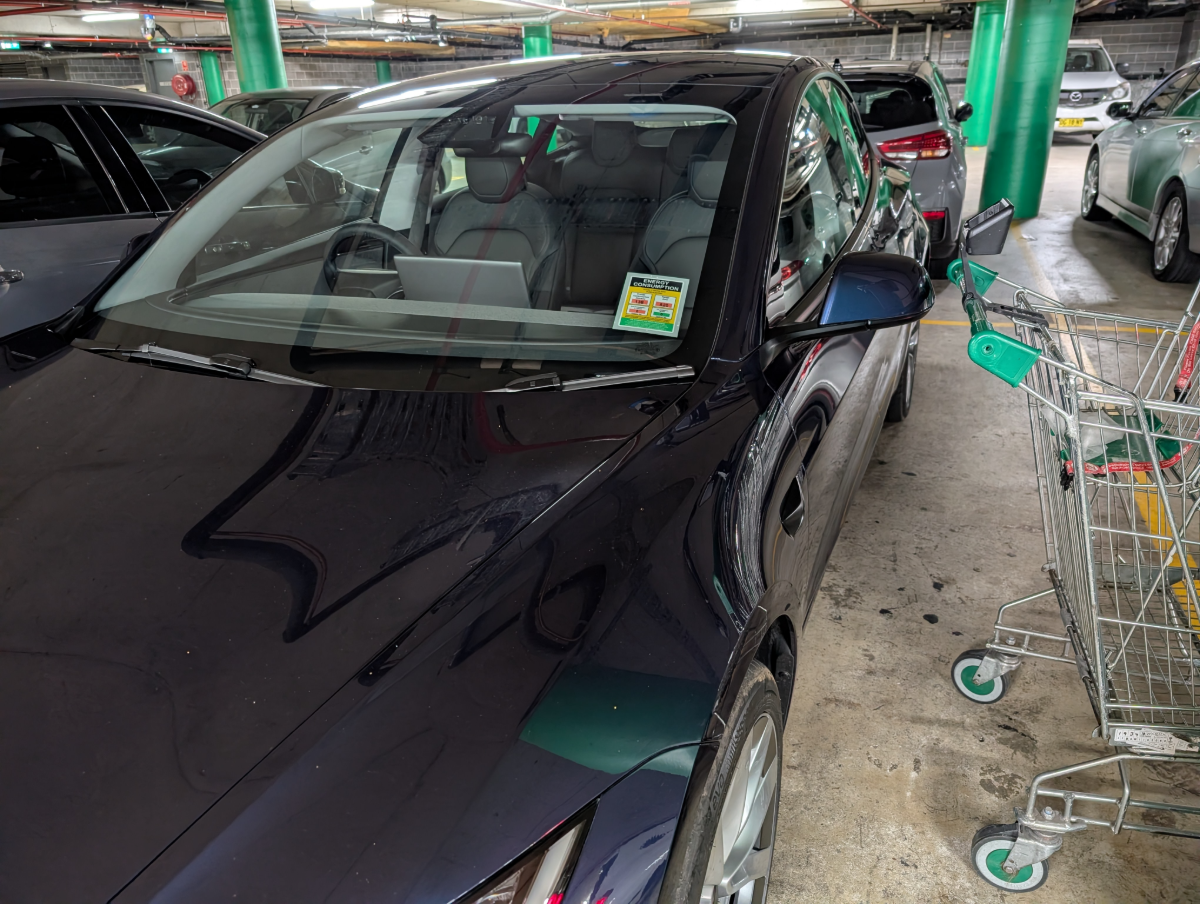
After entering the destination and hitting the blue “Start Self-Driving” button, I selected the indoor carpark from the options while driving. As the car scanned for parking spots I was surprised to see it choose a narrow one between a car and a concrete pole, with a discarded trolley half in the spot for good measure.
Rather than keep driving to find an easier spot further along like I would have done, the car confidently pulled up, threw on the blinker and started reversing in. I was ready to touch the brake if necessary, but did not need to as the car parked itself like a boss with a 5 cm gap to the shopping trolley.
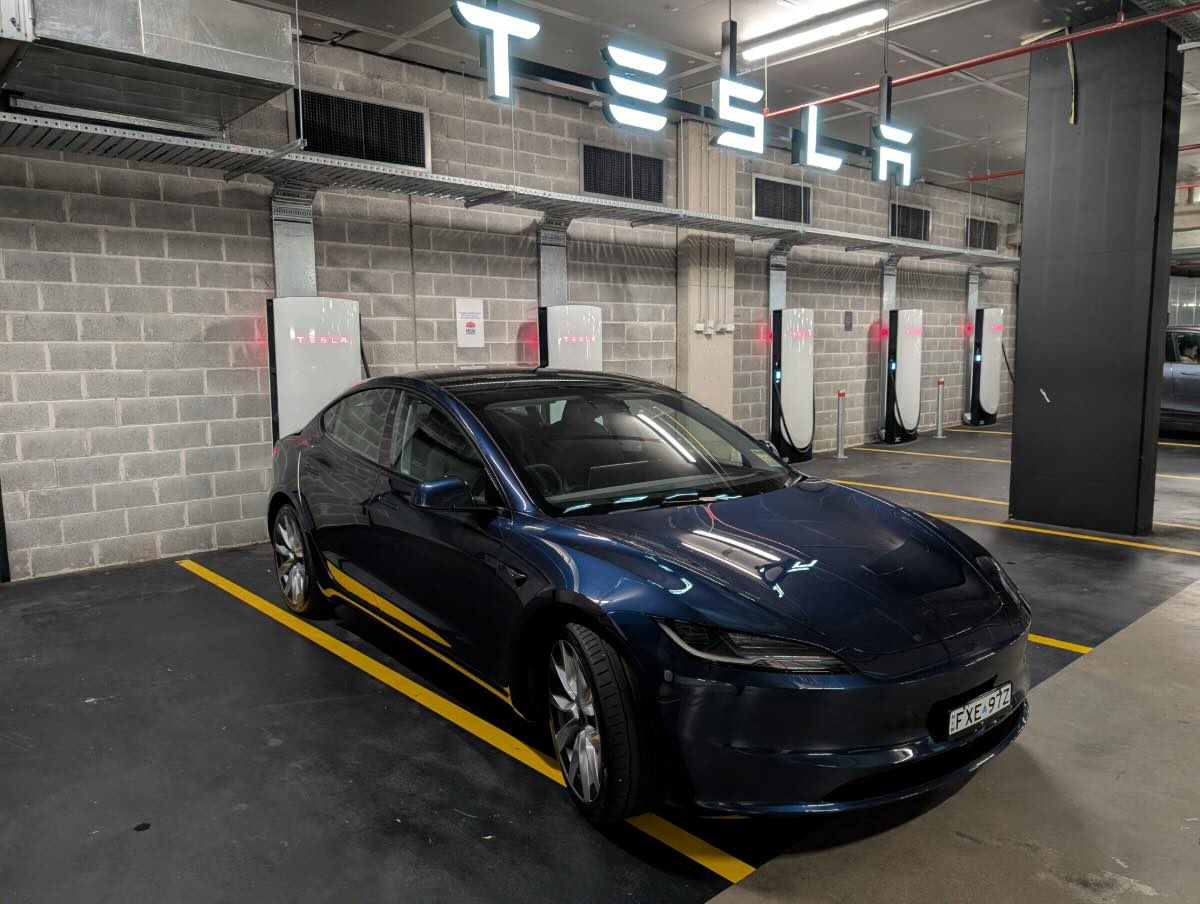
Not all parks were this successful though, such as the one shown in the main article image above. When navigating to a charger there is another “charger” option that shows up which is automatically selected. As you can see, the car parked slightly across the line that time, although all I needed to do was get out and plug in manually.
There were a couple of other cases where it parked across a driveway, or started to go into the neighbour’s driveway at my father-in-law’s place. For that I simply pressed the brake and reversed back a bit before reengaging FSD (Supervised), then it correctly drove into his driveway and parked nicely in front of the garage door.
Speaking of driveways, v14 was also a big improvement for my own steep, curved driveway. The previous version refused to even start driving from my carport, whereas v14 was able to reverse all the way up onto the street without a problem. Driving down was a different story, I tried a few times but even on sloth it was going too fast for the steep part so I hit the brakes.
Do not become complacent
Tesla’s release notes for this update say “Do not become complacent” which sums up the current situation with self-driving perfectly. With FSD (Supervised) v14 being as capable as it is, I think it would be easy to relax too much, and not pay attention as you should.
If you drove around with FSD (Supervised) enabled all the time I also think you would start to lose your driving skills over time, so I would suggest manually driving once a week or something to prevent yourself from going rusty.
The situation reminds me of my early days at Google when the team that later became Waymo presented their latest progress at TGIF with Larry and Sergey. Back then we were privy to lots of inside information before leaks became common and the company became far less transparent unfortunately.
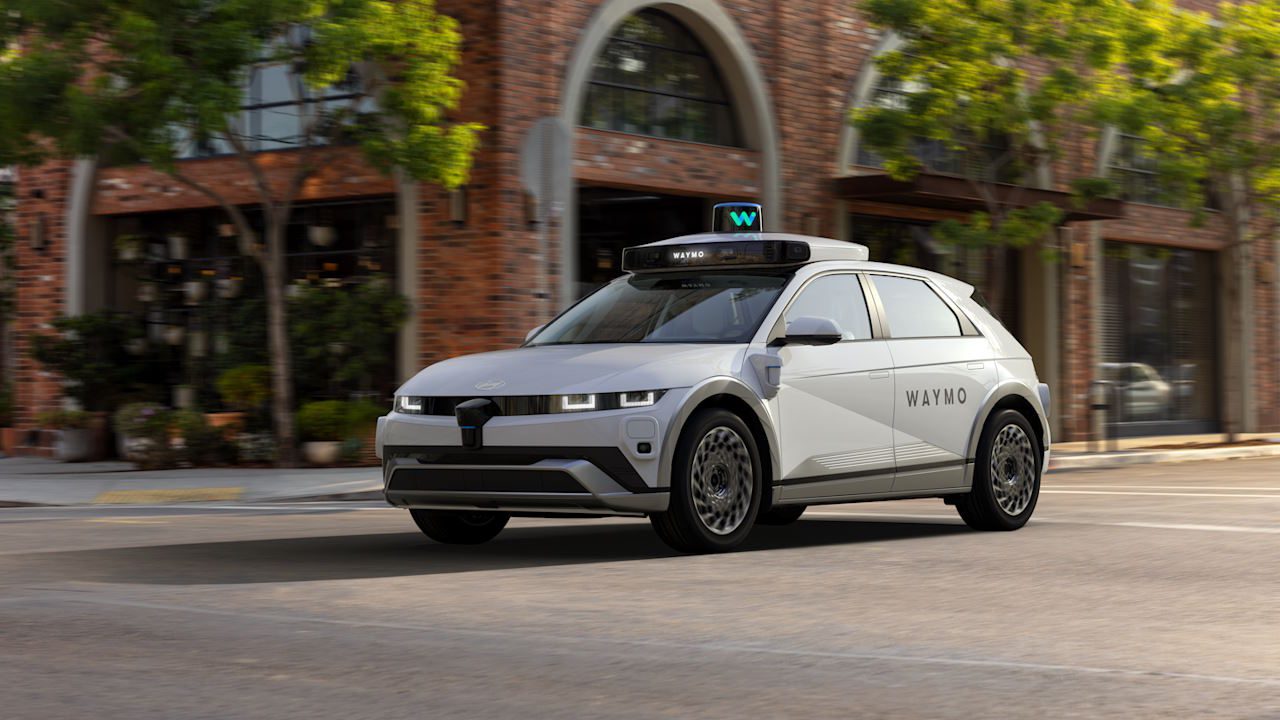
At the time, Google’s self-driving approach was similar to Tesla’s, taking a bottom up approach where supervising drivers were supposed to intervene and give feedback to improve the system over time.
However, the system was already quite good, so supervisors had become complacent and the team showed us videos of their drivers doing emails on their laptops or distracted by their phones. This caused the team to completely change their approach to top down one, starting with full autonomy in geofenced areas, instead of relying on humans.
I think Tesla is now in the same situation, where people will start to trust self-driving too much and potentially stop supervising it as closely as they should. There have already been dozens of deaths caused by people trusting Tesla Autopilot too much, so I can only imagine it getting worse with FSD (Supervised) before it gets better.
Still a long way to go for unsupervised self-driving
To illustrate why it is so important to pay attention and be ready to intervene, I can share my experience first testing FSD (Supervised) 9 months ago as well as during my Model Y Performance review and Model 3 Long Range Rear-Wheel Drive range test which was around 2 months after that initial test.
Nothing critical happened on the first test 9 months ago or the Model Y, but with the Model 3 Long Range once I had to press the brake to avoid going in front of a car turning right on a roundabout that the car clearly didn’t see. With v14 there were a few cases where the car handled the same situation correctly, although they were more abrupt stops than normal.
The worst thing that happened though, was entering an intersection as the light just turned red. My family and I were on the way to get some gelato and the car was driving behind a large truck. As the light turned green I glanced down at the navigation to see which entrance to the shopping centre the car had decided to go in.
At the same instant my son in the back said, “Dad, it just ran a red light!” I am not sure if this was due to the lights being partially blocked by the truck in front, or it being one of those very quick light changes, but I definitely should have noticed and intervened, although it was too late at that point and luckily it only just turned red so no cars were coming the other way.
I also had to intervene in a couple of tricky situations. Firstly, while driving through a busy shopping area, there was queued up traffic in front of us when I wanted to turn right. The cars left a gap for us and FSD (Supervised) started to nudge through it, but was clearly uncertain and a car was approaching from the left so I grabbed the wheel and took over.
Lastly, there was a large semi-trailer turning right at a roundabout in front of me while I was again turning right. It was obvious to me the trailer would soon impinge on the roundabout, but rather than wait for the truck to clear the car started moving into the intersection, so I pressed the brake and waited.
Conclusion
Despite encountering a few new situations where I needed to intervene, I found FSD (Supervised) v14 was a big improvement over v13. As described above, the new speed profiles and arrival options make it a much more complete system that truly automates most of the driving process.
If you have a Tesla with FSD (Supervised) my only advice apart from enjoying it is to please continue paying attention so you don’t become a statistic. The driver monitoring does a very good job with the cabin facing camera, not once did it incorrectly warn me to pay attention even while wearing my reflective sunglasses that the Geely EX5 struggled with.
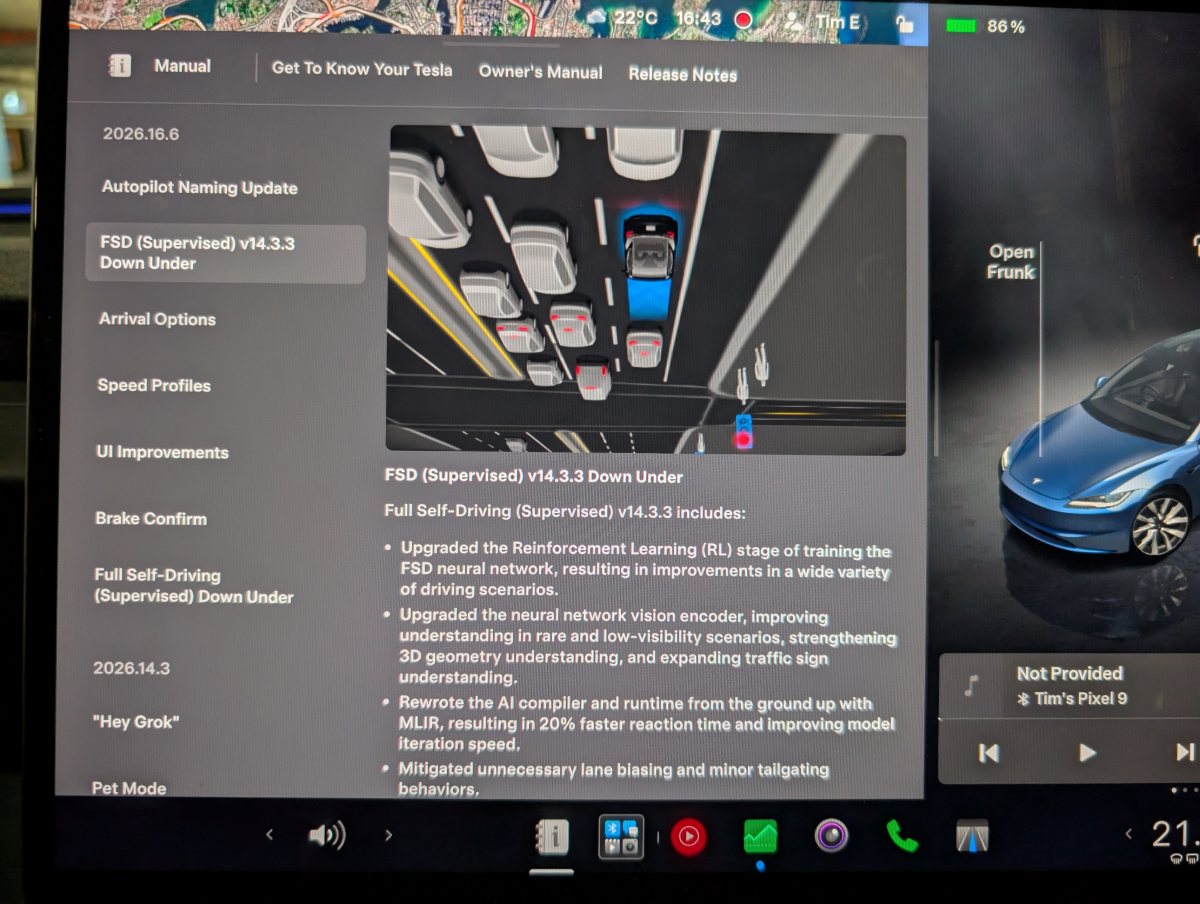
The full v14.3.3 release notes are visible on the Not a Tesla App site, as they are only found via the Tesla app or on screen in the car. The relevant section of the release notes has also been copied below, note the future improvement to avoid potholes is coming soon.
Full Self-Driving (Supervised) v14.3.3 includes:
- Upgraded the Reinforcement Learning (RL) stage of training the FSD neural network, resulting in improvements in a wide variety of driving scenarios.
- Upgraded the neural network vision encoder, improving understanding in rare and low-visibility scenarios, strengthening 3D geometry understanding, and expanding traffic sign understanding.
- Rewrote the AI compiler and runtime from the ground up with MLIR, resulting in 20% faster reaction time and improving model iteration speed.
- Mitigated unnecessary lane biasing and minor tailgating behaviors.
- Increased decisiveness of parking spot selection and maneuvering.
- Improved parking location pin prediction, now shown on a map with a P icon.
- Enhanced response to emergency vehicles, school buses, right-of-way violators, and other rare vehicles.
- Improved handling of small animals by focusing RL training on harder examples and adding rewards for better proactive safety.
- Improved traffic light handling at complex intersections with compound lights, curved roads, and yellow light stopping — driven by training on hard RL examples sourced from the Tesla fleet.
- Improved handling for rare and unusual objects extending, hanging, or leaning into the vehicle path by sourcing infrequent events from the fleet.
- Improved handling of temporary system degradations by maintaining control and automatically recovering without driver intervention, reducing unnecessary disengagements.
- Improved driver monitoring system sensitivity with better eye gaze tracking, eye wear handling, and higher accuracy in variable lighting conditions.
- Help Tesla improve Self-Driving by selecting an intervention reason on the main screen after taking over.
- You can now see distance traveled in FSD (Supervised) without an intervention. The Self-Driving App will also show your longest intervention-free streak.
Upcoming Improvements:
- Expand reasoning to all behaviors beyond destination handling.
- Add pothole avoidance.

Tim has 20 years experience in the IT industry including 14 years as a network engineer and site reliability engineer at Google Australia. He is an EV and renewable energy enthusiast who is most passionate about helping people understand and adopt these technologies.