Chinese EV giant BYD has started the year off with a flurry of tech and product announcements, including 5-minute flash charging tech, blade battery and dozens of models.
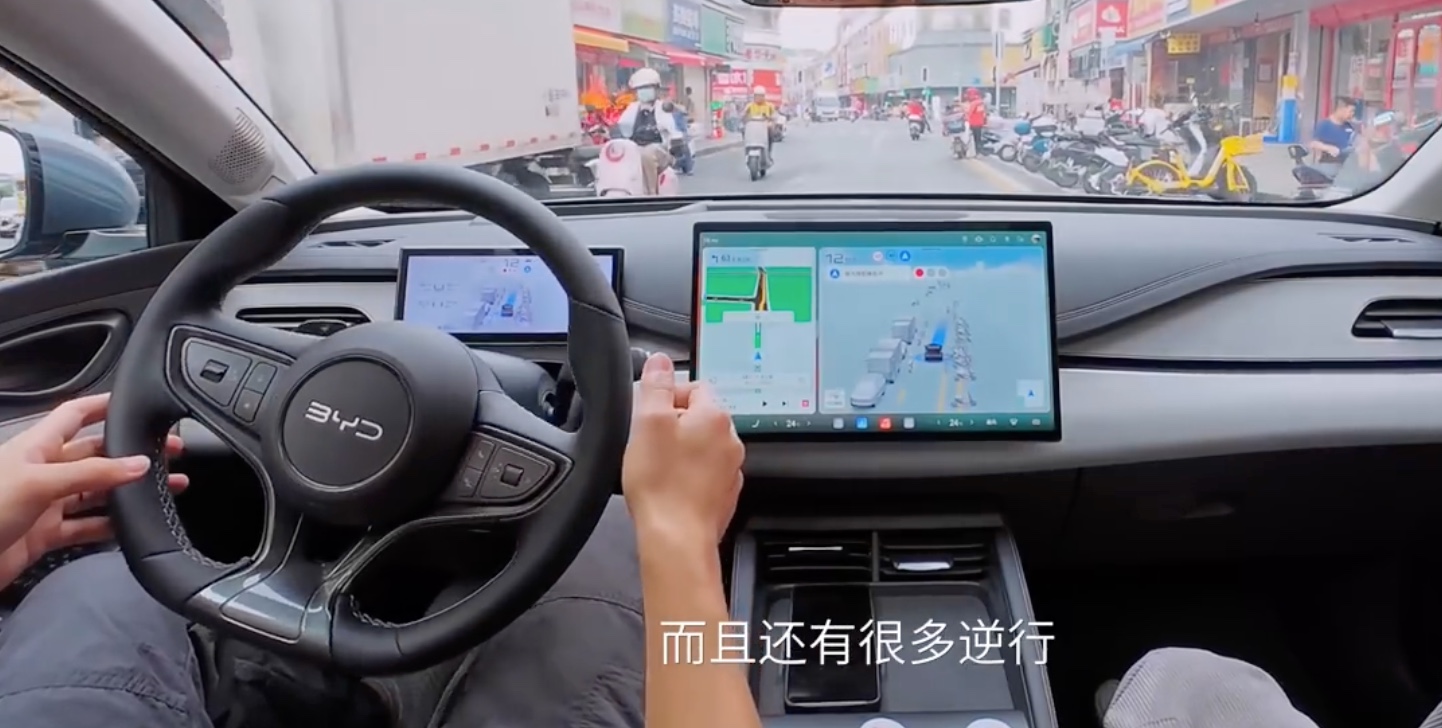
Now, the company has announced ambitious plans in the autonomous driving space by equipping all of its vehicles with the next generation of its God’s Eye self-driving tech, as well as showcasing its own mass-produced chip.
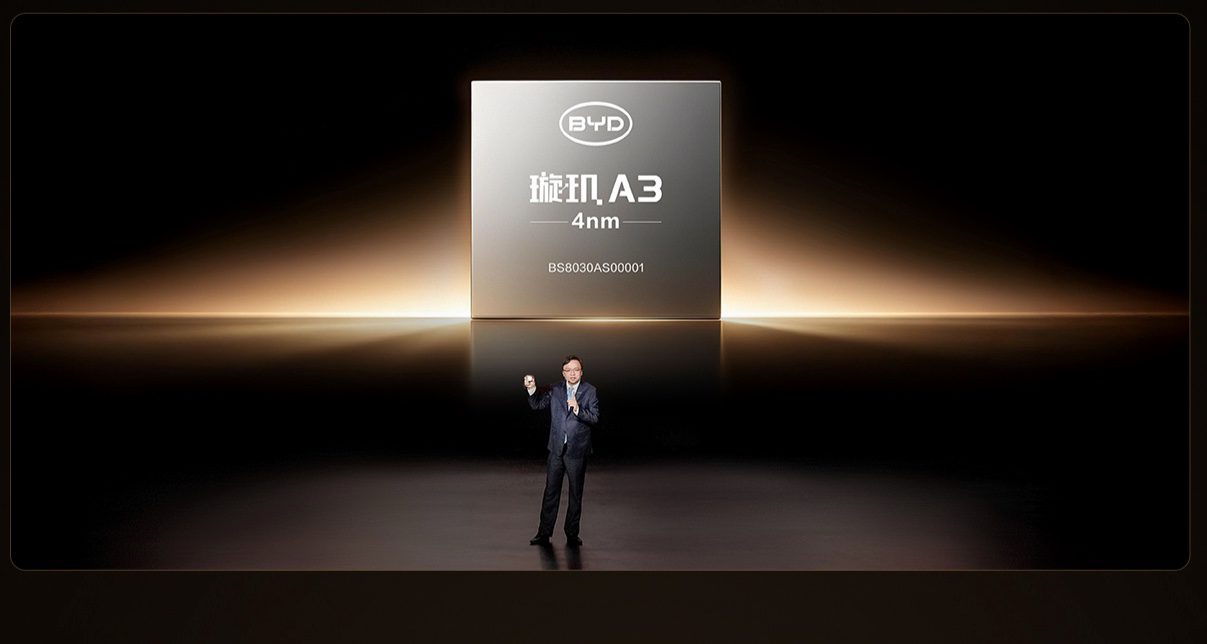
At an event in China, the company shared details of a 4 nm smart-driving chip, which it calls the Xuanji A3, and is capable of supporting level 3 and level 4 autonomous driving.
According to BYD, this new chip is also China’s first 4 nm intelligent driving chip, marking a major milestone for the industry.
On its Weibo page, the company shared details of the tech and the chip: “BYD is pioneering a new era of urban driving for everyone, with all models equipped with the ‘Eye of the Gods B” intelligent system.”
“BYD’s self-developed 4nm intelligent driving chip, the Xuanji A3, represents the highest level of intelligent driving chips in China, supporting L3/L4 autonomous driving.”
The level 3 and level 4 systems will be backed by LiDAR tech, which is the hardware we have seen even in affordable models launched by the brand in recent months.
This hardware with over 1,000‑line LiDAR, HDR cameras, and dual long‑wave infrared cameras is expected to be standard in many BYD models in the coming years.
It also shared that, with this new God’s Eye tech, accidents caused by ADAS during the city pilot software’s operation are covered by the company, which is introducing 1‑year liability coverage for urban navigation.
On its Weibo it shared this inclusion: “If you’re hesitant to use City Navigation, who will be responsible if an accident occurs with Intelligent Driving? BYD promises to guarantee the safety of City Navigation for one year.”
As part of this autonomous driving tech announcement, the company has set goals around Zero traffic accidents, which, according to the brand, can only be achieved through assisted driving.
To make this happen, BYD will invest $A20.5 billion over the next few years as it streamlines its model lineup, while increasing capabilities.
In Australia, most BYD models currently feature cruise control and assisted steering tech and will not be able to perform city self-driving capabilities.
It would be great to see how this tech evolves in BYD’s Chinese models and starts to make way into international markets to compete with Tesla’s FSD Supervised system, which has been available locally in select hardware-equipped vehicles since September 2025.
See The Driven’s detailed EV sales data here: Australian electric vehicle sales by month in 2026; by model and by brand.
Sign up for The Driven’s free daily newsletter and get the latest EV news and analysis delivered straight to your inbox.


Riz is the founder of carloop based in Melbourne, specialising in Australian EV data, insight reports and trends. He is a mechanical engineer who spent the first 7 years of his career building transport infrastructure before starting carloop. He has a passion for cars, particularly EVs and wants to help reduce transport emissions in Australia. He currently drives a red Tesla Model 3.