Electric car sales in Europe have climbed to account for 18.2 per cent of total new vehicle registrations across the first two months of 2026, according to data from the European Automobile Manufacturers’ Association (ACEA).
A total of 312,369 battery electric vehicles were sold over the period, up from a 15.2 per cent share in the same period last year.
The increase comes amid ongoing volatility in global oil markets triggered by the Middle-East war, with analysts suggesting higher fuel prices may be contributing to increased consumer interest in electric vehicles.
READ MORE: Oil price rise driving global EV surge, including the USA
READ MORE: “It’s going crazy!” EV sales surge as oil crisis accelerates Aussie buyer interest
READ MORE: The Middle-East war, the price of oil and how it impacts on EV owners | Analysis (and some opinion)
Some forecasts indicate EV market share could rise further in March if current demand trends continue.
EV uptake varied significantly by market. France recorded one of the highest levels of electrification, with battery electric vehicles accounting for 38.5 per cent of sales, while Germany reached 26.3 per cent.
However, not all markets followed the same trend. EV registrations fell in the Netherlands by 34.9 per cent and declined 11 per cent in Belgium over the same period.
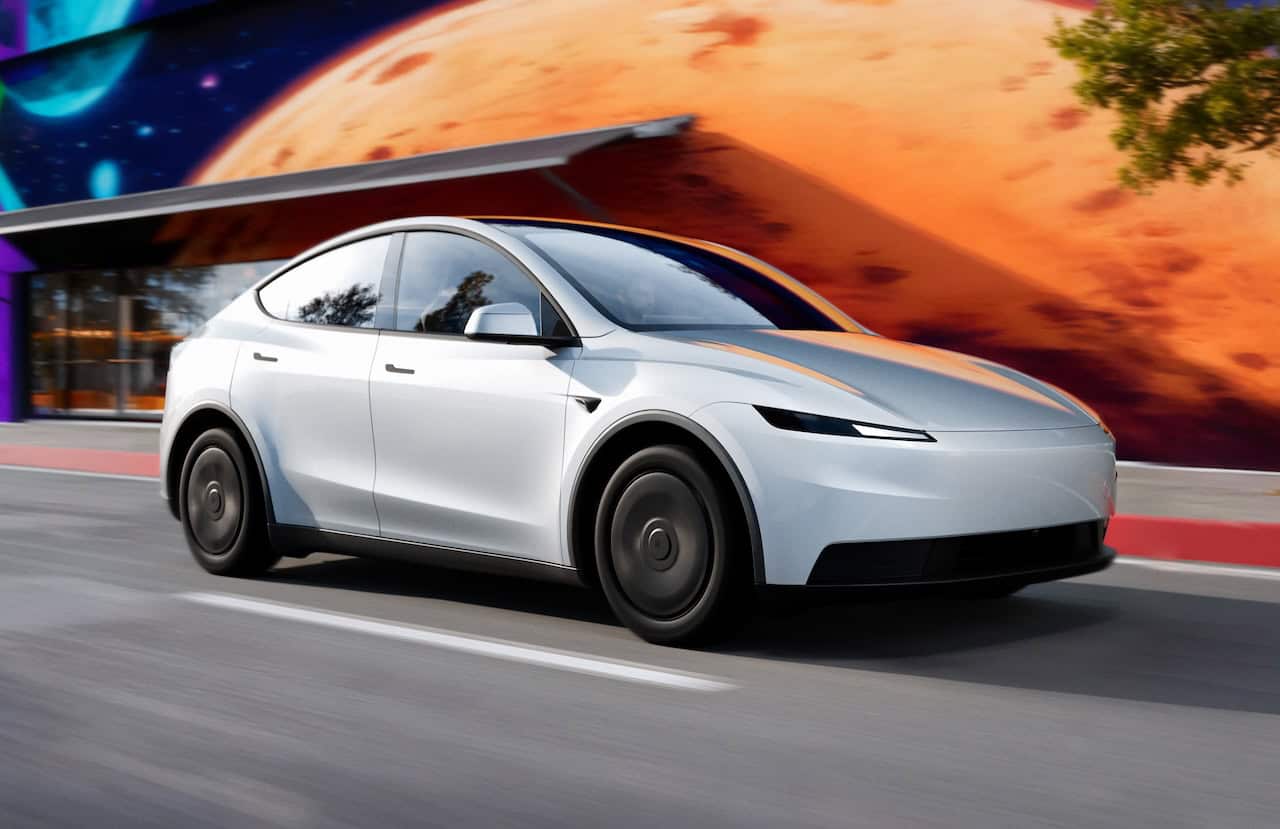
Tesla (Model Y pictured top) reported an 11.8 per cent year-on-year increase in registrations, although it was not enough to clearly reclaim overall leadership, with the US brand level with BYD on around 1.8 per cent market share.
Despite the growth in EVs, hybrid vehicles remained the most popular powertrain in Europe, accounting for 38.7 per cent of total sales. Petrol vehicles followed at 22.5 per cent.
Combined, battery electric, hybrid and plug-in hybrid vehicles made up 67 per cent of registrations in February, up from 58.5 per cent a year earlier.
Petrol-powered vehicle demand declined sharply, falling 23.3 per cent in February. The drop was particularly pronounced in France (down 48.5 per cent), as well as Germany (down 22.8 per cent) and Italy (down 18.6 per cent).
Plug-in hybrid sales reached 162,751 units across the first two months of the year, representing a 9.8 per cent market share, up from 7.4 per cent a year earlier. Growth was led by Italy (up 116.1 per cent), Spain (up 71.5 per cent) and Germany (up 23.8 per cent).
Diesel continued its long-term decline, with market share falling to 8.1 per cent, down from 17.7 per cent a year ago.
Overall, the European new car market recorded modest growth, with 979,321 vehicles sold across the first two months of 2026, up 1.7 per cent year-on-year.
Analysts note that broader economic pressures, including inflation and interest rates, could continue to influence consumer demand in the months ahead.