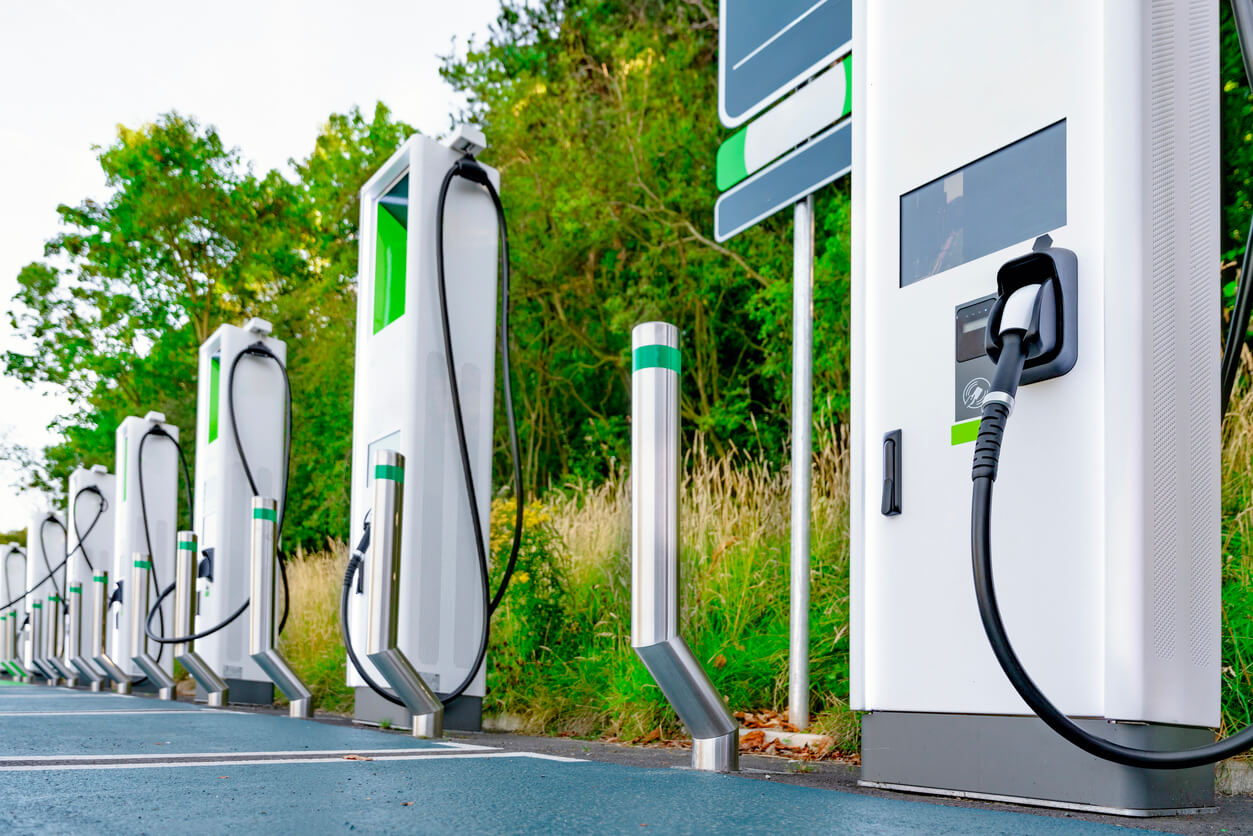
Developers, fleet operators and public charging providers are investing heavily in EV charging infrastructure to support the UKs growing demand. From workplace charging and fleet depots to public charging station networks and rapid charging hubs, commercial EV infrastructure continues to grow. However, many underestimate the complexity of EV charging infrastructure costs and how much they can vary from project to project.
The total cost of a charging point installation involves far more than simply purchasing chargers. Factors such as charging speed, power availability, grid capacity, software integration, future scalability and site design all play a major role in overall project costs.
If your business is planning EV charging infrastructure, understanding the different costs is essential for delivering reliable, scalable and commercially viable charging solutions.
This guide explains the main elements that affect EV charging infrastructure costs, including charger hardware, electrical upgrades, charging infrastructure planning and long-term operational considerations.
What Impacts EV Charging Infrastructure Costs?
No two EV charging projects are identical. Charging infrastructure costs vary significantly depending on the type of charging solution deployed and the site’s operational requirements.
Several major factors influence overall project costs, including:
- Charging speed requirements
- Number of charging points
- Site location and layout
- Electrical supply capacity
- Grid connection requirements
- Civil engineering works
- Software integration
- Future expansion planning
A workplace charging project with a small number of AC chargers will have very different infrastructure requirements from those of a high-power public charging station designed for rapid charging.
The larger the project and the faster the required charging speeds, the greater the infrastructure complexity typically becomes.
EV Charger Hardware Costs
One of the most visible elements of EV charging infrastructure costs is the charger hardware itself.
Different charger types are designed for different applications and charging times.
AC Chargers
AC charging points are commonly used for:
- Workplace charging
- Destination charging
- Fleet parking
- Long-duration parking environments
These chargers are generally used where vehicles are likely to be parked for extended periods, where drivers have more time to fully charge.
AC charging systems are often used where charging speed is less critical, and vehicles can remain connected for several hours.
Rapid Charging Infrastructure
Rapid charging systems deliver significantly faster charging speeds and are commonly used at public charging stations, retail locations, and fleet operations that require faster turnaround times.
Rapid charging infrastructure requires:
- Higher power delivery
- Larger electrical capacity
- More advanced cooling systems
- Greater energy management capability
Because rapid charging delivers significantly more power to EV batteries, infrastructure requirements become more demanding.
Ultra-Rapid and High-Power Charging
Ultra-rapid charging systems are designed for high-traffic charging locations where minimising charging time is critical.
High power chargers are increasingly used for:
- Motorway charging hubs
- Public charging networks
- Logistics depots
- Commercial fleet operations
These systems can dramatically reduce charging time for electric vehicles, but they also impose substantial infrastructure demands due to the high power needed.
If you are looking to deploy high-power charging infrastructure, electrical capacity planning becomes one of the most important parts of the project.
Installation Costs for Commercial EV Charging
Installation costs are a significant proportion of the overall investment in EV charging infrastructure, but it’s also very important that installation is done correctly. Commercial EV charger installations often require a combination of groundworks, trenching, cabling, concrete foundations, mounting systems, electrical testing, traffic management and wider site preparation. The complexity and cost of installation will vary depending on the site’s characteristics. For example, a charging point located close to existing electrical infrastructure is typically quicker and less expensive to install than a large-scale public charging station that requires extensive civil engineering works and long cable runs. This is why the correct planning is key to avoiding unexpected costs later on. Costs can also increase where projects involve underground cabling, integration within multi-level car parks, traffic flow redesign or provisions for future expansion. Careful planning at the outset can help minimise disruption during installation and reduce any future upgrade and operational costs.
Grid Connection and Electrical Upgrade Costs
Its quite obvious that many commercial sites were not originally designed to accommodate large-scale electric car charging or high-power charging systems. As more electric vehicles are expected to charge at the same time, demand on the site’s electrical infrastructure can increase substantially, often requiring power supply upgrades, transformer replacements, new substations, involvement from the distribution network operator (DNO), and the implementation of load-balancing systems. Rapid and ultra-rapid charging infrastructure places particularly high demands on the electrical grid, as they deliver large amounts of energy to EV batteries in relatively short times. As a result, grid capacity and reinforcement requirements can become one of the most important considerations when planning and budgeting for commercial EV charging projects.
Software, Networking and Smart Charging Costs
EV charging infrastructure relies heavily on software, connectivity and smart energy management to operate efficiently. Commercial charging networks often require charging management platforms like Occulus, user authentication systems, payment integration, remote monitoring capabilities, and advanced load-balancing software to operate properly. Features such as smart charging controls and load balancing functionality play a crucial role in optimising the performance of EV chargers, particularly at sites where multiple electric vehicles may be charging simultaneously. By intelligently distributing available power, these systems help reduce the strain, improve efficiency and maximise charger availability. As charging infrastructure expands and networks become more complex, robust software platforms are increasingly essential for maintaining reliability, managing energy consumption and delivering a seamless user experience.
Ongoing EV Charging Operational Costs
Installing charging infrastructure is only part of the long-term investment.
Ongoing operational considerations include:
- Maintenance contracts
- Software subscriptions
- Connectivity fees
- Customer support
- Charger monitoring
- Repairs and servicing
- Energy usage management
Public charging station operators in particular face growing pressure to maintain high reliability standards and minimise downtime. For EV drivers, charger availability and reliability are becoming just as important as charging speed itself. Proactive maintenance and remote monitoring can therefore play a major role in protecting infrastructure performance over time.
Public vs Workplace Charging Infrastructure Costs
Public charging infrastructure and workplace charging systems are designed to meet very different operational requirements. Workplace charging focuses on supporting employees and fleet vehicles, with longer dwell times and more predictable charging schedules, allowing vehicles to recharge over extended periods, i.e., throughout the workday. In contrast, public charging stations are often expected to deliver faster charging speeds, support public payment systems and maintain higher levels of charger utilisation. They also tend to have greater uptime expectations, increased customer support requirements and more complex infrastructure designs. Because public charging infrastructure must accommodate a wider variety of EV drivers, vehicle types and usage patterns, managing these networks is often significantly more complex than operating workplace charging solutions which may have one type of EV to provide charge to.
How to Reduce EV Charging Infrastructure Costs
Careful planning is one of the most effective ways for businesses to reduce long-term EV charging infrastructure costs while improving scalability. A well-designed strategy should consider phased deployment, allowing charging capacity to grow alongside demand rather than overinvesting upfront. Smart load management and energy optimisation technologies can help control power consumption and reduce strain on existing electrical infrastructure, while strategic charger placement ensures convenient access for users and maximises utilisation. Future-proofing infrastructure and adopting a scalable power design can also help accommodate future growth without costly redesigns or major upgrades. By strategically planning for expansion from the outset with a professional team, businesses can create a charging network that remains efficient and adaptable.
Plan a Future-Ready EV Charging Infrastructure Project
At Vital EV, we help businesses design and deploy commercial EV charging infrastructure tailored around operational requirements, charging demand and future growth.
Our team can help deliver solutions built for long-term reliability and performance.
Get in touch with Vital EV today to discuss your EV charging infrastructure project and explore scalable charging solutions designed around your business.