Hyundai is looking to China to deliver more affordable electric cars for Australia, targeting gaps in its small hatchback and SUV line-up as Chinese brands intensify the pressure on established manufacturers.
The company is considering China-developed models for both segments, aiming to offer more competitive entry prices alongside its Ioniq electric range.
Its Chinese joint venture with BAIC already supplies the Elexio medium electric SUV sold here, providing a sourcing pathway for further models. However, the identities, Australian launch dates and prices of the proposed smaller EVs remain unconfirmed.
READ MORE: Best EVs to buy in Australia 2026: The ultimate guide to affordable electric cars at every price
READ MORE: 2026 Hyundai Staria Load Electric Brief Drive: The electric van I’d want to drive every day, but would my boss pay for it?
READ MORE: Hyundai Inster prices cut again: Cheapest non-Chinese EV title reclaimed, but equipment disappears
READ MORE: Confirmed for Australia in mid-2027: New Hyundai Tucson goes all-hybrid to battle Toyota RAV4 and an increasing number of Chinese rivals
Hyundai Australia chief operating officer Gavin Donaldson identified the small passenger car and SUV segments as priorities.
“We’ve definitely got additional products that we’re looking at. Our product portfolio probably lacks a small passenger car, probably lacks a small SUV from an EV point of view,” he said.
“Obviously, we’ve got a medium-sized SUV where most of the market is right now, so we’ll continue to look at where our gaps are. We’ll probably use China to fill those gaps.”
Competitive pricing will be central to the strategy as Hyundai faces expanding electric ranges from brands including BYD, Geely and Chery.
“For us to grow our market and our volume, we think there’s some price points that we need to be competitive at,” Donaldson said.
While Hyundai already sells the Kona Electric, his comments suggest the company sees an opportunity for another small electric SUV. He did not explain whether a China-sourced model would supplement or eventually replace the Kona.

Beijing Hyundai has confirmed another SUV will launch in China in the first half of 2027, although its announcement did not disclose the vehicle’s name or dimensions.
Hyundai also unveiled the China-developed Earth electric family SUV concept in April. Neither announcement establishes that the vehicle concerned will fill the small SUV opening identified by the Australian operation.
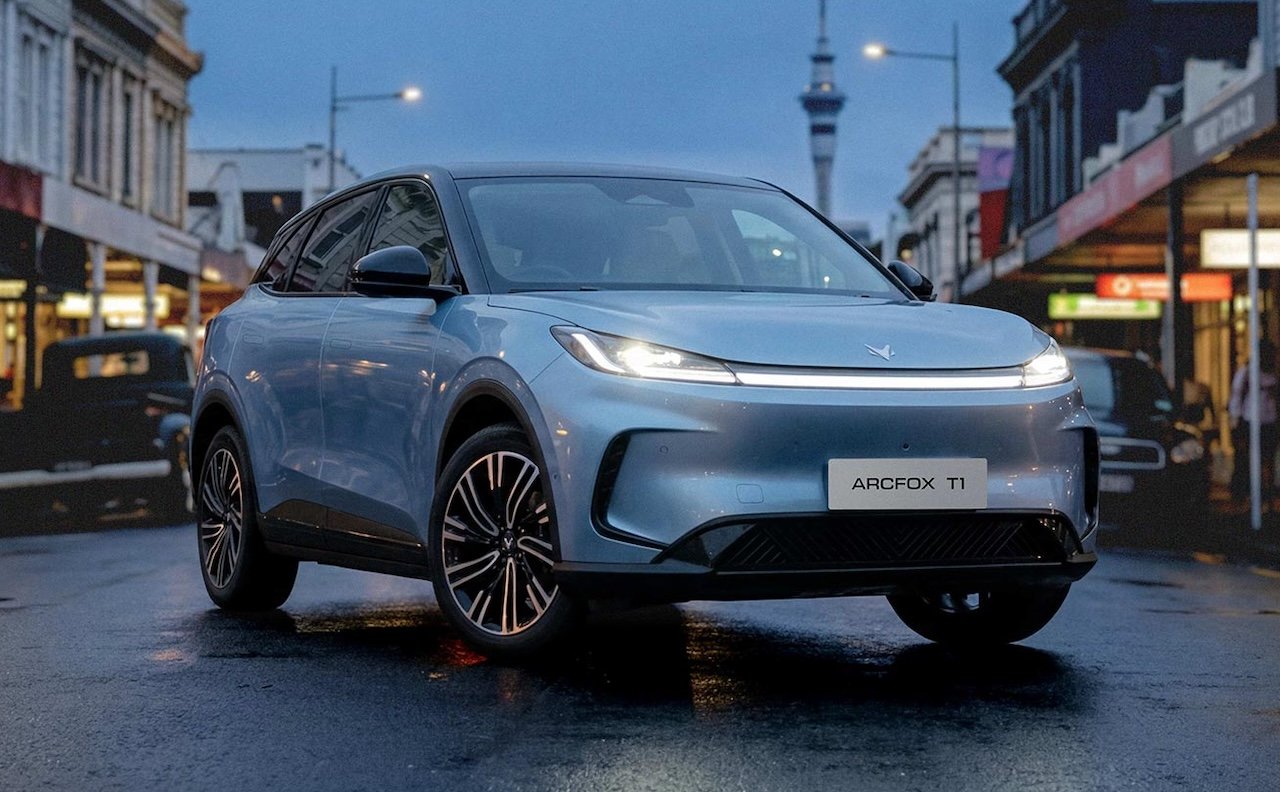
There is already a suitably sized electric vehicle elsewhere within BAIC’s portfolio: the Arcfox T1.
Sold under BAIC’s dedicated electric vehicle brand, the T1 is available in New Zealand and has also been spotted in Australia.
A left-hand-drive example wearing Victorian registration plates was photographed in Sydney this month. The purpose of its Australian evaluation remains unclear.
There is no confirmed connection to Hyundai’s product plans and it is as likely to mean Arcfox plans to launch in Australia.
The New Zealand-market T1 measures 4337mm long and has a 2770mm wheelbase, placing it in the same broad size bracket as the small electric SUV Hyundai is seeking.
It combines a 70kW/176Nm front-mounted motor with a 42.3kWh lithium iron phosphate battery and a claimed 310km WLTP range. Its current New Zealand launch offer is NZ$34,990 plus on-road costs.
An export version is also sold in Indonesia as the BAIC T1, while an updated Chinese version adopted the Beta T1 name in June.
While those vehicles – or derivatives of them – make logical sense foir Australia’s SUV-focussed market, the angular Ioniq V sedan freshly launched in China appears off the radar.

Hyundai Australia development manager Tim Rodgers said the company wanted to strengthen its position at the affordable end of the market.
“It’s really that entry point for the market where we are traditionally really strong, that’s the area we’re quite conscious of right now,” he said.
“There’s a lot of focus on that”
The emphasis on Chinese sourcing follows Hyundai’s decision not to introduce the Turkish-built Ioniq 3 to Australia, despite having investigated its local potential.
“The reality is, the last few years, we’ve been studying what Ioniq 3 could look like in our market,” Rodgers said.
“(But) the global landscape has changed quite a lot, not just the market, but even just logistics and transport. Lots of things have changed, and that’s kind of dictated the decision for us in a lot of ways.”