adminis
0
…APM Petitions EFCC, NASS Over Alleged N12trn Subsidy Savings Discrepancy
…Demands Probe, Says Funds Could Build Refinery, Railway
ABUJA – The Federal Government’s economic reforms may have generated additional resources and strengthened some key macroeconomic indicators, but the real test of the programme is whether the gains can translate into lower living costs, better incomes and improved living standards for Nigerians, economists and policy experts have stated.
The reactions came against the backdrop of the Reform Scorecard presented by the Minister of Finance and Coordinating Minister of the Economy, Taiwo Oyedele, in Abuja, on Wednesday, in which the government disclosed that the reforms had generated N15.8 trillion in additional resources for the Federation between June 2023 and December 2025.
According to Oyedele, N5.4 trillion of the additional resources accrued to the Federal Government, while N10.4 trillion was shared among states and local governments through the Federation Account.
He also said the Federal Government generated N3.1 trillion in additional independent revenue and borrowed N11.9 trillion during the period, bringing its incremental resources to N20.4 trillion.
However, against additional resources of N20.4 trillion, the government recorded expenditure pressures of N30.64 trillion. Oyedele said N9.39 trillion was spent on wage adjustments, minimum wage increases and allowances, while N9.37 trillion went into the increased naira cost of servicing external debt following the depreciation of the currency. Another N6.5 trillion was allocated to strategic infrastructure.
But a Public Affairs Analyst, Jide Ojo, in his reaction, said the figures raised more questions about the management of public finances and the extent to which the additional resources had improved the welfare of citizens.
He questioned why Nigerians were still facing rising living costs and why the government continued to rely heavily on borrowing and deficit financing despite the additional resources generated through the reforms.
“The question is, have we been very prudent in the management of our public finance?” he asked, arguing that the government’s explanation of the resources generated must be matched with evidence of prudent expenditure and tangible outcomes.
Ojo acknowledged that infrastructure projects had been undertaken, but expressed concern about transparency surrounding some of the projects, particularly the actual cost of construction and the financing arrangements.
He said Nigerians needed clearer explanations on major infrastructure projects, including whether they were being delivered under public-private partnerships, financed directly by government or structured under build-operate-and-transfer arrangements.
According to him, the central issue should not be the amount of money the government says it has saved or generated, but whether those resources have translated into improved living conditions.
“Why are our lives poorer?” Ojo asked, stressing that Nigerians would ultimately judge the administration by their ability to pay bills, afford transportation, pay rent and meet other basic needs.
His criticism comes as the government insists that the reforms should not be judged solely by the immediate hardship they caused, but also by the economic distortions they helped correct and the damage they prevented.
Oyedele said the scorecard was intended to provide an account of the “benefits, costs and harms prevented” by the reforms, rather than portray them as an unqualified success.
Ojo, however, argued that macroeconomic achievements would have limited political and social value if they failed to produce corresponding improvements at the household level.
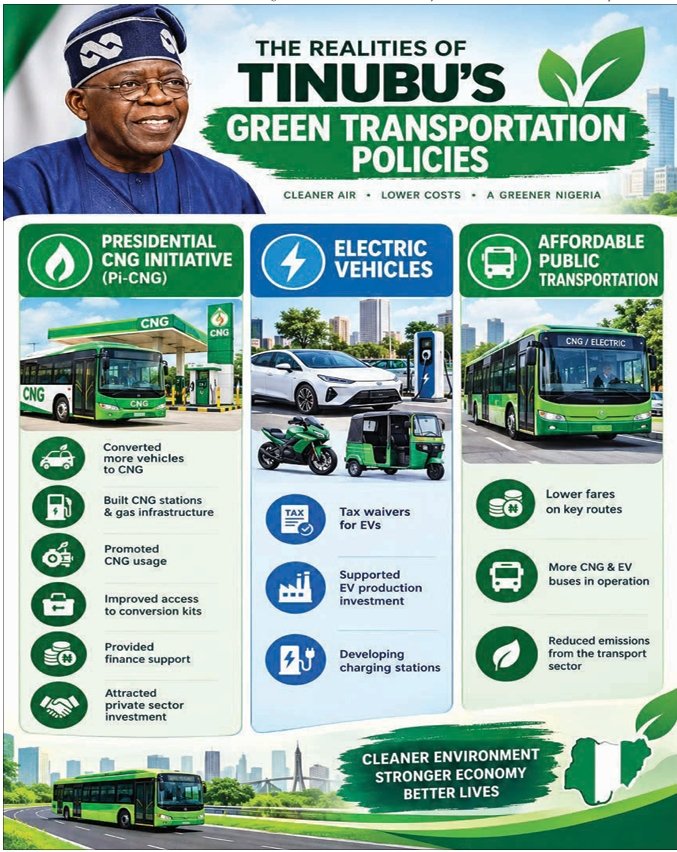
He cited the continued pressure on the cost of rent, transportation and other necessities, arguing that the removal of petrol subsidy and introduction of compressed natural gas had not yet delivered sufficient relief to transport users.
He questioned the availability of CNG infrastructure, particularly the number and geographical spread of filling stations, arguing that the benefits of cheaper fuel would remain limited if motorists could not easily access CNG.
The analyst said the billions of naira committed to the Presidential Compressed Natural Gas Initiative should ultimately be judged by its impact on transportation costs rather than by the scale of government expenditure.
“The question is not about what you said, it’s about the impact of what the macroeconomic policies of this administration have been,” he said, describing the impact so far as less than satisfactory.
His concerns mirror those raised by other economists and policy experts who examined the government’s scorecard.
MACROECONOMIC STABILISATION
A former International Monetary Fund and World Bank expert, Dr Ifediora Amobi, said the reforms were necessary to reposition the economy, but warned that their immediate impact on households and businesses could not be ignored.
He said the government needed to sustain the reforms while introducing measures capable of stimulating economic activity, creating jobs, improving infrastructure and reducing the burden on households.
Proshare Research also cautioned that the scorecard should be viewed as evidence of macroeconomic stabilisation rather than proof that Nigeria had completed its economic transformation.
It noted improvements in foreign reserves, the foreign exchange market, capital importation, market capitalisation and economic growth, but stressed that the next challenge was to convert improved fiscal space and investor confidence into productive investment, employment and real income growth.
The debate has also focused on the resources available to states and local governments. Of the N15.8 trillion generated through the reforms, N10.4 trillion was shared with the two tiers.
Yet, questions remain over whether increased allocations have translated into better public services.
Development economist, Prof. Chiwuike Uba, warned that increased revenues could encourage waste where governments interpret higher allocations as simply more money available for spending without corresponding fiscal discipline.
He described the situation as “fiscal illusion”, stressing the need for greater transparency, audited accounts and effective oversight of public expenditure.
The Federal Government has proposed a central transparency portal to allow Nigerians to track allocations, budgets, development plans and audited accounts of the 774 local government areas.
For Ojo, however, transparency and macroeconomic indicators will ultimately have to be tested against the daily experiences of citizens.
He warned that unless the reforms produce visible improvements in living standards before the next election cycle, the administration could face public backlash.
“The concern is not just the rhetoric that people are going to be listening to. I will be looking at: have I been able to pay my bills? What cost am I able to pay my bills?” he said.
With headline inflation easing but food prices and household expenses still exerting pressure, the reform debate is therefore moving beyond how much money government has generated to how effectively it has been deployed.
The emerging challenge for the administration is to demonstrate that fiscal gains can become household gains — through stronger purchasing power, jobs, affordable transportation, reliable infrastructure and better public services.
For Ojo and other critics, the scorecard may explain where government finances stand. The harder test is whether ordinary Nigerians can feel the difference.
QUESTIONS OVER SAVINGS DISCREPANCY
Meanwhile, the Allied Peoples’ Movement (APM) has petitioned the Economic and Financial Crimes Commission (EFCC) and the National Assembly to investigate an alleged N12 trillion discrepancy in savings from the removal of petroleum subsidy, demanding that every naira realised from the policy be properly accounted for.
The party’s demand followed conflicting figures attributed to government officials on the amount saved from the removal of the subsidy.
According to the APM, the Minister of Finance and Coordinating Minister of the Economy, Taiwo Oyedele, recently put the subsidy-removal savings at N15.8 trillion.
But the party said figures previously announced by the former Finance Minister, Wale Edun, indicated that about $20 billion, equivalent to N27 trillion, had been saved as of November 2024.
The APM, in a statement on Saturday, in Abuja, by its National Publicity Secretary, Abubakar Yusuf, said the difference of about N12 trillion raised serious questions that required urgent clarification by relevant government agencies.
The party alleged that the discrepancy had further fuelled concerns in the public space over the management of subsidy-removal savings, stressing that the government owed Nigerians a clear account of the funds.
The APM said N12 trillion, if properly deployed, could have financed major infrastructure projects capable of transforming the Nigerian economy, including the construction of a new large-scale petroleum refinery with a capacity of between 250,000 and 300,000 barrels per day.
According to the party, such an investment could generate massive employment, stimulate ancillary industries and increase domestic refining capacity, with the potential to ease pressure on petroleum prices.
It also argued that the amount could finance approximately 1,000 kilometres of standard railway infrastructure, linking major commercial and political centres and improving the movement of people and goods across the country.
The party said such infrastructure would create jobs, boost commerce and industrialisation, reduce pressure on the nation’s roads, lower dependence on road transportation and contribute to improved living standards.
The APM expressed concern that Nigerians were continuing to face economic hardship while questions remained unanswered over the management of funds generated from the removal of petroleum subsidy.
It therefore urged the EFCC to immediately investigate the alleged N12 trillion discrepancy and invite the Minister of Finance and Coordinating Minister of the Economy, Taiwo Oyedele, former Finance Minister Wale Edun, as well as relevant officials of the Ministry of Petroleum Resources, to provide clarification.
The party also called on the National Assembly to conduct an open and transparent inquiry into the subsidy-removal savings and make its findings available to Nigerians.