adminis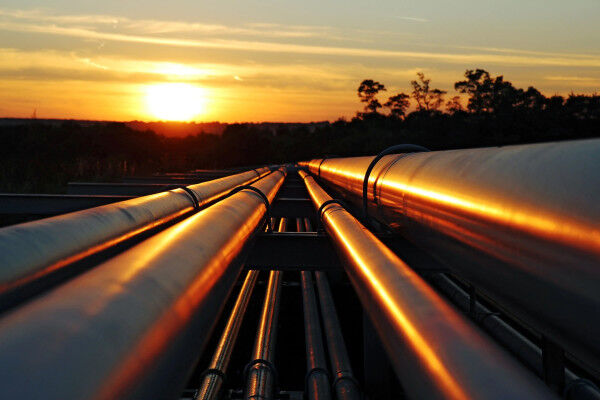
The global energy landscape is defined by a striking paradox: natural gas production has surged, driven largely by the rapid expansion of unconventional resources in the United States, yet the industry continues to grapple with a decade of volatile and often depressed pricing. Despite this instability, global natural gas demand is projected to grow by roughly 1.5% per year through 2030, with the electric power sector accounting for nearly half of that increase. At the same time, global electricity demand is expected to rise even faster, more than 3.5% annually through 2030, fueled by the explosive growth of artificial intelligence, data centers, electric vehicles, and expanding industrial activity across the Asia‑Pacific region.
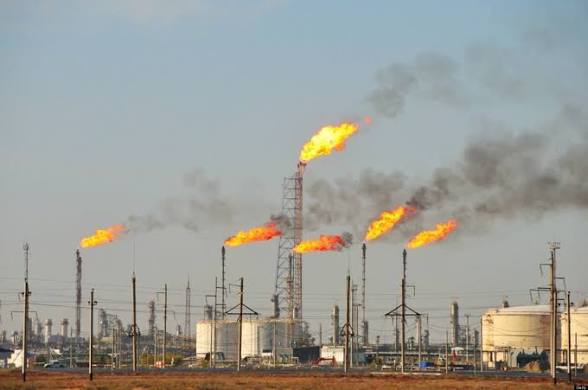
This accelerating demand collides with a structural constraint: a vast share of the world’s proven natural gas reserves estimated at 30% to 80%, remains effectively stranded. These resources are locked in remote, offshore, or infrastructure‑poor regions where conventional pipeline transport is technologically impractical or economically prohibitive. The result is a widening gap between where gas is needed and where it actually exists, creating one of the most pressing logistical challenges in the modern energy system.
The research from Oluwatobi Ajagbe provides a techno-economic roadmap for navigating this stranded category. By comparing two leading monetisation strategies—Gas-to-Wire (GTW) and Gas-to-Liquid (GTL). The study offers a vital guide for producers looking to turn an abundant, low-priced commodity into high-value revenue streams.
Beyond the Pipeline: The Monetisation Menu
Historically, the disconnection between remote gas reservoirs and hungry markets has obstructed natural gas from achieving a fully developed, globally traded commodity status. While Liquefied Natural Gas (LNG) revolutionised the industry in the 1960s by providing a 600-fold volume reduction for sea transport, it remains a capital-intensive solution suited primarily for large-scale, long-distance trade beyond 2,500 miles.
For smaller or more “marginal” fields, the industry is looking toward more agile technologies. Compressed Natural Gas (CNG) offers simplicity by compressing gas to 3,000 psi, though it remains a niche solution for satisfying small markets. More experimental is Gas-to-Hydrate (GTH), which traps methane molecules in water at high pressure and low temperatures to form a solid. While GTH ships avoid the need for expensive refrigeration units, technical hurdles remain before it achieves commercial viability.
GTW vs. GTL: A Tale of Two Investments
The core of Ajagbe’s research lies in a detailed comparative study of Gas-to-Wire (generating electricity at the well-site for transmission) and Gas-to-Liquid (chemically converting gas into liquid fuels like jet fuel or diesel). The choice between the two is not merely technical; it is a fundamental business decision based on capital appetite and risk tolerance.
Using a case study of a gas asset with a flow rate of 10 million standard cubic feet per day (MMScfD), the research highlights a sharp divergence in economic profiles:
- Capital Intensity: GTW is the more capital intensive investment, requiring approximately more than twice the capital needed for a comparable GTL project..
- Net Present Value (NPV): Despite the higher entry cost, GTW is the clear winner for long-term wealth generation. In a realistic production decline scenario in a given gas asset, GTW yielded an NPV of about 2.5 times thatfor GTL.
- The IRR Paradox: While GTW generates more total cash, GTL offers a superior Internal Rate of Return (IRR). Under optimistic conditions, GTL reached an impressive over 75% IRR, outpacing GTW’s 65%.
“GTW project appeared to be more favorable when the economic yardstick is NPV and payback period, but the GTL project is more favorable if IRR is to be used as the economic metric. This is not uncommon, as smaller projects might offer higher percentage return (IRR), while a larger project adds more total wealth ,” Ajagbe notes.
Efficiency and Market Drivers
What actually moves the needle for these projects? The study utilised Monte-Carlo simulations and sensitivity analysis to rank the market drivers that dictate success or failure. For both technologies, Product Price and Process Efficiency were the most influential factors. The study shows that a 10% decrease in natural gas prices can reduce the projected profitability of either project by approximately 15–22%, assuming all other factors remain constant. The reverse is also true: a 10% price increase can boost profitability by a similar margin.
However, the financial resilience of the investments varies significantly:
- In GTW projects, CAPEXis the least influential driver. A 10% change in capital cost affects profitability by about 5%, indicating that once the initial investment hurdle is cleared, the project remains relatively resilient to cost overruns.
- In GTL projects, OPEXis the least influential market driver. A 10% change in operating costs alters project returns by less than 1%, showing that day‑to‑day operating expenses have minimal impact on overall project yield.
The projects’ risk analysis study further solidified GTW’s standing as the “safer” bet for long-term stability. The analysis provided 95% assurance that a GTW project would yield an NPV of at least over 35% greater than that of GTL.
The Bottom Line for Producers
As mature economies experience a decline in natural gas production while still accounting for nearly 45% of world consumption, the pressure to monetise stranded assets will only intensify. The industry is moving toward an era of abundance where the challenge is no longer finding the resource, but choosing the most efficient engine to bring it to a hungry market.
Ajagbe’s findings suggest a decision making guideline for producers. For those with deep pockets and a long-term horizon, Gas-to-Wire offers the most robust financial yield and a shorter payback period in realistic scenarios. For those prioritising rapid returns on a smaller capital base, Gas-to-Liquid—particularly “mini-GTL” technologies, provides a faster path to high-rate profitability as indicated by its superior IRR.
Ultimately, the “best” technology is context-dependent. But in the race to unlock the world’s stranded gas, data-driven economic metrics must lead the way.
Bio
Oluwatobi Ajagbe is a Research Affiliate at the Petroleum Engineering Research Lab in the Mewbourne School of Petroleum and Geological Engineering at the University of Oklahoma. He holds a B.Sc. in Petroleum Engineering from the University of Benin and dual M.Sc. degrees in Natural Gas Engineering & Management and Data Science & Analytics from the University of Oklahoma. His research expertise spans energy project evaluation, natural gas utilization technologies, enhanced gas recovery, producedwater treatment, and the application of machine learning and artificial intelligence in energy systems.