High Fees and a Costly Inspection Program Lack Justification
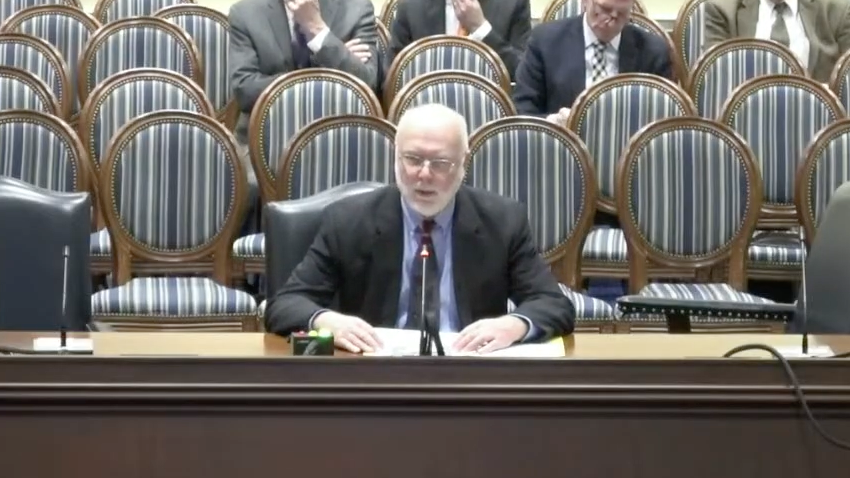
March 4, 2026 – I testified today before the Maryland House of Delegates Environment and Transportation Committee on HB 1225 (“Weights and Measures – Electric Vehicle Charging Equipment – Registration Fees”).
This bill, introduced by Delegate Fraser-Hidalgo, aims to cap registration fees for Electric Vehicle Service Equipment (EVSE) used in retail electricity sales as motor fuel. The original language would have limited the per-port fee to no more than the gasoline dispenser meter fee ($20 per meter + $75 per location). It also required funding for inspection equipment to come from the Maryland Strategic Energy Investment Fund (SEIF).
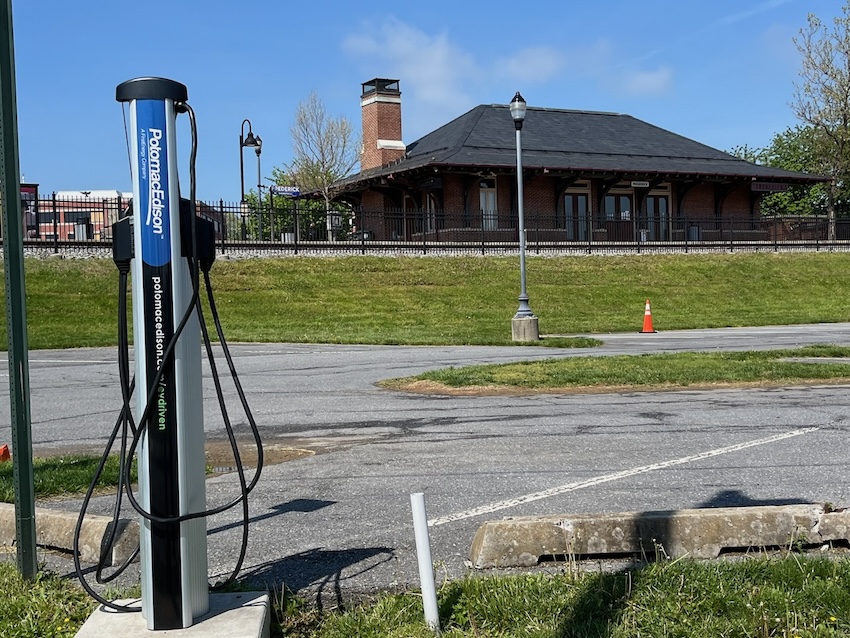
The current Weights and Measures registration fee stands at $150 per port annually, a rate that is one of the nation’s highest and risks discouraging new installations or even lead to the removal of existing chargers.
Amendments announced by the sponsor at the hearing would set the fee at $75 per port. Yet even this reduction imposes significant costs on operators, without clear evidence of need.
My Three Key Points from Testimony
I made three brief points:
- The Department claims this protects consumers from inaccurate metering.
Yet there is no documented evidence of widespread meter accuracy problems in Maryland’s public EV chargers that would justify a multi-million-dollar program. - Complaints about out-of-service chargers have surfaced in hearings.
Weights and Measures inspectors typically only address broken chargers if encountered during scheduled inspections. This program will not meaningfully improve charger uptime or reliability. - An MPIA response reveals only 22 formal EV charger complaints have been filed statewide.
Of those, 14 were submitted by me documenting time-based rather than energy-unit billing. All were investigated and resolved under existing staffing and budget; no new program was needed.
Broader Context and Concerns
Most oral testimony was favorable or favorable with amendments; I was the only speaker in outright opposition.
Before committing millions in registration fees or SEIF funds, I urge the Committee to consider whether this spending aligns with demonstrated need.
Full Testimony
Chair Korman and Members of the Committee,
My name is Lanny Hartmann. I’m an EV driver and editor of PlugInSites.
You have my written testimony, which includes information I obtained through a Public Information Act request showing the Department projects spending approximately $3.37 million over five years for this inspection program.
I have three brief points.
First, the Department presents this as necessary to protect consumers. Yet there is no documented evidence of widespread meter accuracy problems justifying a multi-million-dollar response.
Second, while complaints about out-of-service chargers have been raised in recent legislative discussions and hearings, Weights and Measures inspectors typically only address broken chargers if encountered during scheduled inspections. This program will not meaningfully improve charger uptime or reliability.
Third, the Public Information Act response shows only 22 formal EV charger complaints have been filed. 14 were submitted by me documenting time-based rather than energy-unit billing. Those were investigated and resolved under existing staffing and budget.
Before committing millions in registration fees or SEIF funds, I urge the Committee to consider whether this spending aligns with demonstrated need.
If any SEIF funds are available, I would prefer to see them go toward solar panels or installing more charging stations rather than building an inspection program that current complaint data does not support.
For these reasons, I respectfully ask for an unfavorable report.
Thank you.
Video of Committee Testimony on HB 1225
Related
Discover more from Plug-In Sites
Subscribe to get the latest posts sent to your email.