adminis
As global tensions continue to reverberate across economies courtesy of the ongoing war between Israel/United States and Iran, Nigeria’s commuters are, once again, at the mercy of forces far beyond its borders, BENJAMIN ALADE reports.
The rising cost of transportation across Nigeria has taken a sharp turn for the worse in recent weeks, with commuters and transport operators alike struggling to cope with the ripple effects of soaring fuel prices, widely linked to ongoing geopolitical tensions in the Middle East.
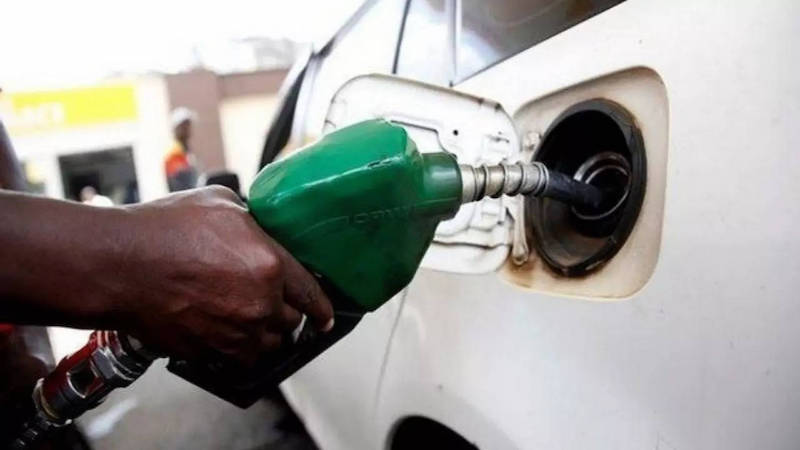
In less than three months, petrol prices have surged by nearly 70 per cent, triggering a corresponding hike in fares across major cities.
From Lagos to Ibadan to Abuja to Kano, Anambra, Kwara, Ebonyi, Ekiti and others, commuters now face a harsh reality: getting to offices, schools, or the markets has become significantly more expensive, forcing many to rethink their travel habits.
For workers like Adewale Sanni, a civil servant in Ibadan, the impact has been immediate and painful.
“I used to spend about N1,500 daily on transport, but now it is almost N3,000. My salary has not changed, so I have had to cut down on feeding and other essentials,” he said.
Similar sentiments echo across motor parks and bus stops, where passengers often engage in heated exchanges with drivers over frequent fare increases.
Transport operators, however, insist they are barely staying afloat. Commercial drivers say the spike in fuel costs has eroded their margins, leaving them with little choice but to increase fares.
“It’s not like we enjoy raising prices,” said Musa Ibrahim, a minibus driver. “Fuel has doubled, spare parts are expensive, and even daily levies remain the same. If we don’t adjust fares, we run at a loss.”
To survive, many motorists have adopted cost-cutting measures. Some reduce the number of trips they make daily to conserve fuel, while others resort to overloading vehicles to maximise earnings, often at the expense of passenger comfort and safety.
In some areas, drivers now insist on full capacity before moving, leading to longer waiting times for commuters.
Meanwhile, ride-hailing operators have also adjusted their pricing algorithms, pushing fares higher and making services less accessible to average Nigerians. This has led to a gradual return to informal and often unregulated modes of transport, further complicating urban mobility.
Despite the growing crisis, there is widespread concern about the pace and effectiveness of government intervention. While authorities have repeatedly assured citizens of efforts to stabilise fuel supply and prices, many Nigerians say the impact has yet to be felt at the grassroots.
Transport unions and policy experts have called for urgent measures, including targeted subsidies for public transportation, investment in mass transit systems and support for alternative energy sources such as compressed natural gas (CNG).
Without these interventions, analysts warn that the situation could worsen, deepening economic hardship and reducing productivity.
As the cost of mobility continues to climb, millions of Nigerians are left navigating a difficult path – where even the simple act of getting from one place to another has become a daily struggle.
Already, Governor Seyi Makinde of Oyo State has approved a N10,000 monthly transportation allowance for workers in Oyo State as part of measures to cushion the impact of rising petrol prices.
The allowance, which will take effect from April 2026, was disclosed by the Chairman of the Nigeria Labour Congress (NLC), Oyo State Chapter, Kayode Martins, in a statement issued earlier in the week.
Martins said the approval followed a formal request by labour leaders to address the increasing cost of transportation faced by workers.
According to him, the intervention is aimed at providing relief amid prevailing economic challenges, particularly the surge in fuel prices, with petrol currently selling between N1,320 and N1,330 per litre in the state.
Speaking with The Guardian, Professor of Transport Planning and Policy at the Lagos State University, Samuel Odewumi, recommended that the government sell crude to Dangote at a discounted rate and request a proportional reduction in refined products.
Odewumi said the government should give Dangote a greater supply that would take care of about 50 per cent of the supply needs of the refinery.
Odewumi, who doubles as the acting Vice-Chancellor, University of Uyo, said, besides that technical subsidy of the production end of the chain, he strongly warned against reintroduction of subsidy at the consumption end of the chain.
He said this would bring back arbitrage, corruption and a huge drain on cash reserve, which would in turn put pressure on the value of the naira.
Odewumi explained that the impact of the fuel price increase was a double-edged sword for Nigeria. On one hand, Nigeria would earn more revenue from the crude export price, but on the other hand, it would cause an instantaneous increase in transportation costs.
“We are already witnessing this and this is a global impact,” he said.
A mobility expert, Luqman Mamudu, also called on the Federal Government to adopt a targeted intervention in the transport sector as a strategic response to rising fuel prices driven by global energy volatility.
Mamudu, an expert mobility consultant and Managing Partner at Transtech Industrial Consulting, attributed the recent spike in transportation costs in Nigeria largely to the ongoing conflict in the Middle East.
According to him, as a participant in the global oil market, Nigeria is inevitably exposed to geopolitical disruptions, which have triggered sharp increases in fuel prices and by extension, the cost of mobility across the country.
He argued that a return to the blanket fuel subsidy regime was neither sustainable nor advisable, citing its history of abuse and inefficiencies.
Instead, he proposed a Targeted Transport Intervention (TTI) aimed at directly supporting verified transport operators.
Under this model, he said the government would create a comprehensive national database capturing all legitimate public transport providers, including haulage firms, commercial buses, taxis, ride-hailing operators, tricycles, motorcycles and even passenger boats operating in rural areas.
Mamudu, who is also a former director of Policy and Strategy at the National Automotive Design and Development Council (NADDC), further recommended the introduction of a digital subsidy system, where only registered operators would be issued fuel subsidy cards.
This, he said, would allow for better monitoring, controlled fuel usage and eliminate leakages that plagued past subsidy frameworks.
To fund the initiative, the expert advised the government to channel excess revenue accruing from high global crude oil prices into the scheme.
He noted that such a move would ensure that the benefits of increased oil earnings are directly felt by ordinary Nigerians through reduced transportation costs.
Highlighting the broader economic implications, Mamudu stressed that subsidising transport operators rather than fuel itself would serve as a critical safeguard against inflation.
He explained that stabilising transportation costs would help prevent a surge in food prices, protect consumers’ purchasing power, and ultimately shield the average Nigerian from the harsh realities of an economic downturn.
He maintained that adopting a targeted and technology-driven approach remains the most practical path to sustaining mobility and economic stability amid ongoing global uncertainties.
Besides, Associate Professor of Marketing at Keele University, the United Kingdom, Dr Emmanuel Mogaji, argued that the conversation must move beyond fuel prices alone and address the wider implications for citizens’ daily lives.
According to Mogaji, traditional policy responses tend to focus narrowly on fuel pricing, but a more forward-looking approach is needed.
“This is not just about cost but how transport systems shape and constrain people’s well-being, dignity, and access to life opportunities, especially in a context like Nigeria.
“From a traditional policy lens, the focus would be on fuel prices. From a transformative transport services perspective, the focus shifts to system resilience and service redesign. How do we plan? How do we become more resilient to this shock?” he asked.
He warned that Nigeria’s heavy dependence on petrol had created a structural vulnerability that leaves the country exposed to global disruptions.
“Over-reliance on petrol equals structural vulnerability. We would be stranded if we didn’t change,” Mogaji noted.
He also advocated for a gradual, but realistic transition to alternative energy sources such as electric vehicles (EVs) and compressed natural gas (CNG).
Mogaji further emphasised the need to invest in non-motorised transport infrastructure, including walking and cycling, particularly within urban areas.
Beyond energy alternatives, Mogaji called for immediate, practical interventions to ease the burden on commuters.
These, according to him, included promoting shared mobility solutions such as structured carpooling, staff buses, and transport cooperatives.
“Instead of waiting for global issues to be fixed, let’s start looking at shared mobility coordination,” he said, suggesting that employers, community groups, and religious organisations can play a role in organising transport for their members.
On the contentious issue of fuel subsidy, Mogaji took a clear stance against its reintroduction.
Rather, he proposed targeted interventions such as transport vouchers for vulnerable populations, subsidised routes for essential services like education and healthcare and improved access for persons with disabilities.
Mogaji further warned that the economic implications of rising transport costs are far-reaching, affecting food distribution, business operations, and access to essential services.
“The impact on the economy will be high. Increased cost of transport, difficulties in transporting food, and vulnerable people will have limited access to transport,” he said.
As Nigeria grapples with the ripple effects of global energy instability, experts believe the current crisis could serve as a turning point, one that compels policymakers to rethink not just fuel pricing but the very structure and purpose of the country’s mobility systems.