As electric vehicles (EVs) rapidly gain mainstream adoption across the United States, businesses are uniquely positioned to capitalize on this shift. Installing a commercial EV charging station is no longer a futuristic perk—it’s a strategic move that enhances customer experience, boosts revenue, and strengthens your brand’s sustainability profile.
Whether you operate retail locations, office buildings, commercial real estate, or multifamily properties, EV charging helps future‑proof your business while meeting evolving consumer expectations.
Understanding Commercial EV Charging Stations
What Is a Commercial EV Charging Station?
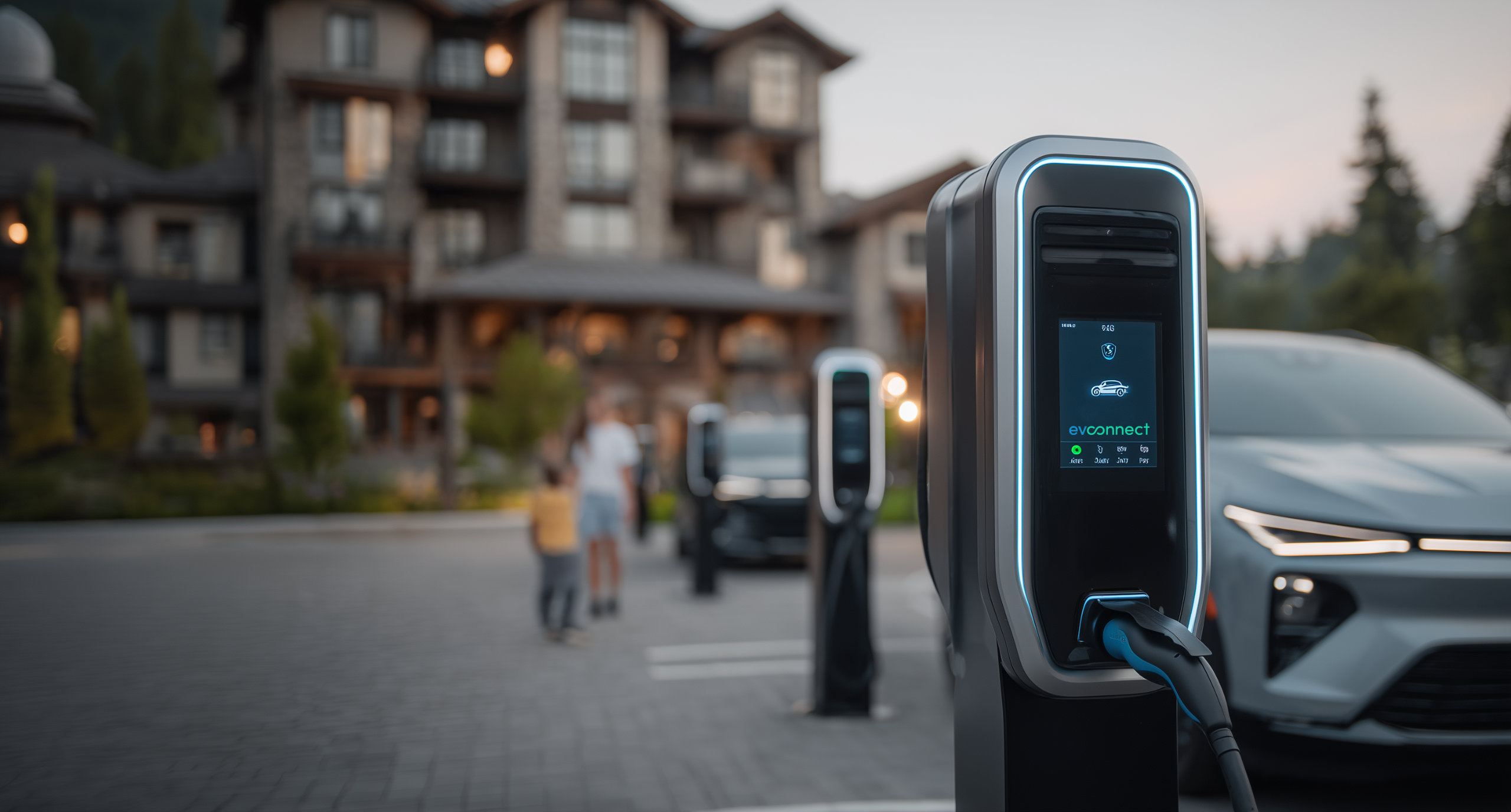
A commercial EV charging station is an electric vehicle supply equipment (EVSE) unit installed at a business location—such as retail centers, workplaces, hotels, or public parking areas—to allow customers, tenants, or employees to charge their electric vehicles on-site. These systems are designed to support higher usage, more robust connectivity, and revenue‑generating capabilities compared to residential chargers.
Types of Commercial EV Charging Stations
Level 2 Chargers (AC):
- Provide 10–60 miles of range per hour.
- Ideal for workplaces, hotels, multifamily, and retail locations with longer dwell times.
- Most common and cost‑effective choice for businesses.
DC Fast Chargers (DCFC):
- Provide 80% charge in roughly 20–40 minutes.
- Best for high-traffic areas such as convenience stores, quick-service restaurants, travel corridors, and fleets.
- Higher cost but optimal for businesses seeking maximum turnover and ROI.
Related Reading: Level 2 vs DC Fast Charging Stations
Benefits of Installing Commercial EV Charging Stations
Attract New Customers
EV drivers actively seek locations where they can charge while they shop, work, or dine. By offering charging amenities, you position your business as a preferred destination. More dwell time often translates directly into increased sales (opens in a new tab)—especially in retail and hospitality environments.
Enhance Brand Image
Sustainability matters. Consumers increasingly choose brands committed to environmental responsibility (opens in a new tab). Installing commercial EV charging stations signals progress, innovation, and eco-conscious leadership—strengthening your competitive advantage.
Improve Employee Satisfaction
For workplaces, EV charging is a valuable employee perk. It supports sustainability initiatives, helps attract top talent (opens in a new tab), and contributes to a modernized, future-ready work environment.
Related: 5 Places Drivers Want to See EV Charging Stations
Costs Associated with Commercial EV Charging Stations
How Much Does a Commercial EV Charging Station Cost?
Costs vary based on charger type, site conditions, installation complexity, and network features. Generally:
- Level 2 chargers: $3,500–$15,000 per charger
- DC fast chargers: $18,000–$350,000+ per unit
Incentives and rebates at federal, state, and utility levels can significantly reduce upfront costs—often by 40–70%.
| Feature | Level 2 Chargers | DC Fast Chargers |
|---|---|---|
| Total cost | $3,500 to $15,000 per port | $18,000 to $350,000+ per port |
| Power output | 3.3 kW to 19.2 kW | 50 kW to 500 kW |
| Segments | Ideal for workplace, multifamily, retail, take-home fleets, and fleets using depots without rapid turnaround needs. | Ideal for travel centers, high-traffic public sites, and fleets that need rapid turnaround. |
Note: This is an estimate. The price will depend on various factors such as the complexity of the installation, features of the EV charging stations selected, distance from the chargers to a power source or electric panel, and any other service or infrastructure upgrades required to support the charging stations. Start with a site assessment for your business to discuss your specific project needs. Contact EV Connect to get started.
The good news is that EV Connect can help you navigate all of these questions and get a firm idea of how much your car charging stations will cost before you move forward with your project. We can also help you find ways to keep these costs as manageable as possible.
Breakdown of Commercial EV Charging Station Costs
Typical cost categories include:
- Hardware (charger units)
- Installation (labor, electrical upgrades, trenching, conduit)
- Software/network services
- Ongoing operations & maintenance
- Permitting and potential utility coordination
Commercial EV Charging Station Installation Cost Factors
Installation is often the largest variable cost. Factors that influence installation expenses include:
- Distance to electrical service
- Existing panel capacity
- Mounting type (pedestal vs. wall‑mounted)
- Required trenching or concrete work
- Networking and integration needs
Businesses can reduce costs by planning strategically, selecting optimal locations on site, and taking advantage of rebates.
Selecting the Best Commercial EV Charging Stations
Top Features to Look For
When evaluating EVSE options, prioritize:
- Smart charging & network connectivity
- Load management capabilities to optimize energy use
- Durability and weather resistance for long-term reliability
- Open standards & interoperability
- Reporting and analytics
- Payment processing & revenue control
Best Commercial EV Charging Stations in the Market
The best commercial EV charging stations on the market distinguish themselves through a combination of performance, durability, and adaptability. These solutions are engineered for high uptime and reliability, ensuring consistent operation even in demanding commercial environments.
They typically include robust warranty coverage and responsive service programs, giving businesses confidence that any issues will be addressed quickly. Leading systems also offer flexible configurations—from wall‑mounted units to pedestal installations and smart networked chargers—allowing organizations to match the equipment to different site layouts and use cases.
Leading EV charging solutions typically offer:
- High uptime and reliability
- Strong warranty and service programs
- Flexible configurations for various use cases
- Scalable hardware to support future expansion
At EV Connect, we’ve grouped commercial EV charging stations into Premier, Standard and Basic tiers using extensive uptime and serviceability data that balances performance, reliability and value.
Where to Find Commercial EV Charging Stations
Businesses can purchase commercial EV charging stations through:
- Manufacturer websites
- Authorized distributors
- Turnkey solution providers
- Utility programs offering EVSE packages
Choosing a provider that offers installation, networking, and ongoing support ensures a smooth experience and higher long-term ROI.
Evaluating Different Offers and Financing Options
To maximize value, compare:
- Hardware and installation bundles
- Network service pricing
- Warranty terms
- Incentive eligibility
- Financing models
Many providers now offer charging-as-a-service (CaaS) models, enabling businesses to install stations with little or no upfront cost.
Installation Considerations
Steps for Successful Commercial EV Charging Station Installation
- Site assessment and electrical evaluation
- Determine charger placement based on traffic flow and accessibility
- Select hardware and network provider
- Obtain permits and coordinate with local authorities
- Install electrical infrastructure
- Mount and commission chargers
- Activate software and payment systems
- Promote the stations to customers and employees
Navigating Local Regulations and Permits
Navigating local regulations and permits is a critical early step in any workplace EV‑charging project because compliance directly influences both cost and timelines.
Beyond simply filing paperwork, organizations often must meet ADA accessibility requirements, adhere to local electrical and safety codes, secure zoning approvals that determine whether charging equipment is permitted on a given property, and complete utility interconnection processes to ensure safe and reliable power delivery.
Each of these elements can vary widely by city, county, and state, which adds complexity for companies operating across multiple regions. Because permitting delays are one of the most common reasons EV‑charging deployments stall, partnering with an experienced provider can significantly streamline the process.
Requirements may include:
- ADA accessibility
- Local electrical codes
- Zoning approvals
- Utility interconnection processes
Skilled partners understand the nuances of local rules, maintain relationships with permitting authorities and utilities, and can anticipate obstacles before they affect construction. This expertise helps keep projects on schedule, reduces unexpected costs, and ensures that charging infrastructure launches smoothly and in full compliance with applicable regulations.
Conclusion: The Future Outlook for Businesses with EV Charging Stations
As EV adoption continues accelerating nationwide, commercial EV charging stations are becoming a standard amenity—and a competitive differentiator. Businesses that invest today will benefit from increased traffic, stronger brand loyalty, new revenue streams, and alignment with sustainability goals.
By embracing EV charging infrastructure now, you’re not just keeping up with the future—you’re leading it.
About EV Connect
EV Connect is a full-service EV charging partner, offering end-to-end support from incentive guidance and site assessment to hardware, installation, software, warranties, and 24/7 customer support—all designed to simplify deployment and ensure long-term station reliability and performance.
Our 16+ years of charging expertise bring it all together seamlessly—all backed by Schneider Electric, the world’s most sustainable company.*
Request a Demo or Contact us today and find out why CPOs, OEMs, utilities, and more trust EV Connect to run their businesses!
*Schneider Electric was named “World’s Most Sustainable Company 2025 (opens in a new tab)” by TIME Magazine and Statista, and “World’s Most Sustainable Corporation 2025 (opens in a new tab)” by Corporate Knights.
Related Reading:
Sources
Beambox – Retail Dwell Time That Leads To Increase in Sales (opens in a new tab)
Capital One Shopping – Eco-Conscious Consumer Statistics (opens in a new tab)
Plug-in America – Workplace Charging & Incentives (opens in a new tab)
Qmerit – How Much Does a Commercial EV Charging Station Cost? (opens in a new tab)
U.S. Department of Energy (DOE) – Costs Associated With Non-Residential Electric Vehicle Supply Equipment (opens in a new tab)