adminis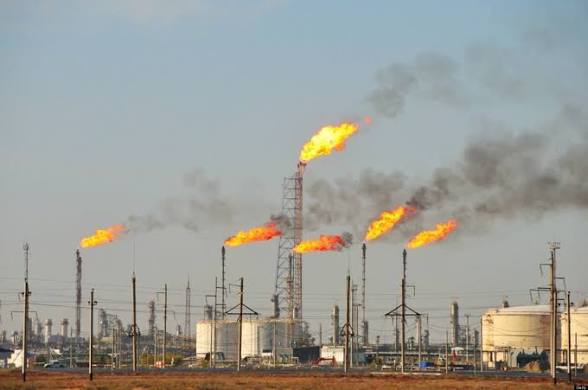
Nigeria loses an estimated $2.5 billion annually by flaring over 300 billion standard cubic feet of it’s gas, wasting resources that could power millions of homes. Analysts said if the gas being flared is properly harnessed, the country could lead Africa’s energy future; BENJAMIN UMUTEME reports.
Accountability Lab Nigeria, in 2025, launched a policy brief on the persistent issue of gas flaring in Nigeria. According to the report, despite the enactment of the Petroleum Industry Act (PIA) in 2021, Nigeria remains the world’s seventh-largest gas flare, releasing approximately 7 billion cubic meters (bcm) of gas annually.
This is does not only result in severe environmental degradation and health challenges for the host communities, but also leads to an estimated economic loss of $2.5 billion every year in wasted resources.
Nigeria Extractive Industries Transparency Initiative (NEITI) also revealed that Nigeria flared 183.4 billion Standard Cubic Feet (5.2 billion m³) in 2023, valued at $458.5 million. According to another report by HumAngle, a hospital physician in Obrikom, this development also leads to an increased risk of tumors among residents in proximity to flares.
Similarly, Obrikom and Egbema, community hospitals reported 1,345 and 2,124 respiratory-related cases (coughing, wheezing, shortness of breath) from 2013–2023, directly associated with gas-flaring pollution. Air pollution levels from flaring exceed WHO safety guidelines, leading to significantly higher rates of respiratory conditions, especially in children.
All these are the economic and health losses that Nigeria and Nigerians have had to go through due to poor enforcement, and fragmented oversight that has kept the country as the world’s seventh-largest gas flarer.
Experts have opined that the current penalties ($2 per 1,000 scf) are too low to discourage gas flaring, and there is a lack of real-time monitoring tools to track violations effectively.
Other effects
Across the Niger Delta region, the effect of gas flaring is felt in the loss of livelihood and the living condition of the people as the majority are forced to drink polluted water.
The numbers are stark in their indictment. According to the World Bank’s Global Gas Flaring Tracker Report (July 2025), Nigeria recorded a staggering 12% increase in gas flaring in 2024, marking the second consecutive year of rising volumes — and the second-largest increase globally, surpassed only by Iran.
Nigeria flared 203.9 billion standard cubic feet (scf) of natural gas in 2025, equivalent to 7.54% of total gas production despite a 92% utilisation rate. This volume, up from 192.9 billion scf in 2024, stems largely from associated gas in oil fields, where infrastructure gaps force operators to burn off excess. Monthly peaks hit 18.7 billion scf in January, underscoring seasonal vulnerabilities tied to limited offtake capacity.
The economic toll is staggering: flared gas could fuel power plants, industries, and exports;yet, it evaporates billions in potential revenue annually. Environmentally, it pumps six million tonnes of CO2 yearly from select sites alone, while pollutants like PM2.5 harm farmers’ health and cut agricultural labour by 5%.
In the first quarter of 2025 alone, Nigeria lost 9,900 GigaWatt hours (GWh) of power generation potential to the flames – a 16% rise from the same period the year before. In all of 2024, the country flared natural gas valued at $1.05 billion, an amount equivalent to 30,100 GWh of electricity – enough to dramatically ease the chronic blackouts that suffocate Nigerian homes and factories alike.
Yet, according to the Nigerian Upstream Petroleum Regulatory Commission (NUPRC) Nigeria sits atop over 215.19 trillion cubic feet (Tcf) of proven natural gas reserves, with an estimated 600 Tcf in unproven reserves – the largest proven gas reserves on the African continent. The tragedy is not one of scarcity. It is one of will, governance, and missed historic opportunity.
Yet, amid the flaring lies an extraordinary opportunity.
The 2026 roadmap
The launch of the NNPC Limited Gas Master Plan 2026 in January marked a turning point. Unlike the previous “dead-on-arrival” policies, the 2026 plan focuses on disciplined execution and commercial viability.
The government’s target is bold: increase national gas production to 10 billion cubic feet per day (bcf/d) by 2027. Central to this is the “Decade of Gas” initiative, which positions natural gas as Nigeria’s primary transition fuel.
The strategy includes: decentralised gas clusters, infrastructure milestones, and the NGFCP permit wave. All these are expected to inject $2 billion in private investment.
By commercialising flared gas, Nigeria can slash emissions, generate billions in new revenue, create tens of thousands of jobs, and position itself as the undisputed leader of Africa’s gas-powered future.
“Nigeria’s pathway to a prosperous future lies in our collective ability to leverage our resource abundance, especially as gas sits at the heart of it. It is our bridge to a cleaner future, our engine for industrialisation, and our foundation for export-led growth,” declared NNPC Group Chief Executive Officer, Bashir Bayo Ojulari, in February 2026.
The “Transition Fuel” debate
Nigeria’s insistence on gas as a “transition fuel” has often put it at odds with global “green-only” advocates; however, industry leaders argue that for Africa, a “just transition” must include gas to solve the immediate crisis of energy access.
For the NNPC Ltd’s GCEO, “Gas sits at the heart of our strategy. It is our bridge to a cleaner future, our engine for industrialization, and our foundation for export-led growth. We cannot leapfrog to 100% renewables while 600 million Africans lack basic electricity,” he said.
The President of the Society for Planet and Prosperity, Professor Chukwumerije Okereke, however, cautioned that while gas is necessary, Nigeria must avoid “carbon lock-in.” He advocated for a “balanced transition scenario” that uses gas revenues to fund the eventual move toward the 150 gigawatts of solar electricity targeted in the national Energy Transition Plan.
Leading the continent
Nigeria’s success or failure will set the template for the rest of the continent. Projects like the Nigeria-Morocco Atlantic Gas Pipeline and the Trans-Saharan Gas Pipeline are no longer just pipe dreams; they are strategic assets meant to integrate African energy markets.
As Adegbite Falade, the Chairman of the Independent Petroleum Producers’ Group (IPPG), puts it: “Nigeria is fundamentally a gas nation. Our challenge has never been potential, but translating that potential into a reliable supply. 2026 is the year we prove we can do it.”
Ojulari has repeatedly emphasised gas as the centrepiece of NNPC’s strategy. In his remarks at CERAWeek 2026, he outlined a “2026 Gas Master Plan” focused on commercial pricing, infrastructure delivery, and bankable contracts to stimulate off-take and deepen value creation. “Gas, not guesswork, will power Nigeria’s future,” he stated, underscoring disciplined execution over rhetoric.
Africa’s energy demand is exploding. The African Energy Chamber’s 2026 Outlook forecasts a 60 percent rise in continental gas demand by 2050. Nigeria, with its reserves and midstream projects, is uniquely placed to meet it.
Regional pipelines, LNG exports to Europe and Asia, and power pools under the African Continental Free Trade Area can turn Nigerian gas into the backbone of West and Central African industrialisation. Neighbours such as Ghana, Benin, and Togo already benefit from Nigerian gas supply; scaled-up domestic utilisation will free volumes for strategic exports while demonstrating a just energy transition model that balances growth with decarbonisation.
Turning flares into fuel
Nigeria stands at an inflection point. By turning flares into fuel, it can achieve zero routine flaring within the decade, meet its Nationally Determined Contributions under the Paris Agreement, and generate tens of billions in new economic value. More profoundly, it can model for the continent how resource-rich nations harness hydrocarbons as a bridge— not a barrier—to sustainable development.
As Ojulari told stakeholders, Nigeria is “funding its future with present resources,” using today’s oil revenues to build tomorrow’s gas economy. The flames of the Niger Delta need not symbolise failure; re-engineered, they can illuminate a brighter path for 1.4 billion Africans.
The NGFCP’s 28 pioneers, NNPC’s strategic pivot, and the federal government’s clear policy signals have set the stage. What remains is execution—swift, transparent, and inclusive. If Nigeria seizes this moment, the country will not merely end a crisis; it will lead Africa’s energy renaissance, proving that the most powerful transformation often begins by looking beyond the flames.
This tension highlights a central challenge: ensuring the benefits of gas utilisation are equitably shared. The government and companies emphasise that domestic utilisation is a priority, particularly for addressing Nigeria’s chronic electricity deficit.
“Gas-to-power is the low-hanging fruit. Nigeria has less than 13,000 MW of grid capacity for 200 million people. Just a fraction of the currently flared gas, if channeled into efficient modular power plants, could add thousands of megawatts, especially in the industrial and population hubs of the South-South and South-West. This is about creating a circular energy economy in the Delta itself,” asserts Mr. Bolaji Osunsanya, CEO of Axxela.
A former Minister of State for Petroleum Resources, Dr. Ibe Kachikwu, is a vocal proponent. “We should be the fertiliser hub for Africa. We should be producing methanol for fuels and plastics. Flared gas is the feedstock for these industries, waiting to be tapped. This is how you create millions of jobs and move beyond crude oil dependency,” he said.
Experts said the vision extends beyond Nigeria’s borders. They said the African Continental Free Trade Area (AfCFTA) creates a massive single market. Nigeria, with its gas potential, could become the continent’s primary supplier of cleaner energy and feedstock.
“Africa’s energy future must be written by Africans,” said the Executive Chairman of the African Energy Chamber, N.J. Ayuk, adding that, “Nigeria’s gas, if responsibly developed, can be the baseload that powers factories from Ghana to Kenya, while enabling a transition to renewables. Liquefied Natural Gas (LNG) from captured gas can supply Europe and Asia, but compressed natural gas (CNG) and virtual pipelines can fuel regional integration first. Nigeria has the chance to be the anchor tenant in Africa’s energy house.”
The orange glow over the Niger Delta is not merely an environmental catastrophe, a public health emergency, or an economic scandal; it is a symbol of a critical turning point in Africa’s energy story. Nigeria stands at the crossroads between becoming the continent’s industrial engine, or remain a cautionary tale of resource mismanagement.