adminis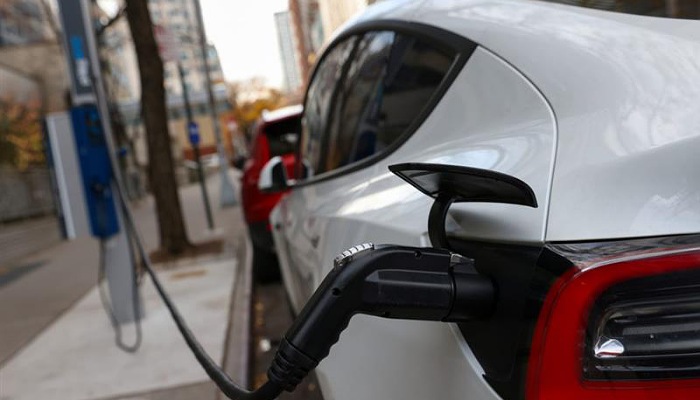
From Rotimi Asher, Lagos
Electric vehicles are proving dependable for Nigerian city drivers, delivering predictable range and lower maintenance needs even as public charging infrastructure remains limited.
This is based on interviews with EV owners, assemblers and industry experts across Lagos and parts of the South-East.
Their experiences suggest that for structured urban commutes, electric mobility is becoming increasingly practical, though infrastructure and policy gaps still shape adoption.
For daily commutes and short trips within cities, drivers report that EVs perform consistently under Nigerian road, traffic and climate conditions. However, concerns around battery longevity, charging access and electricity reliability continue to influence purchasing decisions.
EV drivers who spoke describe their experience as largely predictable, particularly for urban use, where daily travel distances are short, and routines are structured.
Faithful Edozie, who drives a Dayun MPV in Lagos, covers about 50km daily for work and client visits. He said range has not been a concern since he understands his driving pattern and monitors battery levels.
“I’ve never experienced range anxiety”, he said, explaining that once you track your usage, daily movement becomes easy to plan.
Mohammed Yunusa said the reliability he has experienced since switching to electric vehicles two years ago influenced his decision to expand his garage. He now drives three EVs, the BYD Sealion, Denza and Xpeng, which he uses for daily commuting and weekend errands, averaging between 30km and 50km each day.
According to him, the transition has been more convenient than when he relied on a petrol-powered car. Based on his driving needs, he now goes longer between charging sessions than he previously did between fuel refills.
“My EV gives me about twice the practical range I used to get from my petrol car”, he said, referring to how often he needs to recharge compared to how often he used to buy fuel.
Dr. Kaycee Orji, who drives the fully electric Surge X SUV and the VOLTA-X, both assembled by Roxettes Motors, across cities including Aba, Umuahia and Enugu, said his typical daily commute ranges between 40km and 80km depending on meetings and site visits.
He noted that urban traffic conditions have not negatively affected the vehicles’ performance.
According to Orji, the simpler mechanical structure of electric vehicles compared to internal combustion engine cars reduces the likelihood of common engine-related faults associated with petrol vehicles.
While EVs have proven generally reliable, how owners charge their vehicles significantly shapes daily usage and battery longevity.
Edozie, who covers about 50km daily, relies entirely on a public charging station at Foltï Technologies in Victoria Island. He typically tops up once a week, paying about N500 per kWh, which can sum up to roughly N36,000 for a full cycle.
Yunusa relies mainly on an AC home charger installed with his vehicle.
“I rarely use commercial chargers”, he said.
Home charging takes 4–6 hours at 7kW, and he usually tops up once a week to keep his battery around 80% and preserve its life. On the rare occasions he uses commercial stations, a full charge costs roughly N36,000.
Orji noted that AC home charging between 7kW and 11kW usually takes 5–6 hours, while DC fast charging can bring a battery from 20% to 80% in 15–45 minutes. He also revealed that setting up his DC fast charging station at his residence cost about N11.4 million.
Most drivers top up once a week rather than fully deplete their batteries, helping extend battery health.
While drivers have found EVs generally reliable, experts note that proper maintenance and charging habits remain crucial to long-term performance.
Engr Matthew Olanrewaju, a UK-based EV Diagnostics Engineer who spoke, highlighted common maintenance issues for electric vehicles. He works with Tritium Power Solutions, a company that designs and manufactures DC fast chargers for commercial and public networks, widely deployed across Europe, the UK, and other global markets.
According to him, EV batteries typically don’t require frequent maintenance, with most issues arising from poor design or low-quality cells. Parts such as brake pads, shock absorbers, connectors, and electronic components may need replacement due to normal wear and tear, but the battery’s life span is usually five to ten years if properly used.
“Only ensure you don’t fully drain the battery before recharging, and it will remain good until the end of its life”, he said.
Olanrewaju highlighted factors that accelerate battery degradation, including deep discharges, high temperatures, and the use of poorly designed chargers.
“Leaving an EV in the sun on a hot day in Nigeria can reduce battery life, and charging at voltages or currents beyond what the battery is designed for causes damage”, he said.
He recommended preventive practices such as maintaining the battery state of charge between 30% and 80%, topping up when possible, avoiding long heat exposure, and using a quality charger.
For smaller batteries, AC charging is preferred, while DC fast charging suits larger batteries. In Nigeria, most EVs have smaller batteries, making moderate AC charging between 7kW and 50kW the more practical option.
Dr. Kaycee Orji, CEO of ROXETTES, added an assembler perspective on maintenance, noting that modern EVs in Nigeria come with battery thermal management systems that help preserve battery health. According to him, his company’s vehicles are designed to minimize degradation, with typical loss of 3–6% after 3–5 years of use.
The CEO of SAGLEV, Sam Faleye, one of the companies assembling electric vehicles in Nigeria, spoke on EV adoption and market trends in the country. He noted that demand for electric vehicles has increased sharply in recent years.
“While the market for electric vehicles was virtually non-existent five years ago, interest is now very high”,
Faleye referenced current industry data, which suggests that Nigeria’s new car market sells around 200,000 vehicles annually, covering both EVs and internal combustion engine vehicles, of which about 10,000 to 14,000 are assembled locally.
These figures indicate that the apprehension that consumers might shy away from EVs simply because they are new is not as significant as once thought, he noted.
To make EVs more accessible, Faleye explained that SAGLEV works with financing partners and leverages government import duty and VAT exemptions, passing the savings directly to buyers. This strategy targets ride-hailing operators and other segments where affordability and cost of ownership are critical considerations.
On charging infrastructure, Faleye said most EV buyers in Nigeria charge at home, with a charger provided at the point of sale.
“About 80% of our buyers will charge at home or at work, which covers most daily use cases”, he said.
For commercial fleets and mass transit vehicles, charging is managed through employer-installed or fleet-based stations.
He also clarified that the de facto standard for EV charging in Nigeria is likely to be the GBT system used by most Chinese EVs, which make up over 90% of the imported vehicles.
Pricing is a key consideration for buyers comparing electric vehicles ,EVs, with internal combustion engine ,ICE, vehicles. In Nigeria, EV prices vary by battery range, vehicle size, and type pure EV, hybrid, or extended-range.
Most EVs deliver 280km to 420km per full charge, enough for typical city trips; Lagos to Ibadan is about 120km one way.
Compact pure EV sedans for ride-hailing cost around N12 million to N22 million, larger sedans N31 million to N42 million. EV mid-size SUVs can reach N55 million, high-end SUVs over N200 million, and EV pickups up to N60 million.
Light EV trucks typically cost around N40 million. Extended-range EVs generally cost slightly less than fully electric equivalents.
Locally assembled ICE vehicles in similar categories range from N25 million to N35 million for sedans, N20 million to N25 million for light pickups, and N35 million to N40 million for mid-size buses.
Larger SUVs and premium ICE models can exceed N150 million. Imported ICE vehicles outside locally produced brands often cost significantly more due to import duties and logistics.
The Federal Government has taken steps to support EV adoption and manufacturing in Nigeria.
In January 2025, it signed an MOU with South Korea’s AEDC to establish an EV assembly plant and develop supporting infrastructure, aligned with the National Energy Transition Plan ,ETP, and National Automotive Industry Development Plan ,NAIDP.
The project is expected to create 10,000 jobs and reach a production capacity of 300,000 vehicles.
Despite challenges such as electricity supply and road conditions, Nigeria’s EV ecosystem is growing, with past initiatives from the Nigerian Institute of Transport Technology ,NITT, and the National Agency for Science and Engineering Infrastructure ,NASENI, supporting local assembly.
Key players include SAGLEV, Innoson Vehicle Manufacturing ,IVM, Jet Motor Company, Spiro, NEV Motors, Roxettes Motors and EMVC.