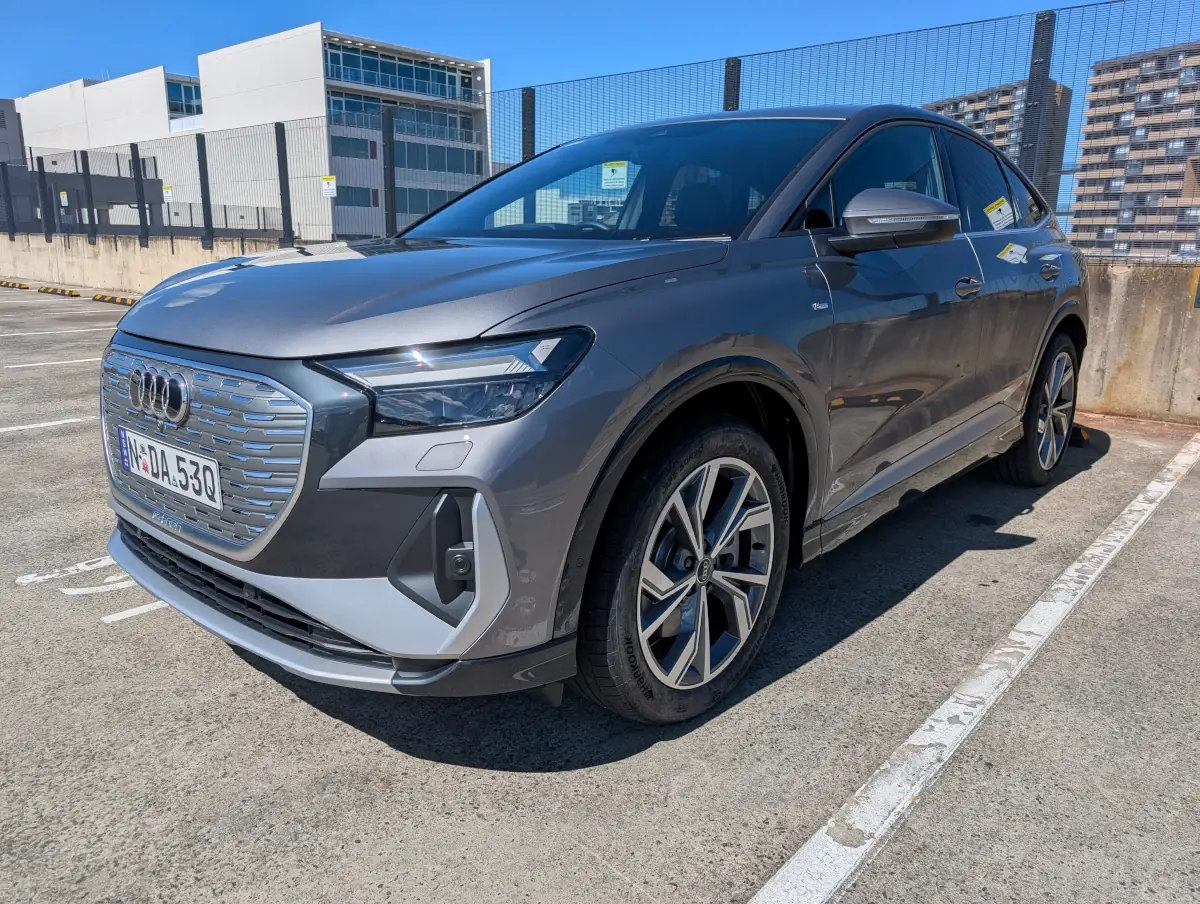
The Q4 e-tron is currently the German brands smallest and most affordable EV in their 4 car lineup, sitting beneath the larger Q6 and Q8 e-tron SUVs, and well below the lofty price tag of an e-tron GT.
However, you wouldn’t call the mid-size SUV small, as it measures only slightly smaller than a Tesla Model Y. Prices starting at $84,900 plus on-road costs, so it is not exactly affordable either for most people. But for those who traditionally buy Audis or other luxury vehicles, I think the Q4 e-tron is worth a look.
Q4 e-tron is built upon the Volkswagen Group’s MEB platform, so it shares underpinnings with several other EVs like the Cupra Born and Tavascan, Skoda Elroq and Enyaq, as well as Volkswagen’s entire range of ID electric vehicles.
There are 4 variants of the Q4 in total, 2 rear-wheel drive Q4 45 e-trons available in either SUV or Sportback body style which is Audi’s name for a coupé SUV. Above that are 2 all-wheel drive Q4 55 e-trons, giving you more power and interior features included, but less range from the same 82 kWh battery for roughly $20,000 extra.
Interestingly, despite the sloping rear window on Sportback versions, their boot space is listed as 15 L higher than the SUVs at 535 L vs 520 L. There is definitely less rear headroom in the Sportback though, so if you have tall people in the back often the SUV would be a better choice.
Plenty of positives
There are plenty of things to like about the Q4 e-tron, starting with the exterior design. Looks are subjective I know, but the Q4 is a good looking car in my opinion, with sleek lines and interesting design elements. I don’t like the fake grille, but I guess Audi wanted the Q4 to blend in with the rest of their combustion SUV range.
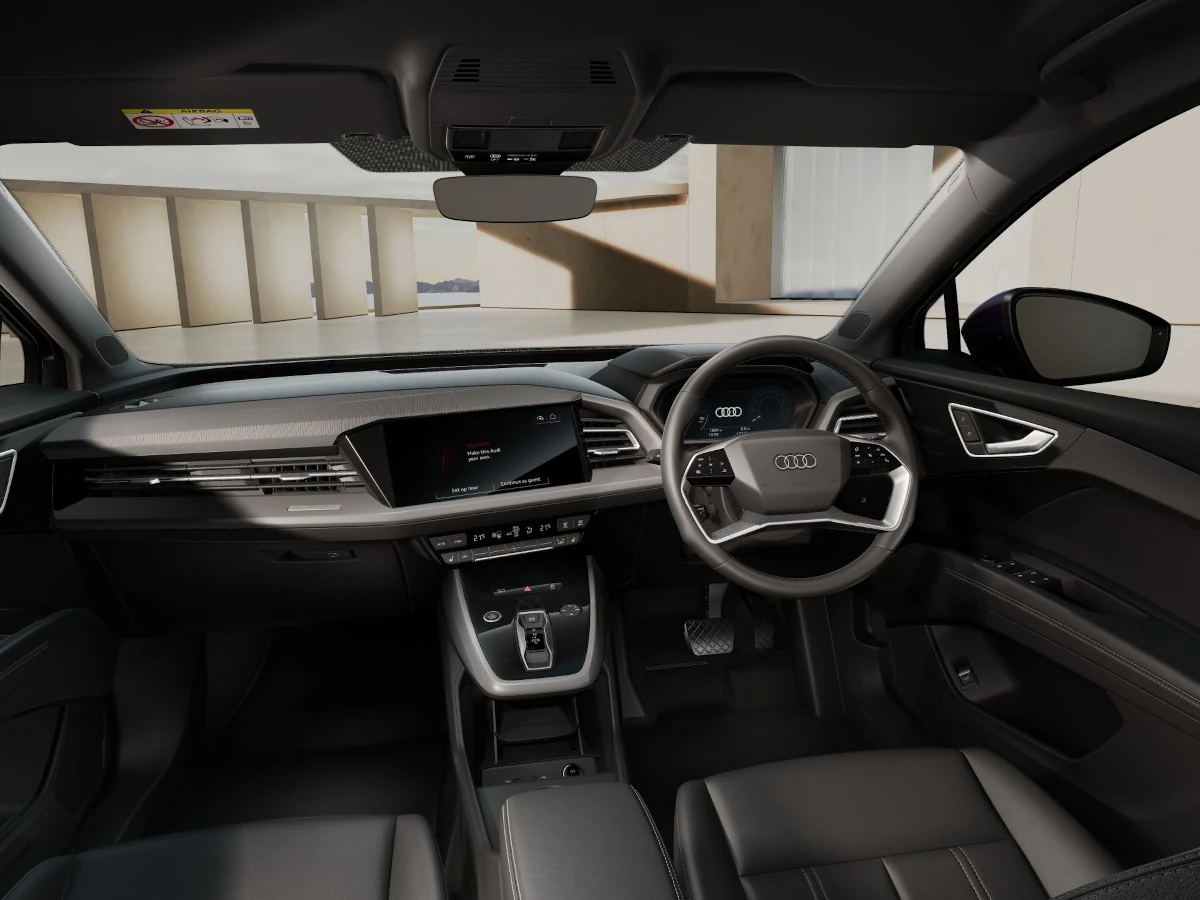
Inside, the Q4 cabin looks and feels premium apart from some hard plastic sections in the door panels which seem cheap, detracting from the overall vibe a little. The central touchscreen is angled towards the driver, along with physical buttons below for adjusting climate controls that emit a satisfying click when pressed.
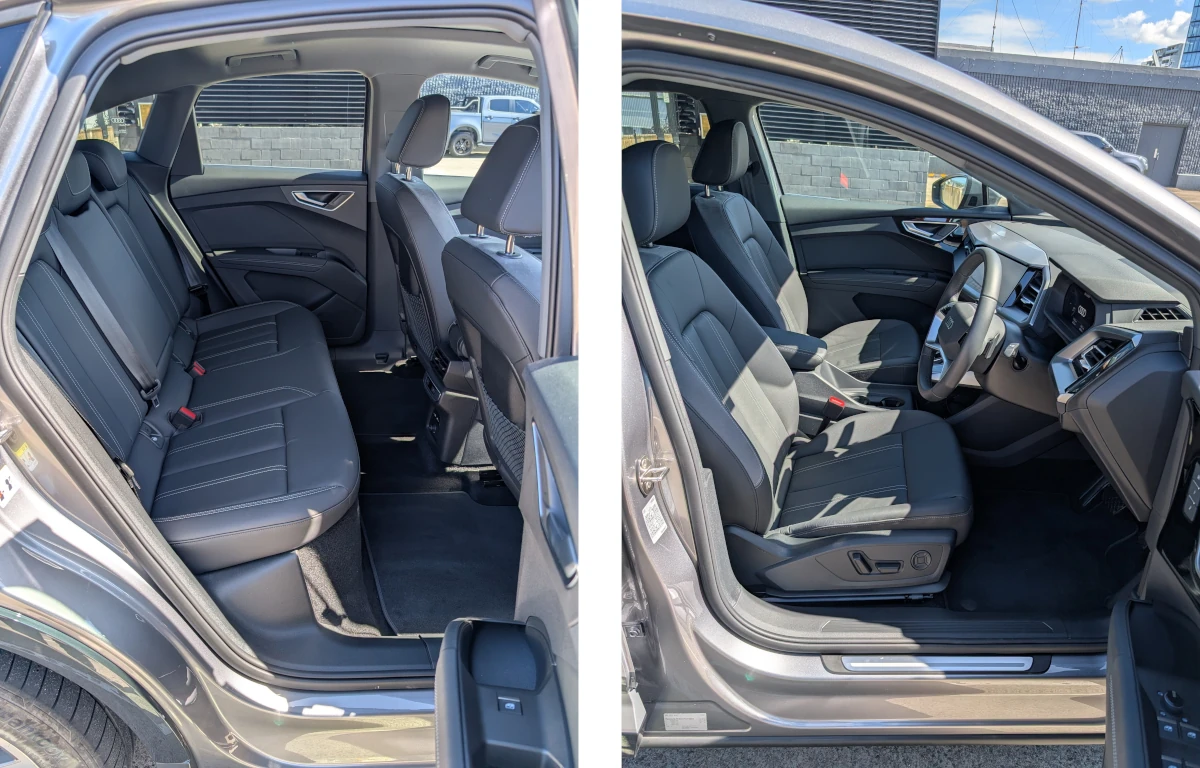
I found the standard leather appointed seats were very comfortable. My father-in-law said he found them particularly good in terms of the seating position at the end of a 3 hour drive through the countryside. The Q4 I drove was fitted with the optional $2,860 comfort package which adds electronic adjustment to both front seats and memory function for the driver.
If you want to upgrade to real Nappa leather seats, you first need to start with the Q4 55 e-tron and add the optional $2,500 S line interior package. As far as I can see these seats still lack ventilation though, a nice feature that comes standard on some cars that are half the price or even less.
When I first got in the Q4 I was disappointed to see it had a start/stop button, although I was pleasantly surprised to find it was completely optional as the car starts up when you touch the brake pedal anyway. The car also turns itself off automatically as you get out which removes another unnecessary step that tends to annoy me in other cars.
Setting off in the Q4 is therefore quick and easy given the optional start button, combined with the fact that settings such as auto hold are retained between drives. You can simply buckle up, press the brake and engage drive. Safety systems were well tuned too, so there is nothing you need to fiddle with each time.
Handling and suspension was another highlight of the Q4 e-tron, no doubt helped by Audi’s vast experience making cars for over 110 years. The Q4 feels sporty and capable, yet was also one of the most comfortable EVs. This was confirmed by every family member who came for a spin, they all commented on the noticeably good ride quality.
The Q4 e-tron handled both high and low speed corners well, feeling planted and confidence inspiring in the bends. On highway stretches it felt as if it would have no trouble at all on German Autobahn travelling much faster than our 110 km/h limits. If I was nitpicking, the takeoff from a standstill when using auto hold can occasionally be jerky.
Acceleration in the single-motor 45 e-tron felt smooth and powerful, on paper it will reach 100 km/h in 6.7 seconds which is spritely enough for most people. For reference the dual-motor 55 e-tron is still heavily rear-biased, as the front motor adds a modest 40 kW / 134 Nm over the 45 e-tron’s outputs (210 kW / 545 Nm), cutting the 0 – 100 km/h acceleration down to 5.4 seconds.
Sam Parkinson described the tranquility of the Q6 e-tron cabin in his review, and I found the Q4 e-tron to be similar. The only time I noticed significant road noise was on rough sections of bitumen, which was a bit surprising given the tyres fitted were EV specific Hankook ventus S1 evo with decent sidewall heights.
Efficiency figures for the Q4 e-tron were average for a car this size weighing just over 2 tonnes. Around town I measured 163 Wh/km and on the highway it was not much worse at 170 Wh/km. This results in around 450 km real world highway range on a full charge, compared with 540 km WLTP for the Q4 45 Sportback I was testing.
Not many negatives
Overall, my experience with the Q4 e-tron was mostly positive, but I came across a few areas that could be improved in future iterations of the car. One of these was navigation using the built-in infotainment experience, which felt oldschool and used a text-to-speech system that reminded me of early versions with a stilted, robotic sounding voice.
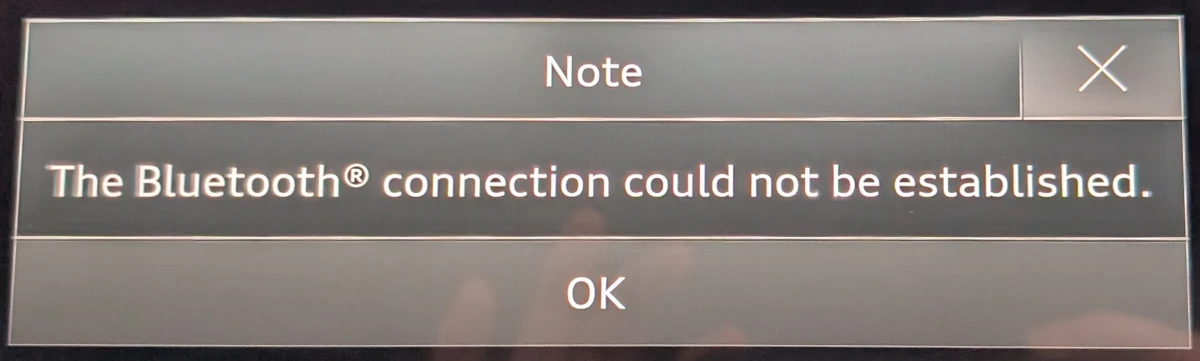
You can overcome this by using wireless Android Auto or Apple CarPlay, although I also noticed occasional glitches while streaming bluetooth audio and Android Auto sometimes failed to connect. On the positive side, navigation steps from Android Auto showed up on the instrument cluster, not on the head-up display though.
Despite all of the physical buttons on the dash, front seat passengers need to swipe clockwise or anti-clockwise around a fiddly touch-sensitive audio control to adjust the volume. Drivers can use buttons on the steering wheel to adjust volume, although these are also touch-sensitive and can be falsely triggered while cornering.
Rear visibility in the Q4 Sportback version is hampered by the sloping roofline and low mounted spoiler which is visible in the rear-view mirror. Thankfully the 360 degree cameras usually provided a good view of surroundings, except at night time when I found them grainy and blurry.
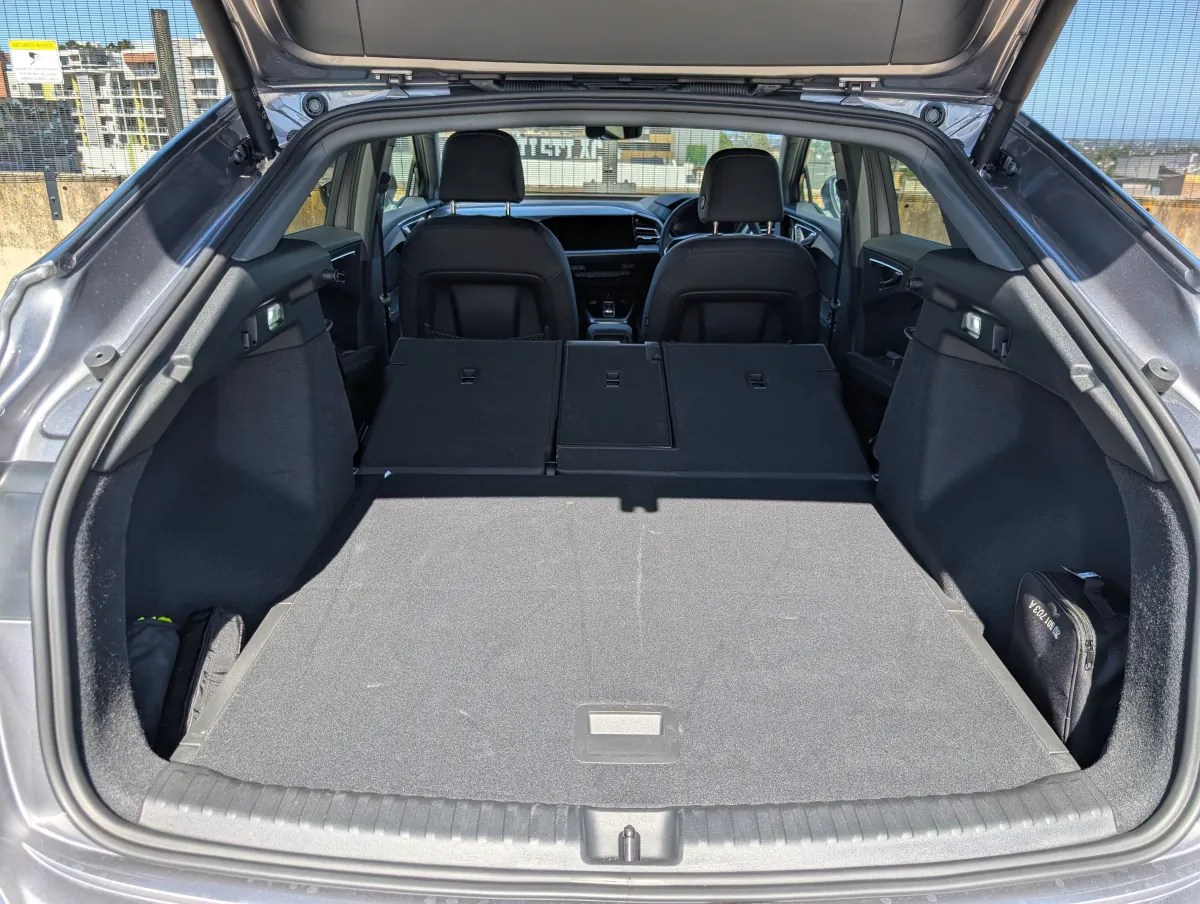
In terms of packaging, Audi has not taken full advantage of the dedicated MEB EV platform, leaving room to add more space and storage if they make a refreshed version of the Q4. For example, there is a slight hump in the middle of the rear floor, no frunk under the bonnet and the interior doesn’t feel as spacious as it could be for a vehicle of this size.
Lastly, the Q4 charge port is located on the rear drivers side which is not the best if you rely on kerbside charging, particularly on narrow inner city streets. This also means you end up blocking a stall when using Tesla’s older Supercharger sites that aren’t fitted with the most recent V4 hardware and longer charge cables.
Conclusion
I really enjoyed driving the Q4 e-tron, particularly how quick and easy it was to set off each time and how well it drove in any circumstance. At the end of the week, I would have been quite happy to keep on driving it around, which is not something I can say about all of the cars I get to test drive.
The Audi Q4 e-tron is certainly not for the budget conscious buyer, with driveaway prices starting from close to $95,000 without any options ticked. However, if you are someone who buys Audis or luxury cars in general, I think the Q4 is a great entry point into an EV.
Audi will need to up their game soon to remain competitive in this segment though, as BMW’s ‘Neue Klasse’ vehicles like the new iX3 set a high benchmark for luxury electric vehicles both in terms of key specifications and value for money.
Table of key specifications for Audi Q4 e-tron
| Variant | Audi Q4 e-tron 45 Sportback | ||
| Starting price | $86,500, plus on-road costs | ||
| Paint colours | 8 exterior colours:
| ||
| Battery size | 82 kWh gross, 77 kWh usable | ||
| Battery chemistry and manufacturer | Nickel Manganese Cobalt (NMC), LG or CATL | ||
| Range | 540 km WLTP | ||
| Driven wheels | Rear-wheel drive | ||
| Power / Torque | 210 kW / 545 Nm | ||
| Maximum charging speed | 11 kW AC, 175 kW DC | ||
| Charging time | 7 kW AC (0 – 100 %) – 11 hours 11 kW AC (0 – 100 %) – 8 hours 175 kW DC (10 – 80 %) – 28 minutes | ||
| Bidirectional charging | No | ||
| Exterior dimensions | Length: 4,591 mm Width: 1,865 mm Width including mirrors: 2,108 mm Height: 1,602 mm Wheelbase: 2,764 mm Ground clearance: 135 mm | ||
| Kerb mass | 2,145 kg | ||
| Storage space | Frunk: N/A Boot, rear seats up: 535 L Boot rear seats folded: 1,460 L | ||
| Service interval | 24 months / 30,000 km | ||


Tim has 20 years experience in the IT industry including 14 years as a network engineer and site reliability engineer at Google Australia. He is an EV and renewable energy enthusiast who is most passionate about helping people understand and adopt these technologies.