adminis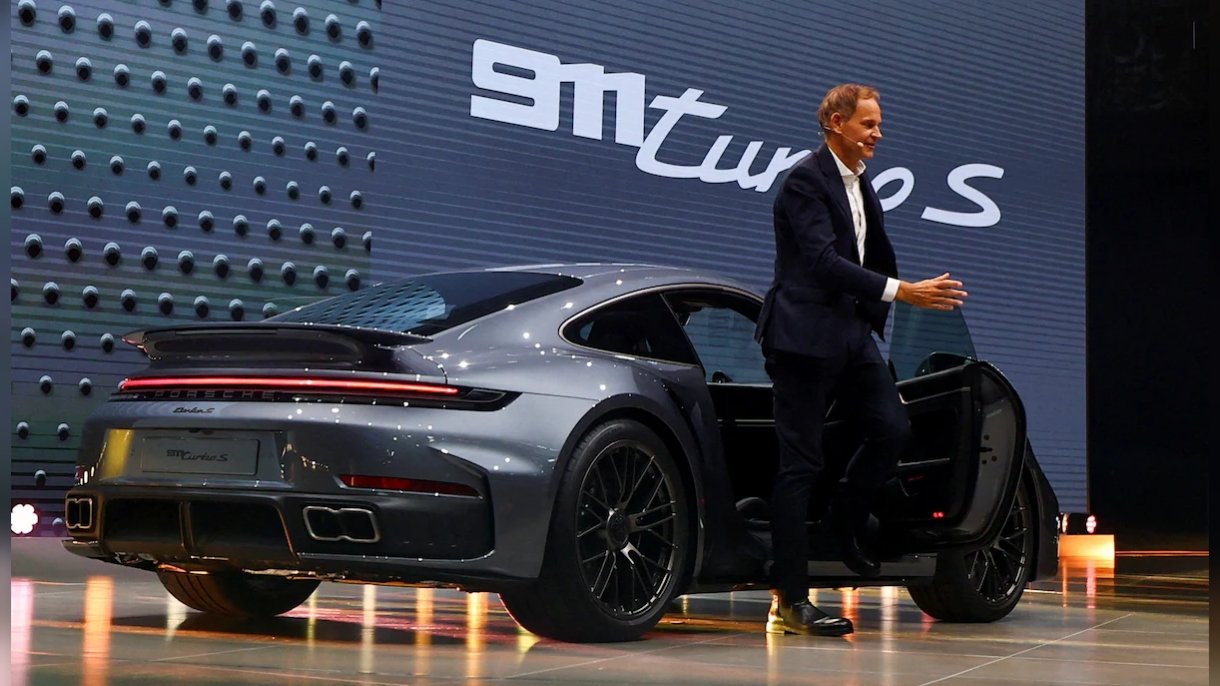
Oliver Blume calls for stronger policy framework as German automaker pursues major restructuring, affordable electric vehicle launches and cost reductions.
Volkswagen chief executive Oliver Blume has called on European policymakers to establish conditions that will enable the German automotive giant to compete more effectively against Chinese manufacturers, warning that the company’s extensive restructuring requires a combination of corporate reforms and supportive government policies.
Blume made the remarks on Sunday at an event titled “For Europe”, held on the eve of the Paris motor show, as the continent’s automotive industry grapples with intensifying competition from lower-cost Chinese electric vehicle makers.
The Volkswagen boss said the company was working to simplify its operations and reduce complexity across its broad portfolio of brands, which includes its mass-market Volkswagen marque and premium manufacturers such as Porsche and Lamborghini.
Describing the scale of the overhaul, Blume called it “the biggest transformation programme in our history”.
“This is a shared responsibility: The business community must become more competitive and create attractive opportunities, while policymakers must establish the right framework conditions,” he said.
His comments reflect growing concern among European automakers that internal cost-cutting and technological innovation may not be sufficient to protect their market positions as Chinese competitors expand their presence across the continent.
Price war puts pressure on European automakers
The Paris motor show comes at a critical moment for Volkswagen, which is attempting to strengthen its electric vehicle portfolio while undertaking a major restructuring amid falling sales in its home market and mounting competitive pressure.
Chinese automotive manufacturers have been expanding aggressively into Europe as a slowdown and intense price competition in their domestic market encourage them to pursue growth opportunities abroad.
Their growing presence has increased pressure on established European brands to offer more affordable electric vehicles while maintaining profitability and financing the transition away from conventional petrol and diesel cars.
Volkswagen, which has maintained a market share of roughly a quarter of Europe’s automotive market over the past decade, is seeking to defend its position as Chinese brands such as BYD and Leapmotor attract growing attention from consumers.
The competitive challenge extends beyond vehicle prices to manufacturing costs, software development and the speed at which automakers can bring new models to market.
For Volkswagen, the task is to improve operational efficiency without compromising its capacity to develop products that can compete with increasingly affordable alternatives.
Job cuts and plant closures form part of restructuring
Blume is also facing pressure to demonstrate that Volkswagen’s turnaround strategy can deliver more than workforce reductions and lower operating costs.
The company is pursuing sweeping job cuts and has threatened to close as many as four plants in Germany as it attempts to align its operations with changing market conditions.
The restructuring has placed employment and manufacturing capacity at the centre of the debate over the future of Germany’s automotive industry.
Investors are demanding evidence that the company can improve product development and software capabilities while restoring competitiveness in a market undergoing rapid technological change.
The challenge is particularly significant in the electric vehicle segment, where manufacturers must invest heavily in new technologies while competing on price with companies that have established strong positions in battery production and lower-cost manufacturing.
Volkswagen is expected to use the Paris motor show to demonstrate its response through a range of more affordable electric vehicles across its volume brands, including Volkswagen, Spain’s Cupra and Czech Republic-based Skoda.
The company will also premiere its new ID. Tiguan electric sport utility vehicle.
The planned showcase highlights Volkswagen’s efforts to broaden its electric vehicle offering and appeal to consumers who remain sensitive to the relatively high prices of some electric models.
Volkswagen backs tougher European trade measures
The German automaker’s calls for policy support come amid a wider debate within the European Union over how to respond to Chinese competition without triggering a damaging trade dispute with Beijing.
Blume is among German automotive industry leaders advocating a more protectionist approach, as concerns grow that the price pressures affecting China’s domestic automotive market could spread to Europe.
On Friday, he described a proposed agreement between the EU and China that could reduce Chinese imports of plug-in hybrid vehicles into the bloc by more than half as an “important step” towards creating a more level competitive environment.
He has also previously supported proposed local-content rules designed to encourage manufacturing within Europe.
Such measures could incentivise companies to produce vehicles and components in the region, potentially supporting local manufacturing and employment. However, European manufacturers also have commercial interests in China, making the consequences of tougher trade policies an important consideration for the industry.
The policy debate therefore centres on how Europe can maintain an internationally competitive automotive sector while responding to the expansion of Chinese manufacturers and the pressures created by the transition to electric mobility.
Analyst warns of risks to European profitability
Industry analysts have also raised concerns about the consequences of Chinese manufacturers increasing exports as competition intensifies in their home market.
Gregor Williams, an analyst at Rhodium Group, said the automotive industry had become increasingly concerned about the competitive challenge emerging from China.
“Industry has become a lot more concerned about the competitive challenge arising in China,” Williams said.
He noted that the downturn in China’s domestic automotive market was creating additional pressure on manufacturers to find customers abroad.
The resulting export push could intensify price competition in Europe, forcing established manufacturers to lower prices to defend market share.
Williams warned that the implications could extend beyond reduced sales revenue to threaten the profitability of the European market itself.
“It’s one thing to lose revenues,” he added. “But if China also manages to export the price war, the European market could become very unprofitable.”
The warning highlights the risk that sustained price reductions could weaken manufacturers’ margins at a time when they must continue spending on electric vehicle platforms, battery technology, software and production facilities.
For Volkswagen and its European rivals, maintaining profitability while delivering more affordable vehicles has become an increasingly difficult balancing act.
Affordable electric vehicles central to Volkswagen’s response
Volkswagen’s planned product announcements at the Paris motor show are expected to reinforce its strategy of combining operational restructuring with new vehicle development.
The company’s volume brands are preparing to showcase a range of more affordable electric vehicles, reflecting the need to compete more directly on price as consumer choices expand.
The introduction of the ID. Tiguan electric SUV will also provide a further demonstration of Volkswagen’s efforts to extend its electric vehicle range.
However, the success of the strategy will depend on more than product launches. Volkswagen must also manage manufacturing costs, improve the efficiency of its operations and strengthen its technological capabilities as competition across the sector intensifies.
The company’s broad brand portfolio gives it access to different consumer segments, but managing such a large organisation also presents challenges as it seeks to reduce complexity and respond more quickly to changing demand.
European auto industry at a turning point
Volkswagen’s restructuring reflects the wider challenges confronting Europe’s automotive industry as it adjusts to electrification, changing consumer preferences and increased competition from China.
The sector faces pressure to preserve manufacturing jobs and industrial capacity while developing vehicles that can compete on price, technology and performance in an increasingly crowded market.
For policymakers, the challenge is to determine how trade policy and local manufacturing incentives can support European industry without creating further economic tensions or limiting market access.
For Volkswagen, the immediate priority is to demonstrate that its restructuring can deliver a more efficient business, a stronger electric vehicle lineup and sustainable profitability.
Blume’s appeal for a supportive policy framework underscores the company’s position that the transformation requires action from both industry and government.
As the Paris motor show opens, Volkswagen faces the task of convincing consumers, investors and policymakers that it can defend its position in Europe’s automotive market while adapting to the rapid changes reshaping the global electric vehicle industry.