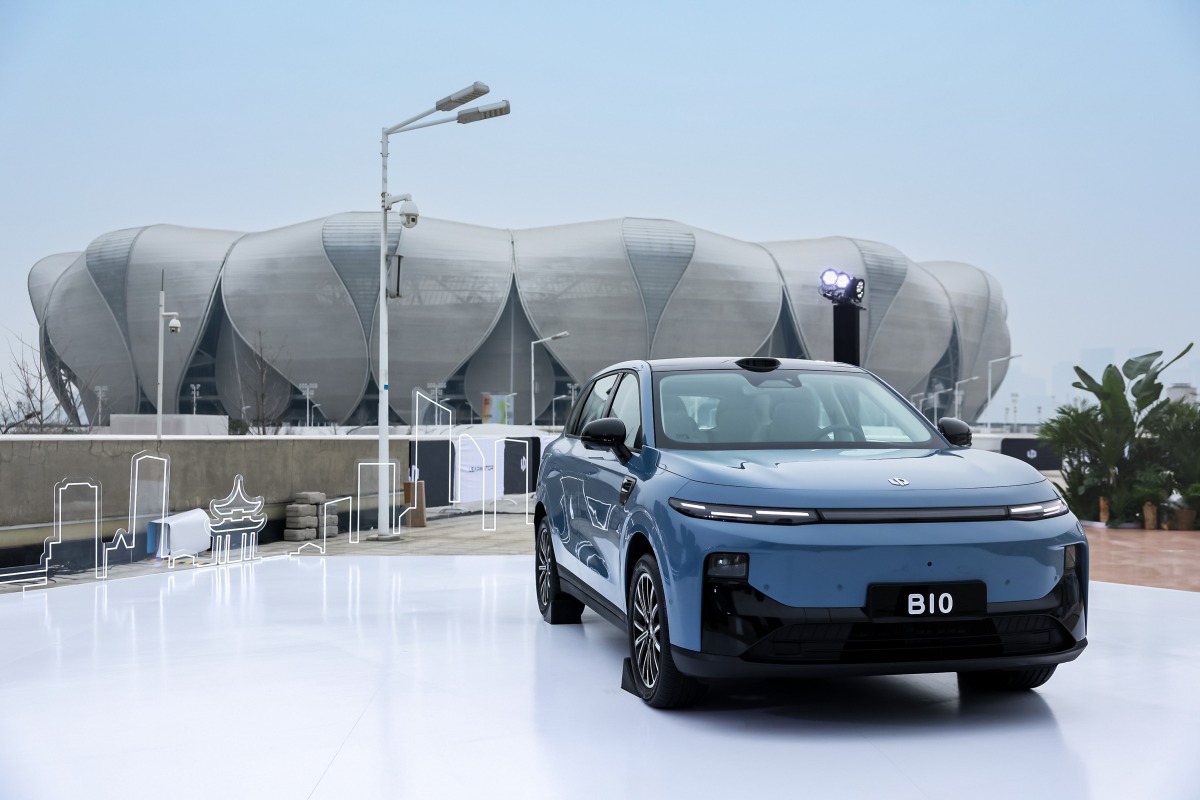
After pulling up on my street with the Leapmotor B10 for the first time, my neighbour wandered over and asked if I’d bought a new Peugeot. Then he paused, squinted at the rear of the car, and revised his guess: “Actually… is that some sort of cheap Porsche Macan?”
It wasn’t the worst observation. The rear three-quarter angle in particular does have a hint of Macan about it. Up front though, things are more generic EV: a smooth nose, slim LED light bar stretching across the bonnet, and the sort of minimalist face now shared by half the electric SUVs arriving in Australia.
The design feels contemporary without being overdone: an upright front end gives it a practical stance, while a gently sloping roofline softens the profile. Spend a bit more time with it though, and the B10 begins to develop its own identity.
The next question people tend to ask is: what exactly is a Leapmotor? Fair question. The B10 is only the second model from the Chinese brand to arrive in Australia, following the launch of the larger C10 in late 2025, making Leapmotor one of the newer names entering an already crowded EV market.
Behind the scenes, however, there is a familiar name involved. Leapmotor has backing from Stellantis, the global automotive group that already sells brands such as Jeep, Peugeot, Fiat, Alfa Romeo and Maserati in Australia. So while the badge may be new, the company helping bring it here has been operating locally for decades.
The price of $38,990 drive-away for the base spec, $41,990 for the Design spec is why people will likely start pay more attention. This pricing places it right in the midst of Australia’s most affordable electric SUV vehicles.
The B10 looks modern, but not overly out there. A sensible upright silhouette at the front is complimented with a slight slope at the roofline.
Climb inside and you’re greeted by a sea of grey. Not unpleasant, but certainly not colourful. The cabin leans heavily into the minimalist EV playbook with a large central screen, very few physical buttons, and an overall vibe that feels a bit like sitting in a spaceship simulator.
One detail that initially caught me off guard sits directly in front of the passenger seat. At first glance it looks as though the factory simply forgot to finish assembling that section of the dashboard. In reality, it’s a deliberately designed as a kind of blank canvas where owners can attach accessories and customise the space however they like.
Some buyers may enjoy that level of flexibility. Personally, I suspect mine would remain exactly as it was delivered – empty and looking slightly unfinished.
This being the upper Design spec, the cabin does get a few welcome upgrades. The seats are trimmed in higher-grade synthetic (“silicone”) leather and the front occupants get both heating and ventilation, along with a heated steering wheel for colder mornings.
The doors are also treated to softer materials rather than the hard plastics often found in cars at this price point, which lifts the sense of comfort and gives the cabin a faint hint of luxury.
And while the daytime interior is largely shades of grey, things brighten up after dark thanks to the ambient lighting. Like many modern EVs, the B10 lets you cycle through a range of colours to give the cabin a bit more personality at night.
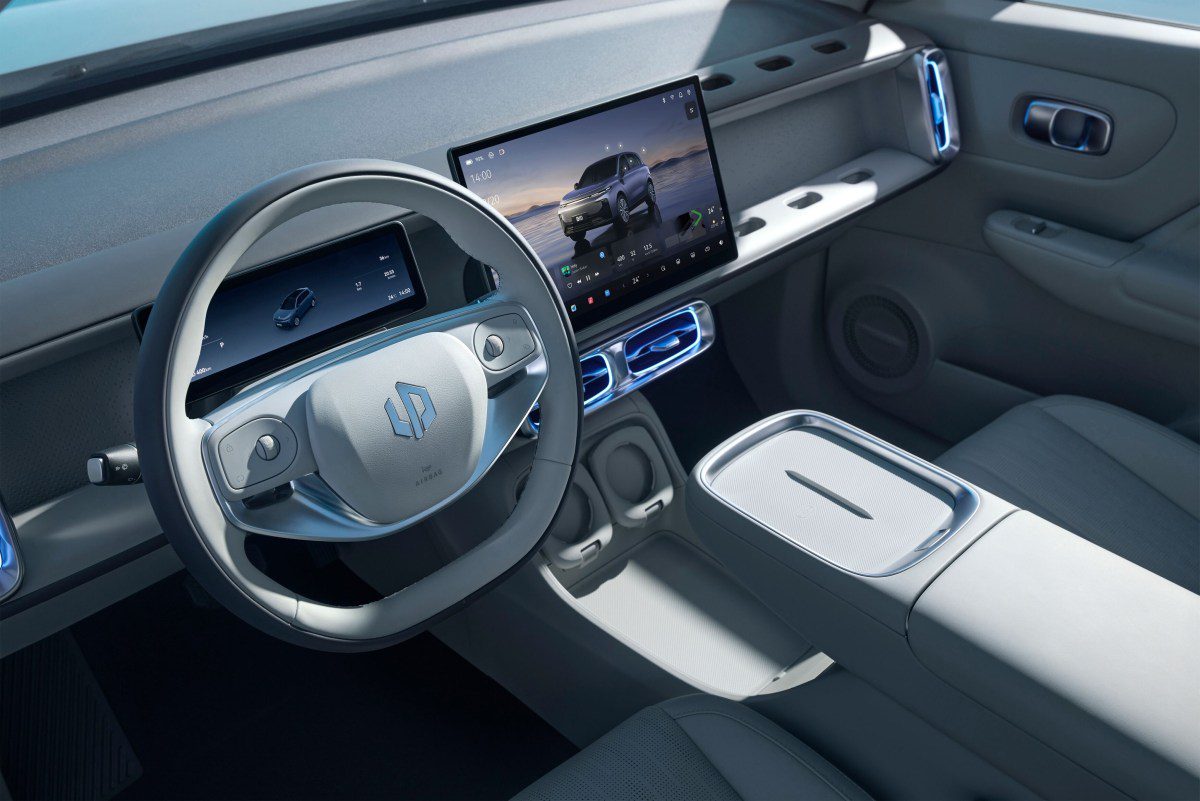
A 14.6-inch touchscreen sits at the centre of the dashboard and controls almost everything in the car, aside from a couple of Tesla-style scroll wheels on the steering wheel. It fits with the minimalist approach adopted throughout the cabin, although I still find myself missing the reassurance of a physical button, particularly for climate control and other everyday functions you want to adjust without digging through menus.
Ahead of the driver, the instrument display is relatively small but surprisingly effective. Despite its size it presents the key information clearly, and there’s a degree of customisation available, allowing you to add things like navigation prompts or efficiency data alongside the speed readout.
Wireless Apple Carplay & Android Auto are welcome and necessary features, but in my experience about 25% of the time my car did not connect wirelessly. While I can’t rule out the issue being with my phone rather than the car, it’s not an issue I’ve experienced before on other vehicles.
The ride is comfortable and well suited to everyday driving, with acceleration more than adequate. Flick it into Sport mode and the instant torque delivers a brief moment of thrill before the reality of Sydney’s 40–50 km/h streets quickly brings things back to earth.
Apparently strong one-pedal driving isn’t especially popular in China, which may explain the tuning here. But for Australian drivers who’ve become used to smoother and more predictable systems in other EVs, it could feel a little underwhelming. Even the strongest regenerative braking mode outside of one-pedal is relatively mild compared with what many other electric cars now offer.
The Design LR gives you a 67.1 kWh LFP battery with a claimed NEDC range of 516 km, while the base Style uses a smaller 56.2 kWh pack rated at 442 km. Real-world figures will be a bit lower as they always are. But even allowing for highway speeds, warmer weather, multiple passengers, and air-conditioning, the B10 still offers a comfortable driving range. In the week of driving I had the B10 I averaged an impressive 14kWh/100kms.
Both variants support up to 11 kW AC charging, while DC fast charging reaches 140 kW on the base Style and up to 168 kW on the Design LR.
I left the ADAS (driver attention monitoring system) on its default settings and, while it clearly keeps a close eye on both your gaze and your speed, the dulcet tones it uses to remind you of your driving responsibilities are thankfully not overly obnoxious.
Not too long ago, when you thought about electric SUVs in Australia, you were usually looking at $50,000 to $60,000. Within that bracket there are now plenty of excellent options, but it still meant EVs sat firmly above the price of many comparable petrol models.
More recent arrivals such as the Jaecoo J5, BYD Atto 2, and now the Leapmotor B10 are beginning to shift that equation. They’re bringing genuine choice to the more affordable end of the market and offering reassurance that a well-equipped electric SUV can be just as approachable as its combustion-powered counterparts.
The B10 is a compelling addition to this growing segment, and yet and another reminder that real value has already started arriving in Australia’s EV market.
View the full specs sheet here.