Support CleanTechnica’s work through a Substack subscription or on Stripe.
President Donald Trump sailed into office last year on a mission to banish wind turbines from the waters of the US, and now failure is staring him in the face. Not one or two, but five major new offshore wind farms on the Atlantic Coast are on track to add multiple gigawatts of clean power to the nation’s grid, including one that Trump first tried to kill seven years ago.
Killing Vineyard Wind …
If you’re thinking the target of that seven-year vendetta is the 800-megawatt Vineyard Wind offshore wind farm off the coast of Massachusetts, run right out and buy yourself a cigar. First proposed in 2017, Vineyard Wind was billed as the very first large-scale offshore wind farm to be built in the US, far outweighing the only other project in the water at the time, the 30-megawatt Block Island Wind Farm in Rhode Island.
Trump tried to deep-six Vineyard Wind during his first term in office back in 2019, when the Interior Department’s Bureau of Ocean Energy Management demanded a specious re-review of the project. The office anticipated a final decision — most likely, a negative one — on January 15 of 2021.
However, fate and the US electorate intervened. Trump lost his office to President-elect Joe Biden in November of 2020. Wisely, the developers temporarily withdrew Vineyard Wind’s permit application just a few weeks after Election Day, citing a new turbine supplier and a re-design that included just 62 turbines, down from 84 in the original proposal.
Over the objections of BOEM, the developers did not re-submit the paperwork while Trump was still in office. After he left in January of 2021 (not without a struggle), BOEM promptly approved the new configuration in May of that year, and construction began in 2023. By last October, many of the 62 turbines were already delivering power to the grid.
Then, Trump tried again. On December 22, BOEM summarily ordered work to stop on Vineyard Wind and four other Atlantic Coast wind farms, citing a the sudden emergence of unspecified national security concerns.
… Or Not.
Somewhat weirdly, on the same day that BOEM issued the stop-work order, the agency also slipped a separate note to Vineyard Wind, clarifying that the project could keep operating the 44 turbines that were already commissioned at the time.
So … what was the emergency? Who knows! Vineyard sued for relief in federal court, and by the end of January, the whole project was underway again. On Friday, March 13, the developers announced that all 62 turbines have now been installed, with full commissioning to follow.
The offshore wind trade organization Oceantic Network was among those celebrating the news. “With the third U.S. project now delivering desperately-needed electricity to the grid—and lowering winter energy bills for millions of Americans—the domestic offshore wind industry is demonstrating its true potential every day,” Oceantic enthused, drawing attention to the pre-existing Block Island Wind Farm as well as Vineyard Wind.
The Third Wind Farm
The third wind farm referenced by Oceantic is the 704-megawatt Revolution Wind project serving Rhode Island and Connecticut, which also celebrated a key milestone on March 13 when it sent electricity to the grid for the first time.
Revolution is another project Trump tried to stop more than once. The first attempt occurred on August 22 of 2025, when BOEM issued an emergency stop-work order citing “national security interests.”
A federal judge smelled something fishy and suspended the order several weeks later, enabling Revolution Wind to restart construction until December 22, when it was caught in the same emergency stop-work snare that ensnared Vineyard Wind and three other projects. Vineyard Wind sued and prevailed in court, enabling it to restart construction as of January 12.
Revolution Wind is a joint venture between the Skyborn Renewables branch of Global Infrastructure Partners and the Danish energy firm Ørsted, which celebrated the March 13 milestone in a public announcement.
“At a time of rising electricity demand, Revolution Wind supports a growing regional economy, including energy-intensive industries such as manufacturing and data centers,” Ørsted emphasized, drawing attention to a report showing that the new offshore wind farm will save ratepayers in New England up to $500 million per year in wholesale energy costs.
That $500 million figure comes from a report issued by the Connecticut Department of Energy and Environmental Protection on September 9 last year, as part of an effort to push back against the August 22nd stop-work order. The cost comparison is even more favorable now that Trump has blown up global energy markets with his war in Iran, with a ripple effect on the cost of fossil fuels here in the US.
Ørsted also reminds everyone that wind turbines perform especially well under the windy conditions of New England winters.
“ISO New England, the entity responsible for operating the electric grid, has noted the importance of offshore wind energy projects including Revolution Wind to the region’s grid reliability, particularly in winter,” the company notes.
… And Three To Go
All three of the other wind farms delayed by the December 22 stop-work order are also steaming towards completion, including the massive 2.6-gigawatt Coastal Virginia Offshore Wind project, which should be up and running any minute now.
Another wind farm in the December 22 cohort is Empire Wind off the coast of Long Island in New York State. Empire faced an earlier stop-work order in April of 2025, which is rather weird considering that the project was initially greenlighted during Trump’s first term in office.
To compound the weirdness, New York Governor Kathy Hochul personally negotiated a restart for Empire Wind with Trump himself in May of 2025, only to see the project halted again in December.
Hochul gets the last laugh, though. Empire also won its day in court earlier this year, and Hochul won a legal victory for the new congestion pricing tolls in Manhattan, which Trump has been trying — and failing — to eliminate.
“Donald Trump’s unlawful attempts to trample on the self-governance of his home state have failed spectacularly,” Hochul said in a celebratory statement on March 3 regarding the win for congestion pricing. “Congestion pricing is legal, it works, and it is here to stay.
“The cameras are staying on,” Hochul added for good measure, spiking the football.
Ouch!
Hochul also has also one-upped Trump’s December 22 stop-work order against the Sunrise Wind project in New York. On February 2, a federal judge enabled work to continue on the 925-megawatt project, towards commissioning in 2027.
In the meantime, natural gas barely gets a sliver of new power generation capacity added this year, with coal weighing in at less than zero. Don’t just take my word for it. “In 2026, U.S. coal generation declines by 7% in our forecast as generation from renewable sources increases and the electric power sector retires about 4% of its coal-fired generating capacity,” summarizes the US Energy Information Agency, which is still free of the Trump chopper, for now.
Who voted for this guy, anyways?
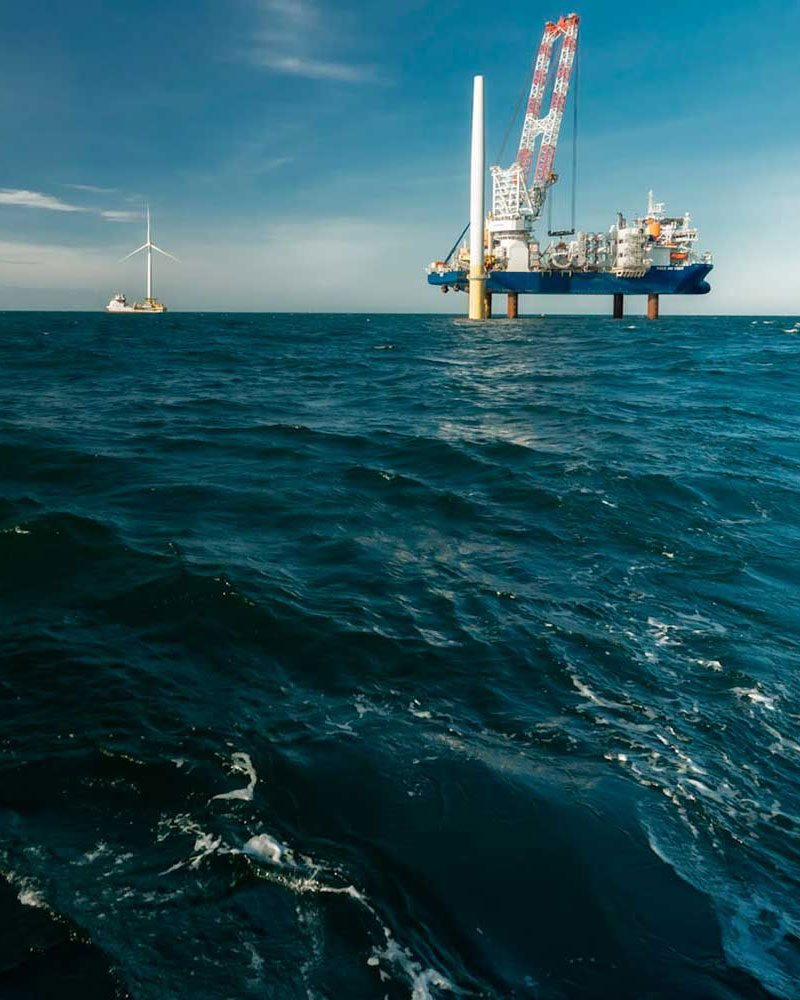
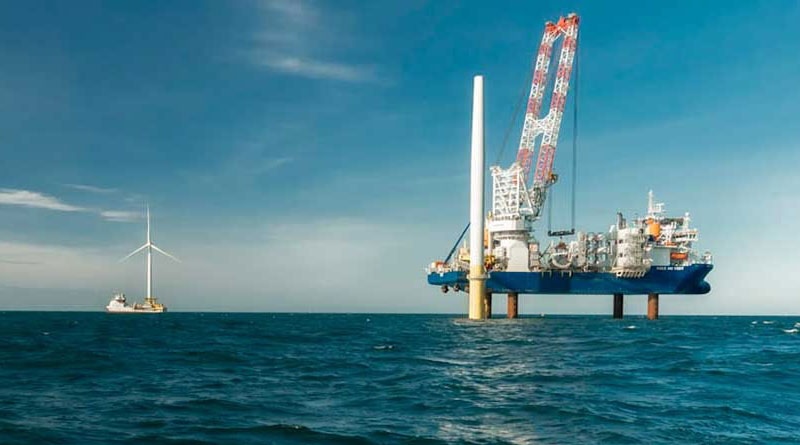
Photo: The US offshore wind industry is still alive and kicking with multiple gigawatts’ worth of clean electricity heading for the nation’s grid (cropped, courtesy of Dominion Energy).
Sign up for CleanTechnica’s Weekly Substack for Zach and Scott’s in-depth analyses and high level summaries, sign up for our daily newsletter, and follow us on Google News!
Have a tip for CleanTechnica? Want to advertise? Want to suggest a guest for our CleanTech Talk podcast? Contact us here.
Sign up for our daily newsletter for 15 new cleantech stories a day. Or sign up for our weekly one on top stories of the week if daily is too frequent.
CleanTechnica uses affiliate links. See our policy here.
CleanTechnica’s Comment Policy